Sea of Crete
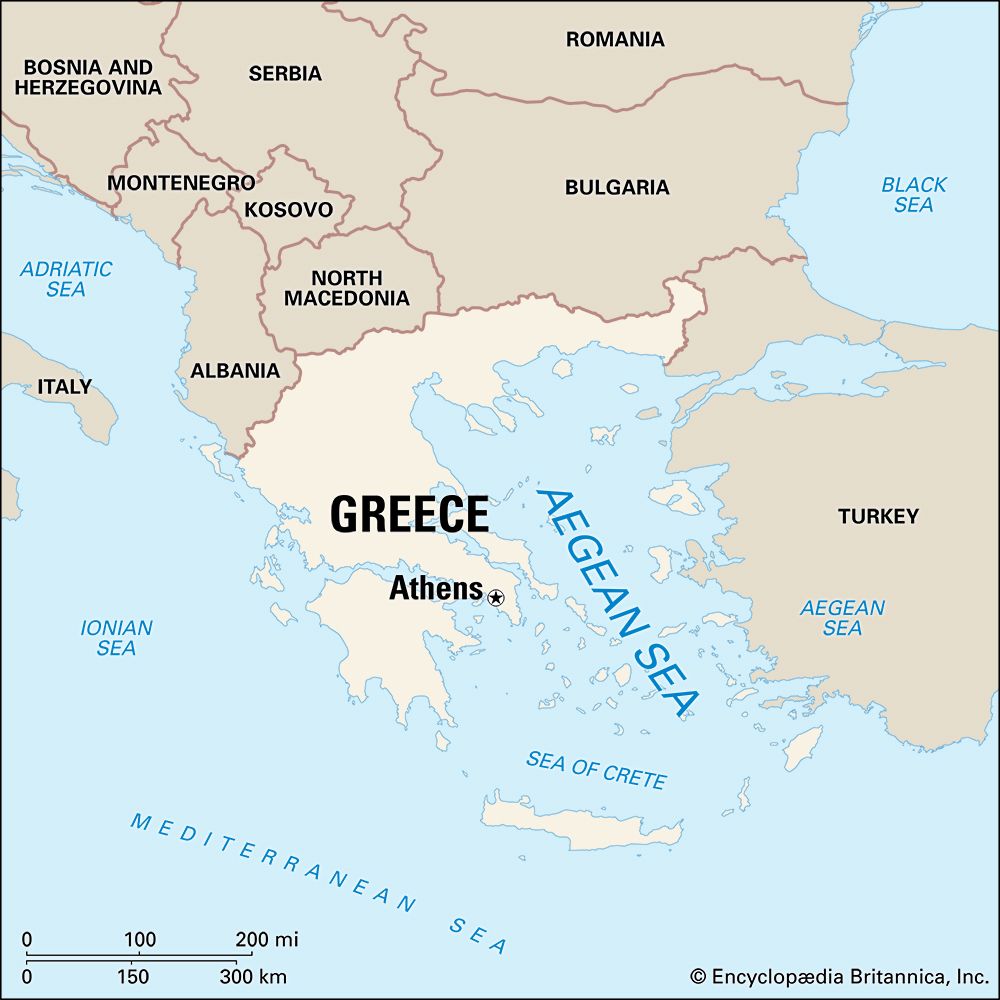
The Sea of Crete is the southern portion of the Aegean Sea, which is itself an arm of the Mediterranean Sea. Geographically, it is situated between the…
What is Sea of Crete?
The Sea of Crete is the southern portion of the Aegean Sea, which is itself an arm of the Mediterranean Sea. Geographically, it is situated between the Cyclades islands to the north and the island of Crete to the south.12
This body of water is notable for being the deepest section of the Aegean Sea, with depths exceeding 10,000 feet (3,294 meters) located east of Cape Sidero on Crete. Historically, it has also been referred to as the Sea of Candia.12
What are the Cyclades islands known for?
The Cyclades are a group of approximately 30 islands in the Aegean Sea, renowned for their profound historical, archaeological, and cultural significance.
Historical and Archaeological Significance
- Bronze Age Culture: The islands were the center of the Cycladic culture, famous for their distinctive white marble idols, which were likely once painted to depict anatomical details, jewelry, and tattoos.45
- Sacred History: The islands form a circle around Delos, the legendary birthplace of Apollo and Artemis, which served as a major religious and political hub in antiquity.4
- Artistic Legacy: Archaeological sites like Akrotiri on Thera have yielded exceptionally well-preserved frescoes that provide invaluable insights into ancient Aegean clothing, architecture, and daily life.6
Modern Landscape and Economy
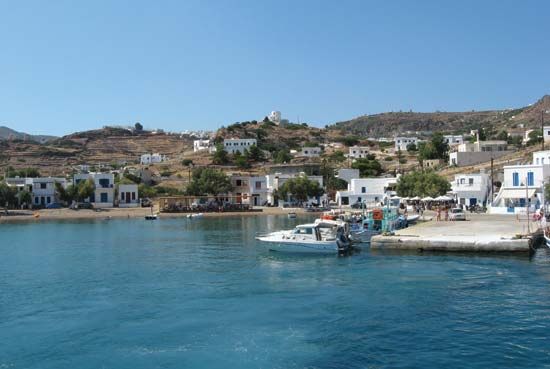
- Architecture: The modern landscape is characterized by iconic cube-shaped, whitewashed houses and traditional windmills.4
- Economy: Once facing rapid depopulation, the islands have become major tourist centers. They also export goods such as wine, brandy, tobacco, pottery, and handicrafts.4
How was the island of Crete formed geologically?
The island of Crete is geologically linked to the south and west of the Greek mainland, representing a significant structural feature of the region. Its formation is part of the complex tectonic history of the Mediterranean, which was shaped by the Alpine orogeny—a process driven by the northward compression of Africa into Europe during the Cenozoic Era.21
As the Tethys Sea evolved and was eventually destroyed by the collision of small plates, the movement of Anatolia westward played a crucial role in the deformation of Greece and the creation of the Aegean arc. Crete itself is characterized as a rugged, asymmetrical limestone massif. This mountainous structure is divided into several distinct ranges, including the Lefká Mountains in the west, the central Ídi Mountains, the east-central Díkti Mountains, and the far eastern Tryptí Mountains. The island’s ongoing seismic activity remains a reflection of the continuing compression between various European microplates in the region.12
What is the difference between the Aegean Sea and the Mediterranean Sea?
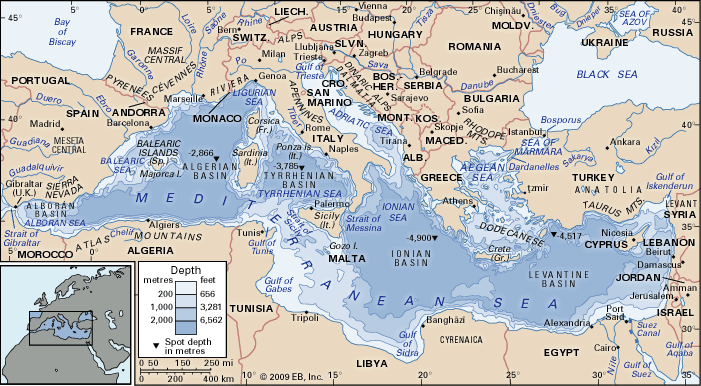
The primary difference between the Aegean Sea and the Mediterranean Sea is one of scale and classification: the Aegean is a smaller, distinct arm or bay of the much larger Mediterranean basin.91011
Key Distinctions
- Geographic Scope: The Mediterranean is a vast, intercontinental sea separating Europe from Africa, stretching approximately 2,500 miles from the Strait of Gibraltar to the coast of Turkey. In contrast, the Aegean is a specific, smaller body of water located between the Greek peninsula and Asia Minor, covering about 83,000 square miles.129
- Configuration: While the Mediterranean is an elongated, almost landlocked depression, the Aegean is characterized by an intricate configuration filled with numerous islands, which are the peaks of a submerged landmass known as Aegeis.9
- Hydrology: The Aegean is influenced by cold-water masses flowing in from the Black Sea, which affects its water temperatures and salinity levels differently than the broader Mediterranean.9
Sources
- Sea of Crete — Encyclopædia Britannica
- Greece - The islands of Greece — Encyclopædia Britannica
- Crete, Sea of — Merriam-Webster
- Cyclades — Encyclopædia Britannica
- Aegean Islands — Encyclopædia Britannica
- Aegean civilizations - The Cyclades — Encyclopædia Britannica
- Western painting - Early Cycladic — Encyclopædia Britannica
- Europe - Mesozoic and Cenozoic eras — Encyclopædia Britannica
- Mediterranean Sea — Encyclopædia Britannica
- Aegean Sea — Encyclopædia Britannica
- Mediterranean Sea - Physiography — Encyclopædia Britannica
- Aegean Sea — Merriam-Webster
- Mediterranean Sea - Temperature and water chemistry — Encyclopædia Britannica
- Mediterranean Sea - Natural divisions — Encyclopædia Britannica
Published on · 3 min read