Strait of Messina
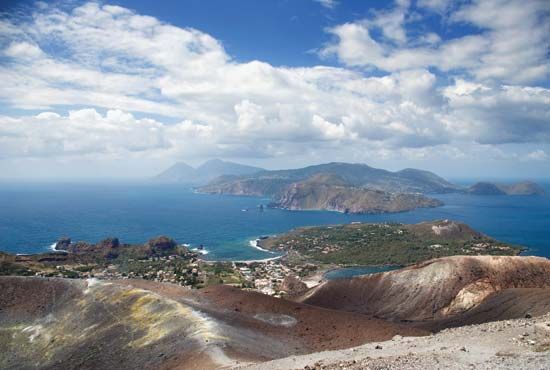
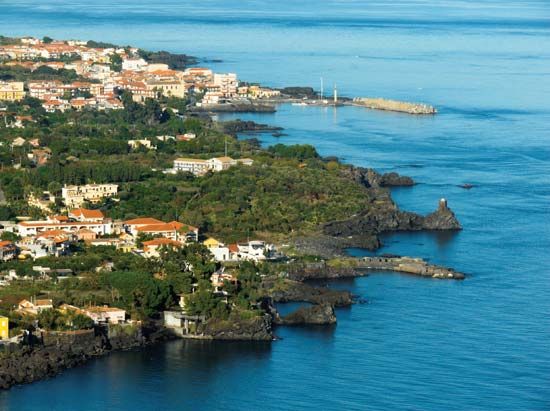
The Strait of Messina is a 20-mile (32 km) channel connecting the Tyrrhenian Sea and the Ionian Sea, separating Sicily from mainland Italy. Geographically…
What are the geological characteristics and history of the Strait of Messina?
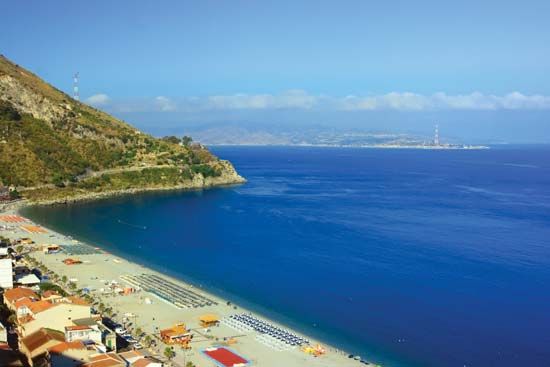
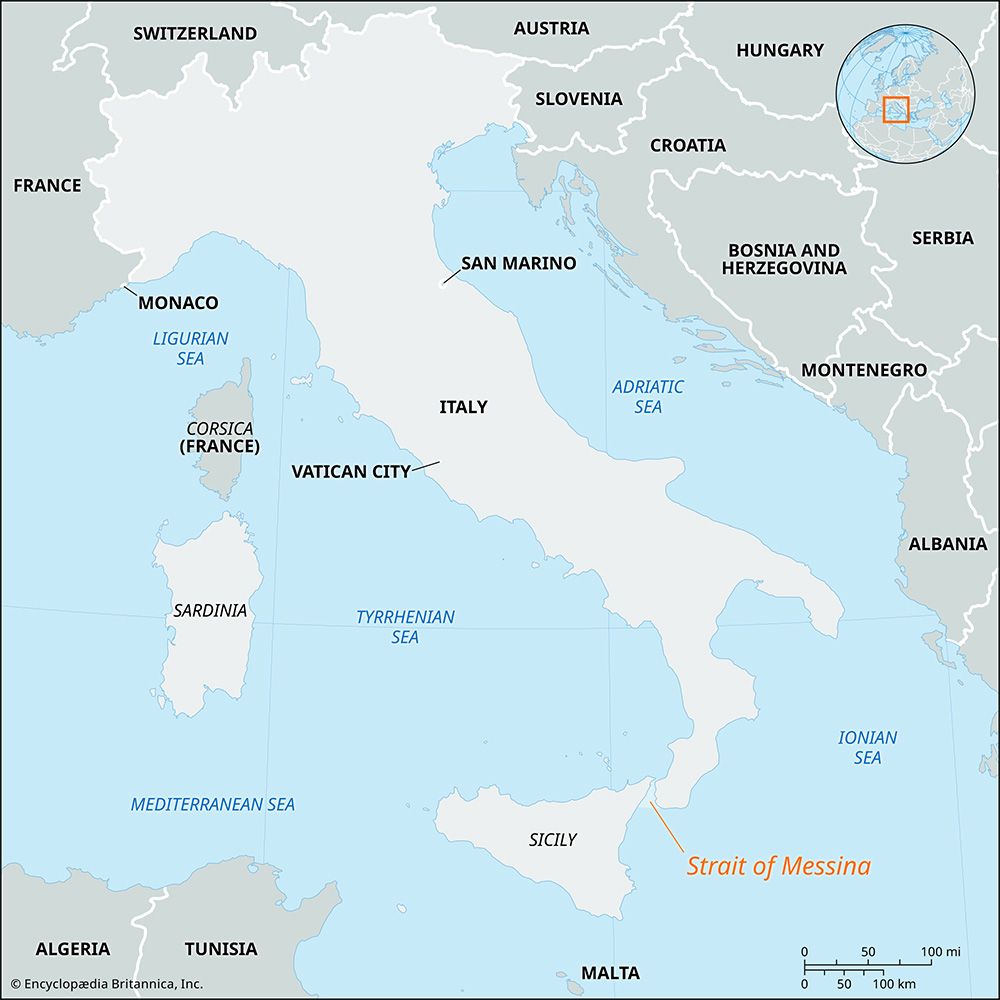
The Strait of Messina is a 20-mile (32 km) channel connecting the Tyrrhenian Sea and the Ionian Sea, separating Sicily from mainland Italy. Geographically, it narrows to 2 miles (3 km) in the north and widens to 10 miles (16 km) in the south, with a depth of 300 feet (90 meters) at its northern end.12
The region is characterized by complex hydrodynamics, featuring alternating currents that shift every six hours and occasionally produce whirlpools. These currents are strong enough to displace deep-sea vegetation and bring bioluminescent fish to the surface.1
Historically, the strait is a zone of significant seismic activity. On December 28, 1908, the area was the epicenter of a massive 7.5-magnitude earthquake that devastated the cities of Messina and Reggio di Calabria. While the disaster was long attributed to seafloor displacement, modern research indicates that a subsequent tsunami was triggered by an underwater landslide.3
How has the Strait of Messina influenced the culture and economy of the surrounding regions?
The Strait of Messina has profoundly shaped the cultural and economic landscape of the surrounding regions for millennia.
Cultural Influence
In antiquity, the strait was a source of both fascination and terror for sailors. Its treacherous currents and whirlpools were personified in Greek mythology as the monsters Scylla and Charybdis, creating the enduring idiom of being caught “between a rock and a hard place.” The region’s mystique was further bolstered by the Fata Morgana, a frequent optical illusion that caused objects on the shore to appear vertically elongated, reinforcing local legends.13
Economic Significance
Economically, the strait serves as a vital maritime link between the Tyrrhenian and Ionian seas. The major ports of Messina and Reggio di Calabria have long functioned as hubs for trade and transportation. Today, these cities are connected by essential ferry services, including train ferries and hydrofoils, which facilitate the movement of goods and people between Sicily and mainland Italy. The local economy relies heavily on the port’s operations, alongside industries such as olive oil production, citrus farming, and the manufacturing of chemicals and pharmaceuticals. Additionally, the strait is rich in plankton and fish, supporting a long-standing fishing tradition.14
How wide and deep is the Strait of Messina, and how does this impact ship passage?
The Strait of Messina is a 20-mile (32 km) long channel that varies significantly in width: it is 2 miles (3 km) wide at its northern end, between Faro Point and the Rock of Scylla, and widens to 10 miles (16 km) in the south, between Capes Alì and Pellaro. At its northern end, the strait reaches a depth of 300 feet (90 meters).1
These dimensions and the strait’s unique hydrodynamics create considerable challenges for ship passage. The area is known for complex, alternating currents that typically shift every six hours, creating powerful flows that can generate whirlpools. In antiquity, these conditions—along with hazardous rocks—were so treacherous that they were personified as the monsters Scylla and Charybdis. Today, while modern navigation has mitigated many of these ancient risks, the strait remains a notable maritime passage where strong currents and tidal effects continue to influence local navigation and the operation of ferry services between Sicily and mainland Italy.1
What is the geographical location and significance of the Strait of Messina?
The Strait of Messina is a 20-mile (32 km) long channel located in the Mediterranean Sea. It serves as a vital maritime link between the Tyrrhenian and Ionian seas, effectively separating Sicily to the west from the Italian mainland to the east1.13
The strait’s significance is rooted in both its historical notoriety and its physical characteristics. In antiquity, it was feared by sailors due to hazardous rocks and powerful whirlpools, which were personified in Greek mythology as the monsters Scylla and Charybdis. These dangers, combined with the frequent appearance of the Fata Morgana optical illusion, cemented the strait’s legendary status.5
Today, the strait remains a notable passage. Its major ports, Messina and Reggio di Calabria, support regional economic activity, while the surrounding waters are recognized for their rich plankton and fish populations.5
Sources
- Strait of Messina — Encyclopædia Britannica
- Messina earthquake and tsunami of 1908 — Encyclopædia Britannica
- Messina, Strait of — Merriam-Webster
- Messina — Encyclopædia Britannica
- List of Important Straits — Encyclopædia Britannica
- Did you know? — Merriam-Webster
Published on · 3 min read