Tyrrhenian Sea
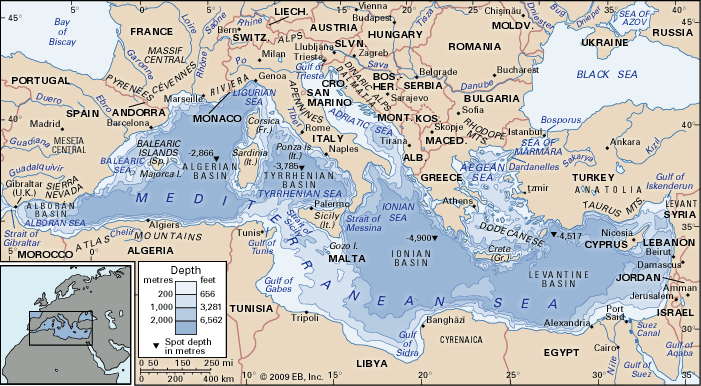
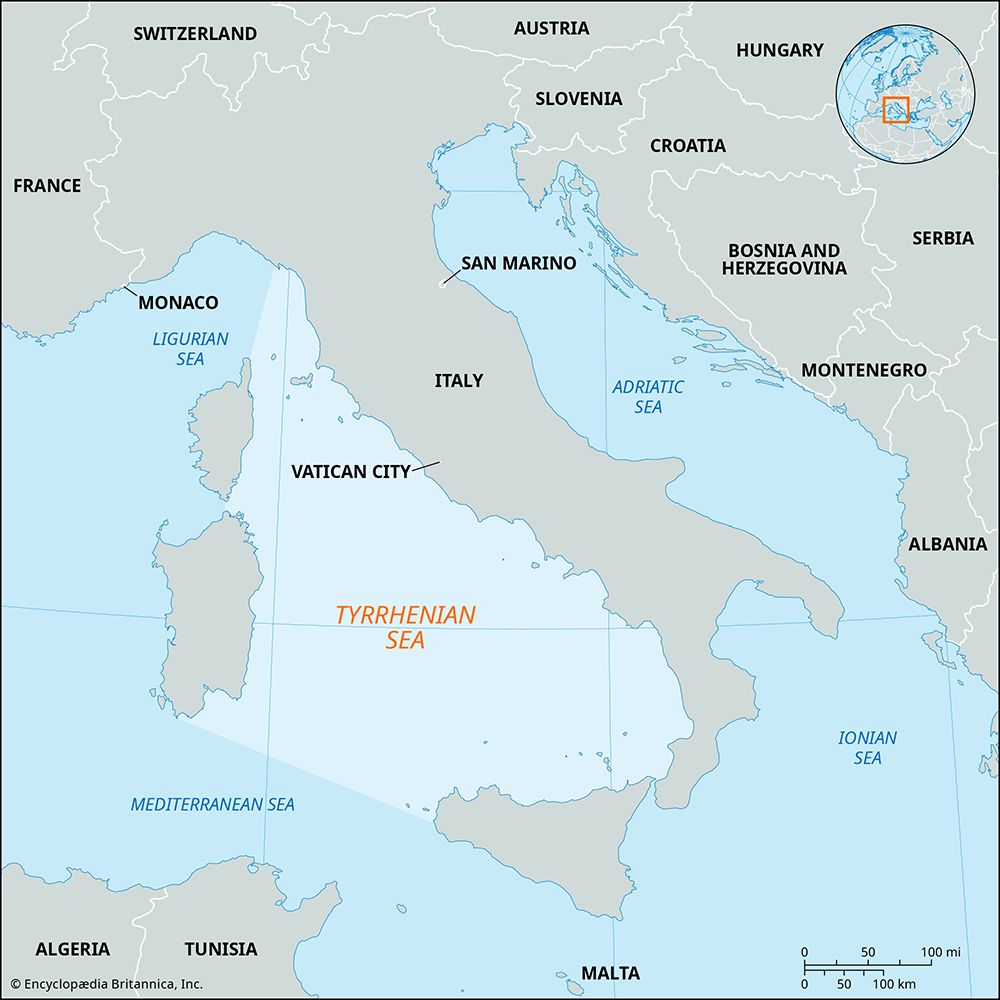
The Tyrrhenian Sea is an arm of the Mediterranean Sea situated between the western coast of Italy and the islands of Corsica, Sardinia, and Sicily.
Where is the Tyrrhenian Sea located and what are its geographical boundaries?
The Tyrrhenian Sea is an arm of the Mediterranean Sea situated between the western coast of Italy and the islands of Corsica, Sardinia, and Sicily.12
Its geographical boundaries are defined by the following connections and features:
- Northwest: It connects to the Ligurian Sea through the Tuscan Archipelago.1
- Southeast: It connects to the Ionian Sea via the Strait of Messina.1
- Landmasses: The sea is bordered to the east by the Italian peninsula and to the west by the islands of Corsica and Sardinia.12
The region is characterized by several notable inlets, including the Bay of Naples and the gulfs of Gaeta, Salerno, Policastro, and Sant’Eufemia.1
What are the major islands found in the Tyrrhenian Sea?
The Tyrrhenian Sea contains several notable island groups and individual islands, primarily located in the north and southeast regions of the sea.1
Major Island Groups
- Tuscan Archipelago: Located in the north, this group includes the island of Elba and Pianosa Island, the latter of which is known for its flat terrain and history as a place of banishment.13
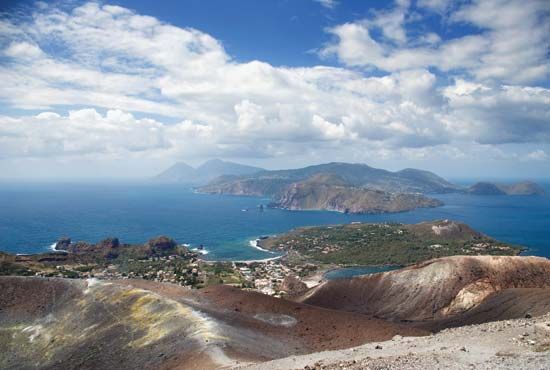
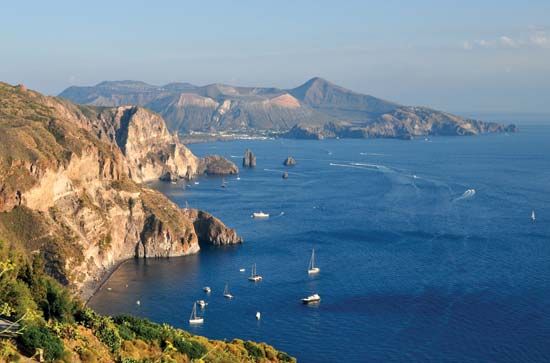
- Eolie Islands (Lipari Islands): Situated off the northern coast of Sicily, this volcanic group consists of seven major islands: Lipari, Salina, Vulcano, Stromboli, Panarea, Filicudi, and Alicudi.14
While Corsica, Sardinia, and Sicily serve as major geographical boundaries for the sea, they are distinct landmasses that define its western and southern limits rather than being islands contained within the sea itself.1
What is the average depth of the Tyrrhenian Sea, and how does it compare to other parts of the Mediterranean?
The provided search results do not contain information regarding the specific average depth of the Tyrrhenian Sea.
While the data identifies the Tyrrhenian Basin as a distinct submarine basin within the western Mediterranean Sea, it does not provide a numerical average depth for this specific area. For comparison, the broader Mediterranean reaches depths of approximately 16,000 feet (4,900 metres) in the Ionian Sea, which represents the deepest sounding in the entire Mediterranean region.6
How does the Tyrrhenian Sea’s ecosystem differ from other parts of the Mediterranean?
Sorry, the Britannica knowledge base does not contain information regarding how the Tyrrhenian Sea’s ecosystem specifically differs from other parts of the Mediterranean.
While scientific studies have investigated the pelagic animal life and seasonal circulation patterns between the Tyrrhenian and Balearic seas, the provided search results do not offer a comparative analysis of their respective ecosystems.
Sources
- Tyrrhenian Sea — Encyclopædia Britannica
- Mediterranean Sea - Natural divisions — Encyclopædia Britannica
- Pianosa Island — Encyclopædia Britannica
- Salina Island — Encyclopædia Britannica
- Eolie Islands — Encyclopædia Britannica
- Mediterranean Sea - Physiography — Encyclopædia Britannica
- Mediterranean Sea — Encyclopædia Britannica
- Mediterranean Sea - Study and exploration — Encyclopædia Britannica
Published on · 2 min read