Giglio Island
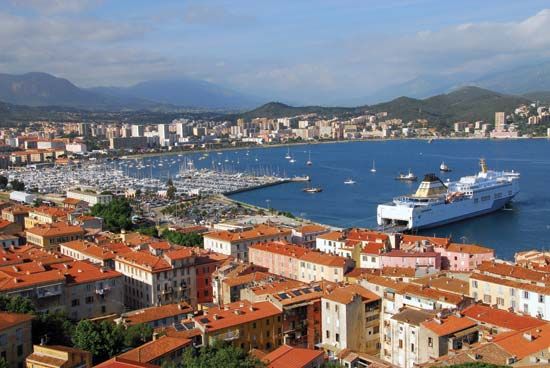
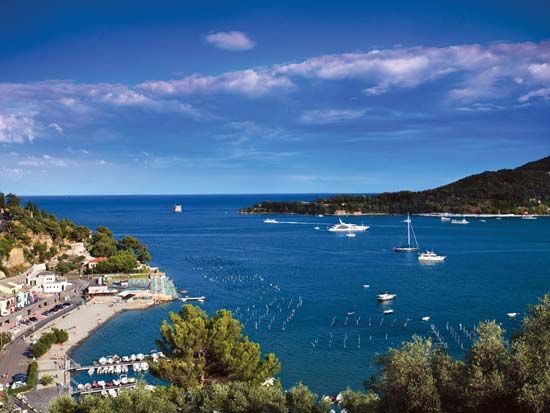
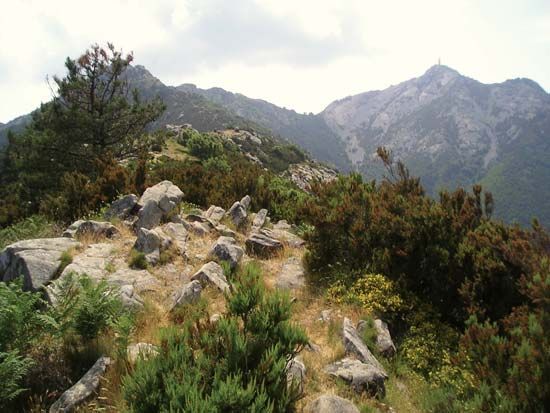
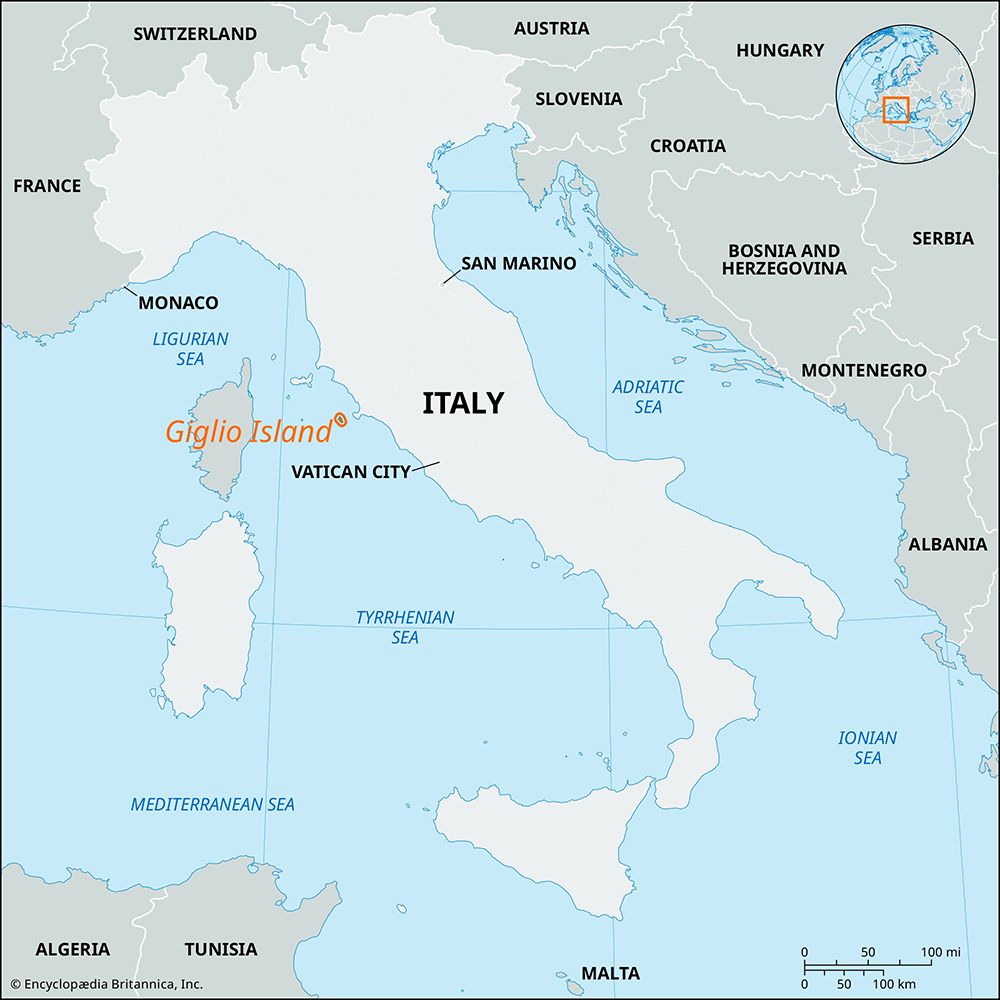
Giglio Island is a mountainous, volcanic islet located in the Tyrrhenian Sea off the west coast of Italy. Part of the Tuscan Archipelago, the island covers…
What is Giglio Island?
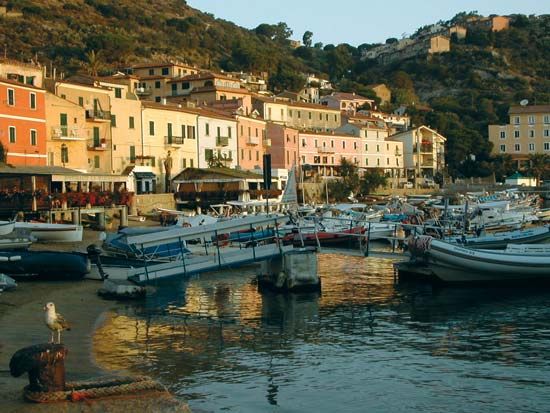
Giglio Island is a mountainous, volcanic islet located in the Tyrrhenian Sea off the west coast of Italy. Part of the Tuscan Archipelago, the island covers approximately 8 square miles and reaches an elevation of 1,634 feet.1
The island’s economy relies on wine production and offshore fishing, while tourism is supported by the medieval village of Giglio Castello and the resort area of Campese. Access to the island is provided through Giglio Porto, which maintains daily ferry connections to the Italian mainland.1
Historically, the island was under the control of Pisa and Florence during the Middle Ages. In more recent times, it gained international attention in 2012 when the cruise ship Costa Concordia struck rocks off its coast, leading to the vessel’s capsizing.12
What is the Tuscan Archipelago?
The Tuscan Archipelago is a group of islands located in the Tyrrhenian Sea between the western coast of Italy and the island of Corsica. This island chain serves as a geographic connection between the Ligurian Sea to the northwest and the rest of the Tyrrhenian basin.3
The archipelago includes several distinct islands, each with unique characteristics:
- Elba: The largest and most prominent island in the group.3
- Pianosa Island: A low-lying island situated southwest of Elba, historically known as a site of Roman banishment and later as a penal colony.4
- Giglio Island: A mountainous, volcanic island known for its wine production, fishing, and tourism.1
These islands are administratively part of the Italian region of Tuscany and have played various roles throughout history, ranging from strategic military positions to sites of exile and agricultural development.41
How do volcanic islands form?
Volcanic islands are primarily formed through three distinct geological processes that allow molten rock to reach the surface and accumulate on the seafloor:
- Subduction Zones: When two tectonic plates converge, one is forced beneath the other into the mantle. As the descending slab reaches depths of about 100 km, it releases volatile components that stimulate melting in the mantle above. This produces magma that rises to the surface, creating a curved line of islands known as an island arc, such as the Mariana Islands.56
- Hotspots: These are regions where mantle material upwells to melt through the crust. As a lithospheric plate moves over a stationary hotspot, a chain of volcanic islands is created over millions of years. The Hawaiian Islands are the classic example of this process, where the active volcanoes are located at one end of the chain, and the islands become progressively older with distance from the hotspot.76
- Oceanic Ridges: Along the axes of oceanic ridges, tectonic plates move apart, allowing magma to well up and create new seafloor. While most of this activity occurs underwater, some ridges are sufficiently elevated to emerge above sea level, as seen in Iceland.8
What is the history of the Tyrrhenian Sea?
The Tyrrhenian Sea, an arm of the Mediterranean Sea, has served as a vital maritime corridor throughout history, connecting the western coast of Italy with the islands of Corsica, Sardinia, and Sicily.410
While the provided search results do not offer a comprehensive chronological history of the sea itself, they highlight its enduring strategic importance. The sea’s exits—the Strait of Messina and the Strait of Sicily—have been critical to Mediterranean navigation and trade for millennia. Historically, the region’s coastal geography has been shaped by complex geological processes, including uplift and erosion, which influenced the development of ancient civilizations and port cities like Naples and Palermo.411
Furthermore, the sea has long been a focal point for maritime activity, exemplified by the Tiber River, which flows into the Tyrrhenian Sea near Ostia Antica. During the Punic Wars, Ostia became a vital naval base and commercial hub for the Roman grain trade, underscoring the sea’s role in supporting the economic life of classical empires.12
Sources
- Giglio Island — Encyclopædia Britannica
- Costa Concordia disaster: Top Questions — Encyclopædia Britannica
- Pianosa Island — Encyclopædia Britannica
- Tyrrhenian Sea — Encyclopædia Britannica
- hotspot — Encyclopædia Britannica
- plate tectonics - Island arcs — Encyclopædia Britannica
- volcano - Submarine volcanoes — Encyclopædia Britannica
- volcanism — Encyclopædia Britannica
- volcanic eruption — Encyclopædia Britannica
- Mediterranean Sea - Physiography — Encyclopædia Britannica
- Tyrrhenian Sea — Merriam-Webster
- Tiber River — Encyclopædia Britannica
- Vulcano Island — Encyclopædia Britannica
Published on · 3 min read