Suffolk
The Suffolk breed of sheep was developed in England between 1800 and 1850 by crossing Norfolk horned ewes with Southdown rams. While the Suffolk itself is a…
How has the Suffolk breed influenced other sheep breeds through crossbreeding?
The Suffolk breed of sheep was developed in England between 1800 and 1850 by crossing Norfolk horned ewes with Southdown rams. While the Suffolk itself is a product of crossbreeding, its primary influence on other sheep breeds today is as a terminal sire in commercial production.12
In modern commercial sheep farming, producers frequently utilize two-breed or three-breed crosses to maximize productivity. In these systems, white-faced ewes are often preferred for their maternal traits in range environments, while a black-faced sire—most notably the Suffolk or the Hampshire—is used to sire market lambs. This crossbreeding strategy leverages the Suffolk’s reputation as a prolific, early-maturing breed with an excellent mutton carcass, ensuring that the resulting offspring are well-suited for slaughter or for use as high-quality breeding stock. Following World War II, the popularity of the Suffolk grew significantly, often replacing smaller, less productive breeds in various regions.21
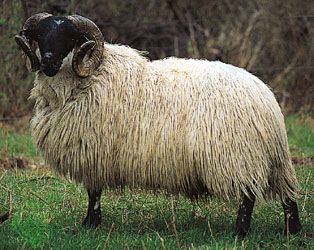
Where did the Suffolk breed originate, and how was it developed?
The Suffolk breed originated in England, where it was developed between 1800 and 1850. The breed was created by mating Norfolk horned ewes with Southdown rams.14
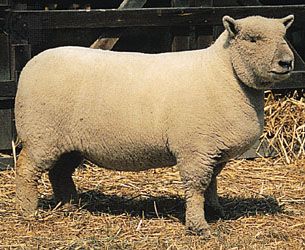
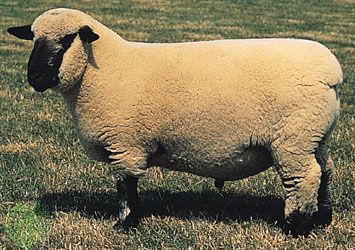
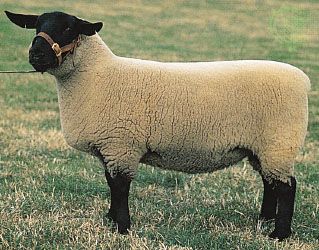
Characterized by their black faces and legs, large frames, and hornless heads, Suffolks are recognized as a fine mutton breed that matures early and exhibits significant stamina. While they are not considered ideal for wool production—as their fleeces are typically short, light, and contain black fibers—they became highly popular as lamb producers following World War II, often replacing smaller, less productive breeds in various regions.14
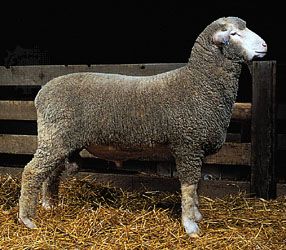
How does the Suffolk breed compare to other popular sheep breeds in terms of meat production?
The Suffolk is widely recognized as a fine mutton breed, valued for its ability to produce high-quality meat carcasses. Compared to other sheep breeds, its role in meat production is distinct due to its popularity as a terminal sire in commercial crossbreeding programs.15
Meat Production Characteristics
- Performance: Suffolks are prolific, early-maturing sheep that possess excellent mutton carcasses. Their large frame and rapid growth make them highly efficient for producing market lambs.15
- Commercial Use: In modern sheep farming, the Suffolk—along with the Hampshire—is frequently used as a black-faced sire crossed with white-faced ewes. This strategy combines the maternal traits of the ewes with the superior meat-producing qualities of the Suffolk to create lambs finished for slaughter.5
- Comparison to Other Breeds: While breeds like the Southdown are also noted for their ideal body conformation for meat, the Suffolk’s larger size and growth rate led to its increased popularity following World War II, often replacing smaller, less productive breeds. Other breeds, such as the Columbia or Cotswold, produce acceptable mutton but are often prioritized for their wool yield or specific fleece characteristics.531
What are the main physical characteristics of Suffolk sheep?
The Suffolk breed is characterized by several distinct physical traits that reflect its development as a high-quality meat producer.15
Key Physical Characteristics
- Face and Legs: The breed is easily identified by its characteristic black face and black legs.15
- Size and Build: Suffolks are large-framed, hornless sheep.15
- General Carriage: They are known for being energetic and alert, possessing a carriage that displays both stamina and quality.1
- Wool: While they are classified as a medium-wool breed, they are not considered ideal for wool production. Their fleeces are typically short in staple, light in weight, and contain undesirable black fibers.1
These physical attributes, combined with their early-maturing nature, have made them a popular choice for lamb production across various environments, including rangelands.1
Sources
Published on · 3 min read