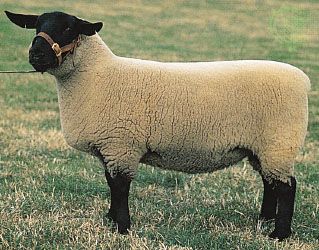
Southdown
The provided search results do not contain specific information regarding the breeding habits or lambing characteristics of Southdown sheep.
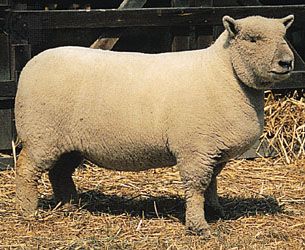
What are the breeding habits and lambing characteristics of Southdown sheep?
The provided search results do not contain specific information regarding the breeding habits or lambing characteristics of Southdown sheep.
While the records confirm that Southdowns are the oldest British breed and are primarily raised for their ideal body conformation for meat production, details concerning their reproductive cycles, fertility, or lambing traits are not included in the available data.1
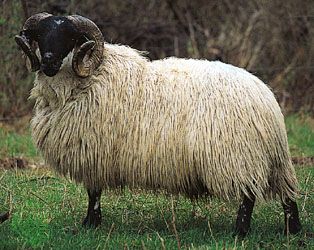
What are the main uses of Southdown sheep in agriculture?
Southdown sheep are primarily utilized in agriculture for meat production, as they possess an ideal body conformation for mutton. While they produce a high-quality, fine-textured wool, it is relatively short and light in weight, making the breed less focused on wool production compared to other varieties.1
Beyond their direct use for meat, Southdowns have played a significant role in the development of other sheep breeds through crossbreeding:
- Breed Development: The Suffolk breed was created in the 19th century by mating Norfolk horned ewes with Southdown rams.2
- Carcass Improvement: In New Zealand, Southdown rams have been crossed with Romney ewes to develop more uniform lamb carcasses for the meat industry.3
As the oldest of all British sheep breeds, the Southdown remains popular globally, particularly in the United States, Australia, and New Zealand, due to its established reputation as a reliable mutton breed.1
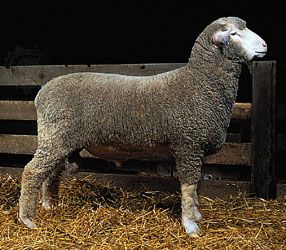
How does the Southdown breed compare to other popular sheep breeds?
The Southdown breed is distinguished as the oldest British sheep breed, primarily valued for its ideal body conformation for meat production. When compared to other popular breeds, its characteristics highlight specific agricultural trade-offs:
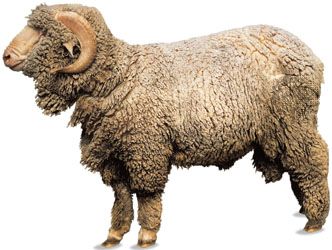
- Wool Quality vs. Yield: While Southdowns produce the finest wool among British breeds, the fleece is short and relatively light in weight. In contrast, breeds like the Merino are prized for excellent, fine, soft fleeces, while the Lincoln is known for heavy, coarse, long wool used for carpets.1
- Physical Stature: Southdowns are characterized by a small, rounded body. This differs significantly from the Lincoln, which is the world’s largest sheep, or the North Country Cheviot, known for its large, deep-bodied frame.1
- Breed Influence: The Southdown’s genetics have been foundational in developing other meat-focused breeds. For instance, the Suffolk was created by crossing Southdown rams with Norfolk horned ewes, resulting in a larger, more prolific, and early-maturing sheep.2
How has the Southdown breed influenced the development of other sheep breeds?
The Southdown breed has been a foundational influence in the development of modern sheep breeds, primarily due to its superior body conformation for meat production. Its genetic contributions have helped breeders enhance carcass quality and create new, specialized breeds.
Key examples of this influence include:
- Development of the Suffolk: Between 1800 and 1850, the Suffolk breed was developed in England by mating Norfolk horned ewes with Southdown rams. This cross resulted in a breed that is highly prolific, early-maturing, and noted for its excellent mutton carcasses.1
- Carcass Improvement in New Zealand: In the post-World War II era, breeders in New Zealand sought to produce more uniform lamb carcasses for the meat industry. They achieved this by crossing Southdown rams with Romney ewes, a practice that significantly impacted the quality of meat production in the region.2
By serving as a primary sire for crossbreeding, the Southdown has played a critical role in shaping the meat-producing capabilities of various sheep populations globally.32
Sources
- Southdown — Encyclopædia Britannica
- Suffolk — Encyclopædia Britannica
- Origins of agriculture - Sheep — Encyclopædia Britannica
Published on · 3 min read