Sheep
Domesticated sheep (Ovis aries) have been selectively bred into more than 200 breeds to suit diverse environments and human needs, primarily for meat, milk…
How do different breeds of sheep vary in their characteristics and purposes?
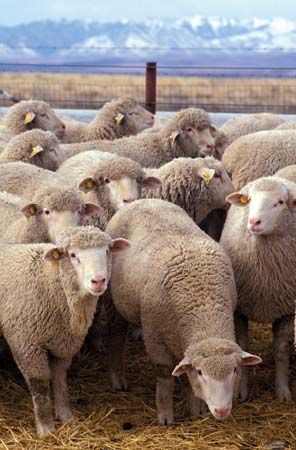
Domesticated sheep (Ovis aries) have been selectively bred into more than 200 breeds to suit diverse environments and human needs, primarily for meat, milk, and wool. These breeds are generally categorized by their fleece type: fine, medium, long, or fur.12
Classification and Purpose
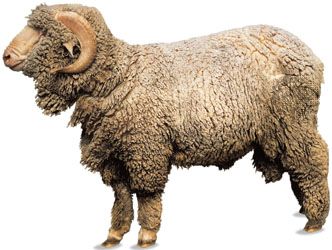
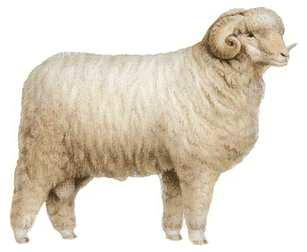
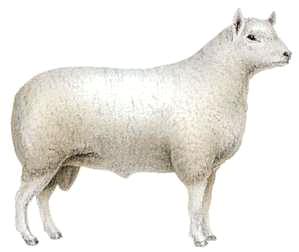
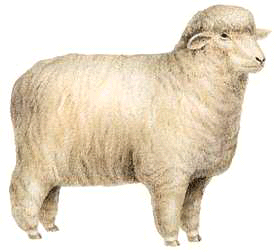
- Fine-Wool Breeds: Primarily raised for high-quality, soft wool production. The Merino is the foundational fine-wool breed, while the Rambouillet is a prominent descendant known for rapid lamb maturation.12
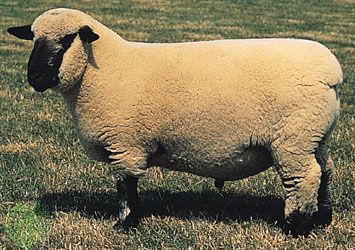
- Medium-Wool Breeds: Often raised for meat (mutton). Many, such as the Hampshire, Suffolk, and Southdown, are prized for their superior carcass quality.12
- Long-Wool Breeds: These include the Lincoln and Cotswold, which produce coarse, long fibers suitable for carpets and rugs, alongside meat production.1
- Fur Breeds: The Karakul is raised specifically for the pelts of young lambs.12
Modern commercial operations often utilize crossbreeding to combine desirable traits, such as the hardiness of range sheep with the meat quality of black-faced sires.134
What are the primary uses of sheep in modern agriculture and industry?
Sheep have been integral to human agriculture since their domestication around 10,000 BCE. In modern industry and farming, they serve several primary purposes:5
- Wool Production: Sheep are primarily raised for their fleece, which is a valuable, lightweight, and durable commodity suitable for global export.65
- Meat: They are a significant source of meat, specifically lamb and mutton, which are consumed worldwide.5
- Dairy: While less common than cattle, sheep are utilized for milk production, particularly in southern Europe, where it is processed into various dairy products.7
- Industrial By-products: Beyond food and fiber, sheep provide lanolin, a purified wool grease used extensively in the pharmaceutical and cosmetic industries for ointments, emollients, and skin care products. Additionally, their hides and pelts are used in the manufacture of leather.89
Because they are ruminants capable of subsisting on sparse forage and brushy weeds, sheep remain highly efficient livestock for utilizing land that might otherwise be unproductive.6510
How long have sheep been domesticated, and where did their domestication originate?
Sheep were among the first animals to be domesticated by humans, with evidence suggesting this process began at least 12,000 years ago in the region now known as Iraq. Other historical records indicate that domestication from wild species, such as the mouflon, was well underway by at least 5000 BCE, with remains found at numerous early human habitation sites across the Middle East, Europe, and Central Asia.111213
Early agriculturalists in the Fertile Crescent and the Zagros Mountains of Iran were instrumental in this transition, initially managing herds for meat, milk, and hides. While early management focused on these resources, the specialized weaving of wool did not emerge until several thousand years later, around 1500 BCE.14211
How has selective breeding affected the evolution of domestic sheep?
Selective breeding has fundamentally reshaped the evolution of domestic sheep, moving them far beyond the characteristics of their wild progenitors. By systematically selecting for specific traits, breeders have developed over 200 distinct breeds tailored to diverse environmental conditions and human requirements for meat, milk, and wool.32
Methods of Improvement
The transformation of sheep began in earnest with pioneers like Robert Bakewell, who in the 18th century introduced methodical selection, inbreeding, and culling to exaggerate desirable traits. Modern breeding continues this legacy through crossbreeding and intermating. For example, the Columbia and Targhee breeds were developed in the United States by crossing long-wool mutton breeds with fine-wool Rambouillets to create animals suited for Western range conditions that excel in both wool and meat production.1642
Key Evolutionary Shifts
- Fleece Quality: While wild sheep possess a combination of hair and a short undercoat of wool, domestic breeds have been selected for specialized fleece, ranging from the fine, soft wool of the Merino to the long, coarse fibers of the Lincoln used for carpets.32
- Conformation and Size: Breeders have altered body shapes to prioritize meat yield, such as the barrel-shaped Leicester or the large, muscular Suffolk.162
- Reproductive Traits: Selective pressure has increased the frequency of twins in certain breeds and enhanced milk production in others, such as the Dorset, to support faster lamb growth.12
Sources
- Livestock farming - Breeds — Encyclopædia Britannica
- Sheep — Encyclopædia Britannica
- Origins of agriculture - Sheep — Encyclopædia Britannica
- Livestock farming - Management — Encyclopædia Britannica
- Livestock farming - Sheep — Encyclopædia Britannica
- Livestock — Encyclopædia Britannica
- Lanolin — Encyclopædia Britannica
- Livestock farming - Feeding — Encyclopædia Britannica
- dairy product — Encyclopædia Britannica
- meat processing - By-products — Encyclopædia Britannica
- Did you know? — Merriam-Webster
- 6 Domestic Animals and Their Wild Ancestors — Encyclopædia Britannica
- Origins of agriculture - Southwest Asia — Encyclopædia Britannica
- Origins of agriculture - Sumer — Encyclopædia Britannica
- Sheep: Top Questions — Encyclopædia Britannica
- Robert Bakewell — Encyclopædia Britannica
Published on · 3 min read