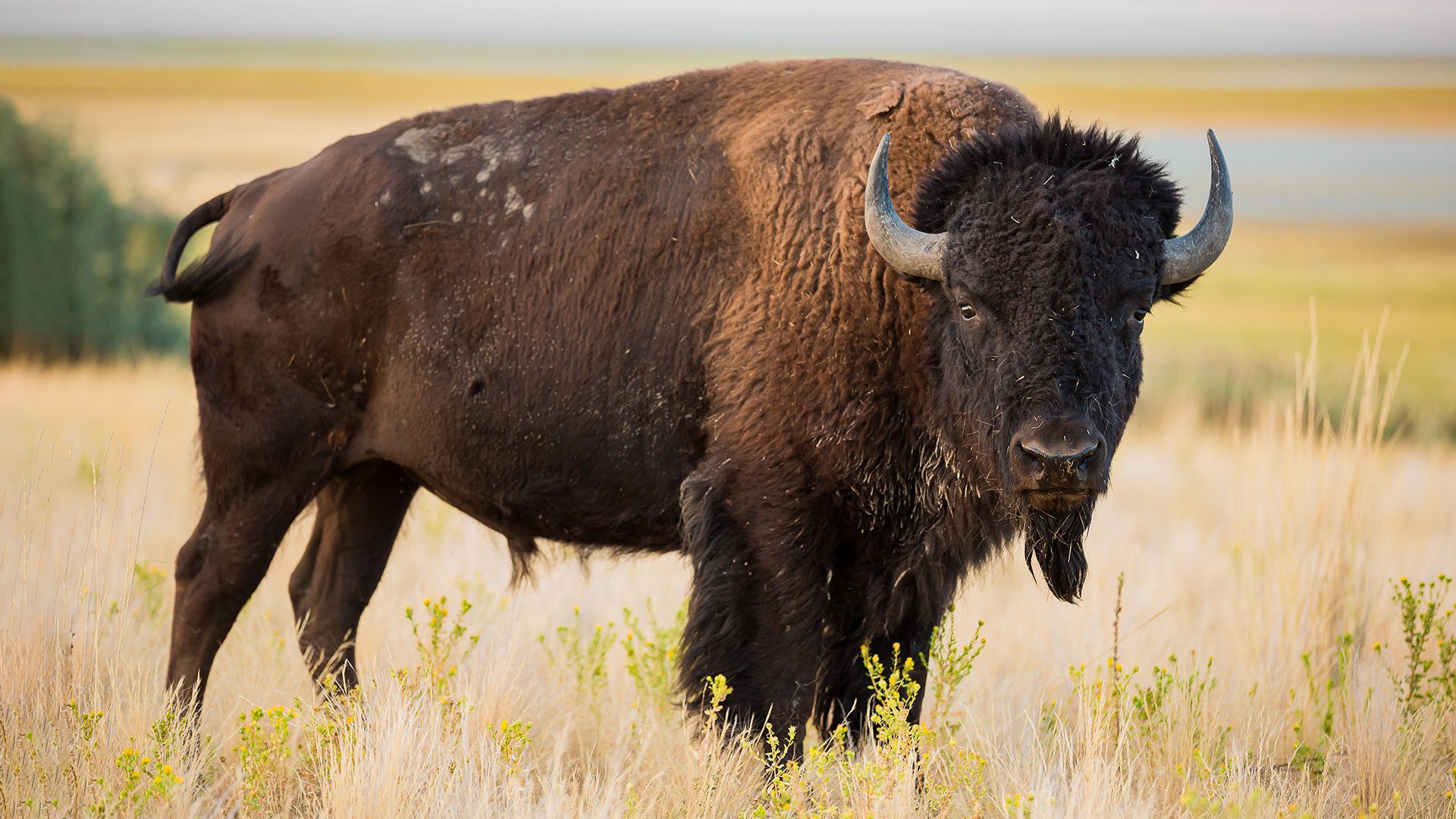
Gaur
The gaur (Bos gaurus) is a large species of wild cattle belonging to the family Bovidae. It is recognized as the largest of all wild cattle, capable of…
What is gaur?
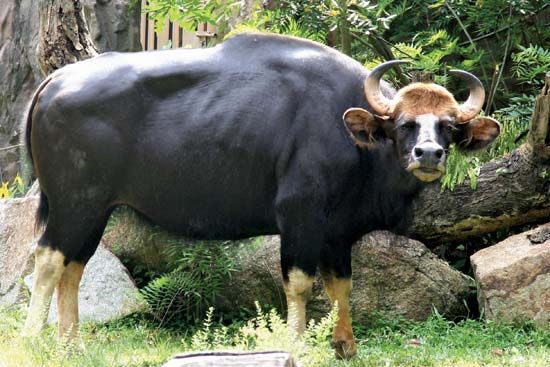
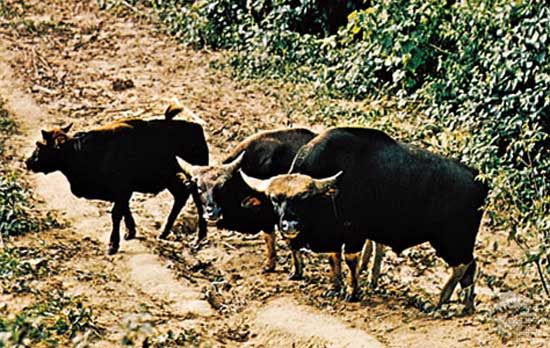
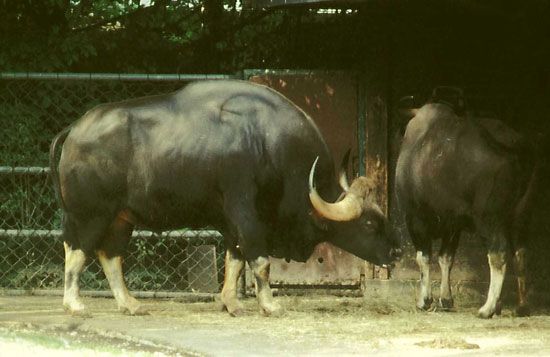
The gaur (Bos gaurus) is a large species of wild cattle belonging to the family Bovidae. It is recognized as the largest of all wild cattle, capable of reaching a shoulder height of 1.8 meters (6 feet) or more.1
Physically, the gaur is heavy-bodied with a broad forehead, short thick curved horns, and a distinctive high ridge on the forepart of its back. It is often characterized by its blue eyes and white “stockings” on its legs. While bulls are typically dark brown or blackish, cows and young gaurs are reddish brown.12
These animals live in small herds within the mountain forests of India, Southeast Asia, and the Malay Peninsula. Due to a significant reduction in their population, they now survive only in scattered herds across parts of India, Myanmar, Thailand, and Peninsular Malaysia.1
What are some other species of wild cattle found in Asia?
In addition to the gaur, Asia is home to several other species of wild cattle, many of which are currently threatened by habitat loss and overhunting. Notable species include:56
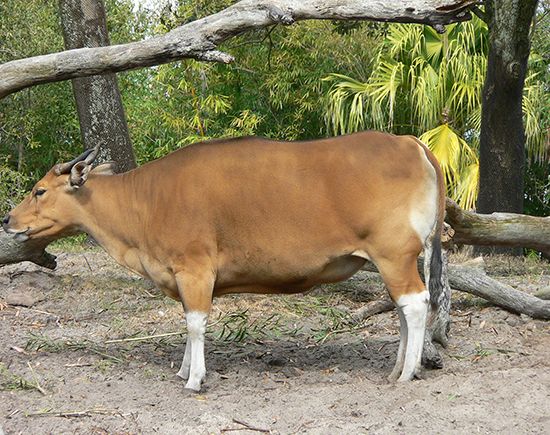
- Banteng (Bos banteng): A shy species found in Southeast Asian hill forests. They resemble domestic cows and are characterized by a slight dorsal ridge, white rumps, and white “stockings” on their legs.7
- Kouprey (Bos sauveli): An elusive and highly endangered wild ox of Indochina. It is intermediate in size and possesses a distinctive large dewlap and frayed horn tips in older bulls.1
- Wild Water Buffalo (Bubalus arnee): A massive animal native to Southeast Asian swamps and forests. They are known for their large, splayed hooves that facilitate movement through deep mud and their ability to wallow to regulate body temperature.5
- Yak (Bos grunniens): While often associated with domestication, wild populations exist and are adapted to the harsh, cold environments of high-altitude regions.68
These species are part of the tribe Bovini, which is uniquely adept at exploiting a wide variety of biomes and habitats across the continent.6
How do gaurs interact with other animals in their forest habitat?
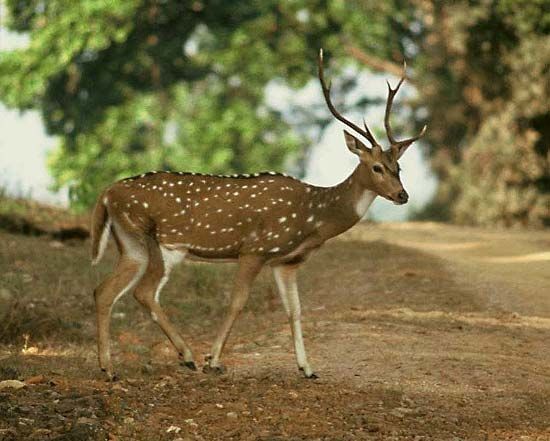
In their forest habitats, gaurs interact with other animals primarily through competition for food resources and shared ecological niches. Because gaurs are large, non-specialized herbivores that graze on tall, coarse grasses and browse on leaves by breaking down saplings, they often occupy the same environments as other ruminants, such as sambar deer, chital, barasingha, and blackbuck.10
While these species may inhabit the same general areas, they minimize direct competition through behavioral differences and specific dietary preferences. For instance, while gaurs and sambar deer are both active primarily at night, they target different vegetation types, with gaurs focusing on coarser grasses and saplings.1
Gaurs also face pressure from predators, most notably tigers, which are their primary natural threat. In some instances, the presence of human settlements can influence these interactions; for example, the gayal—a subspecies of the gaur—has historically benefited from a form of self-domestication by foraging near human villages, where they gain protection from predators.10
What conservation efforts are in place to protect the gaur?
Conservation efforts for the gaur primarily focus on habitat preservation and legal protection, as the species has been greatly reduced in number and now survives only in scattered herds across India, Myanmar, West Malaysia, and Thailand.1
In India, the Wildlife (Protection) Act, 1972 serves as a foundational legal framework, facilitating the establishment of national parks and wildlife sanctuaries. These protected areas, such as Kanha National Park and Tadoba National Park, provide essential refuges for gaurs alongside other species like the Royal Bengal tiger and barasingha.12
Beyond individual reserves, conservationists emphasize the importance of habitat connections. Because fragmented habitats can lead to inbreeding and increased demographic risks, creating wildlife corridors is a critical intervention. These corridors link isolated forest fragments, allowing populations to maintain genetic diversity and access necessary resources. Despite these measures, the long-term survival of the gaur remains challenged by ongoing habitat loss, fragmentation, and uneven enforcement of environmental regulations outside of well-protected zones.1312
We could dive deeper into the specific challenges of managing wildlife corridors in densely populated regions.
Sources
- gaur — Encyclopædia Britannica
- gaur — Merriam-Webster
- false gharial — Encyclopædia Britannica
- List of cattle — Encyclopædia Britannica
- banteng — Encyclopædia Britannica
- kouprey — Encyclopædia Britannica
- Water buffalo — Encyclopædia Britannica
- bovid - Natural history — Encyclopædia Britannica
- bovid - Evolution and diversification — Encyclopædia Britannica
- artiodactyl - Food habits — Encyclopædia Britannica
- gayal — Encyclopædia Britannica
- Environment and sustainable development in India - Wildlife — Encyclopædia Britannica
- conservation - Habitat connections — Encyclopædia Britannica
Published on · 3 min read