Susquehanna River
The Susquehanna River holds significant historical and cultural importance as a vital land corridor and a center for regional development in the eastern…
What are the major historical and cultural significance of the Susquehanna River?
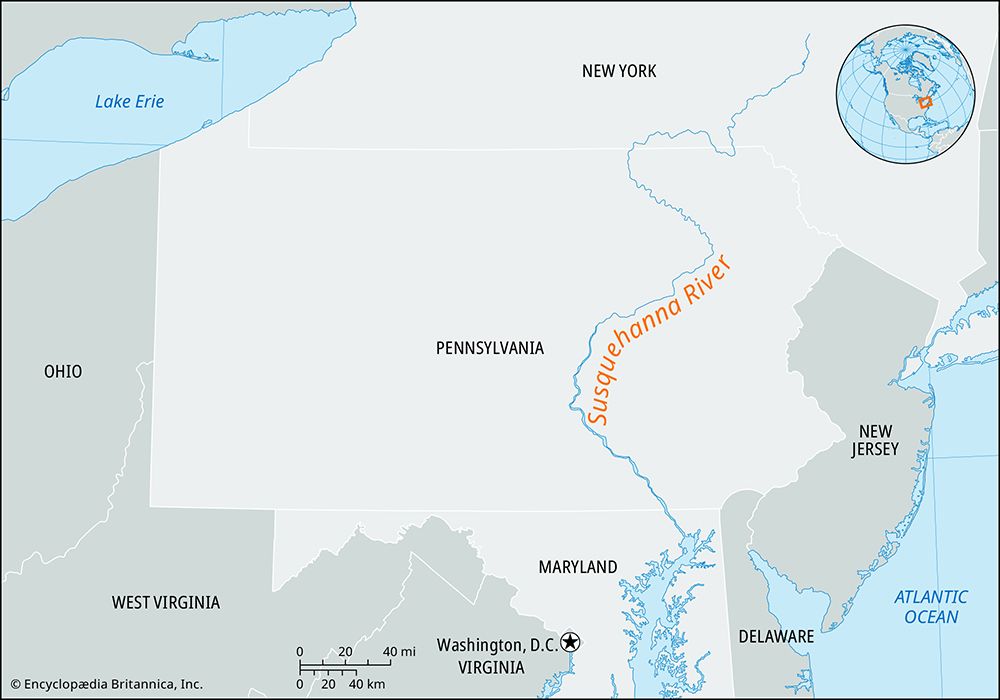
The Susquehanna River holds significant historical and cultural importance as a vital land corridor and a center for regional development in the eastern United States. While the river itself was not a major waterway for navigation due to its many rapids and obstructions, its valley served as a crucial land route to the Ohio River system.1
Culturally, the river is deeply tied to the Susquehannock, an Iroquoian-speaking people who lived in palisaded towns along its banks. The name “Susquehanna” is believed to derive from Delaware Indian words meaning “muddy river”. Historically, the region was a site of conflict between the Susquehannock and the Iroquois, and the area later saw the displacement and tragic massacre of many remaining Susquehannock in 1763.23
Economically, the valley became a focal point for coal mining and, more recently, a source of hydroelectric power with plants located in Pennsylvania and Maryland. Additionally, the river’s resources were historically targeted by merchants seeking to capture trade, as evidenced by the construction of the Chesapeake and Delaware Canal.14
What are some of the major cities located along the Susquehanna River?
Several major cities and communities are situated along the Susquehanna River as it flows through New York, Pennsylvania, and Maryland. Key urban centers located along the river and its immediate tributaries include:
- Binghamton, New York1
- Wilkes-Barre, Pennsylvania1
- Scranton, Pennsylvania (located on the Lackawanna River)1
- Williamsport, Pennsylvania (located on the West Branch of the Susquehanna)1
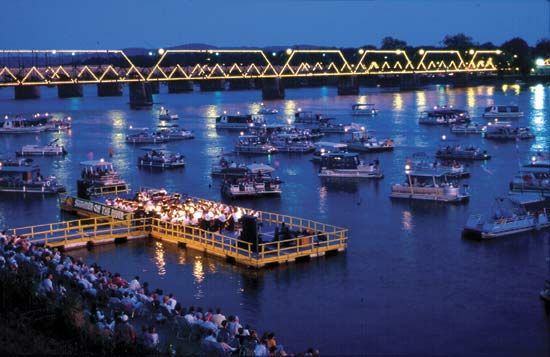
- Harrisburg, Pennsylvania (the state capital)16
- Havre de Grace, Maryland (located at the head of the Chesapeake Bay)1
- Hallstead and Great Bend, Pennsylvania3
Additionally, the Harrisburg area serves as a hub for several surrounding communities, including Middletown and Hershey, which are part of its broader urbanized region.6
What is the geographical location and length of the Susquehanna River?
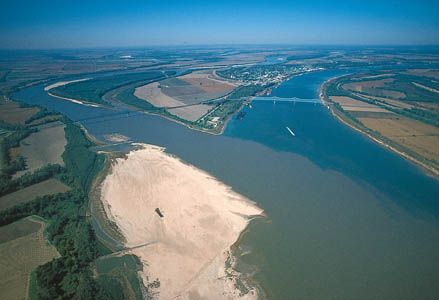
The Susquehanna River is one of the longest rivers on the Eastern Seaboard of the United States, stretching approximately 444 miles (715 km) in length.1
Geographically, the river originates at Otsego Lake in central New York. From there, it winds through the Appalachian Plateau across New York, Pennsylvania, and Maryland. The river ultimately empties into the head of the Chesapeake Bay at Havre de Grace, Maryland. Its basin, which includes several major tributaries, drains an expansive area of 27,570 square miles (71,410 square km).1
What Native American tribes historically lived along the Susquehanna River?
The Susquehannock were the primary Native American tribe historically associated with the Susquehanna River valley. An Iroquoian-speaking people, they traditionally lived in palisaded towns along the river in the regions now known as New York, Pennsylvania, and Maryland.2
The Susquehannock were semisedentary agriculturalists who were first documented by Captain John Smith in 1608. Throughout the 17th century, they faced significant pressure from the Iroquois Confederacy, which sought to expand its territory and control over the fur trade. The Iroquois ultimately conquered the Susquehannock in 1676, forcing them to relocate, though some were later permitted to return to their ancestral lands.27
While the Susquehannock were the dominant group in the valley, the broader region was home to various Algonquian-speaking tribes who also interacted with the river’s geography, particularly in areas of Maryland where they faced territorial pressure from the Susquehannock.78
Sources
- Susquehanna River — Encyclopædia Britannica
- Susquehannock — Encyclopædia Britannica
- Susquehanna — Encyclopædia Britannica
- Susquehanna — Merriam-Webster
- Delaware - Economic development in the 19th century — Encyclopædia Britannica
- Harrisburg — Encyclopædia Britannica
- Northeast Indian - Territorial and political organization — Encyclopædia Britannica
- Maryland - History — Encyclopædia Britannica
Published on · 3 min read