Suwannee River
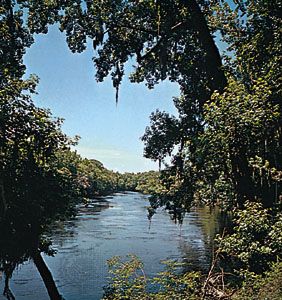
The Suwannee River is fed by numerous springs and three primary tributaries:
What are the main tributaries of the Suwannee River?
The Suwannee River is fed by numerous springs and three primary tributaries:
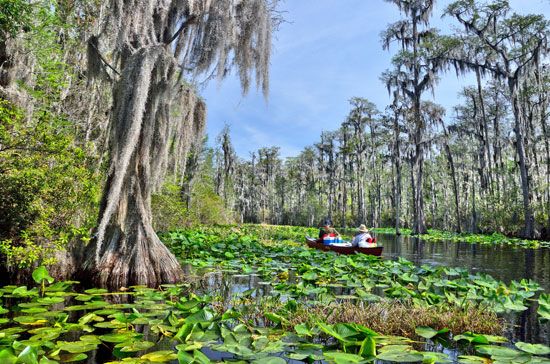
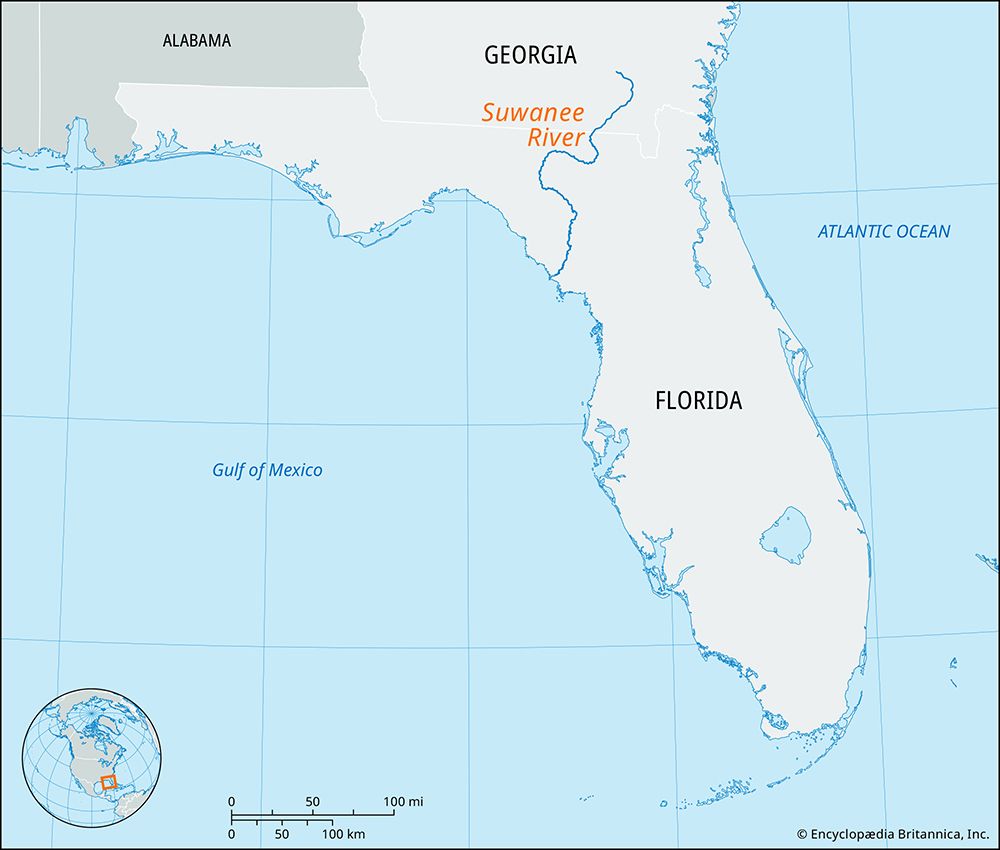
Rising in the Okefenokee Swamp, the river flows 250 miles through Georgia and Florida before reaching the Gulf of Mexico.12
What is the significance of the Suwannee River in American folklore and music?
The Suwannee River holds a significant place in American culture primarily due to its association with the famed song “Old Folks at Home,” written by the American composer Stephen Foster. Often referred to as “Swanee River,” the song was published in 1851 and became one of the most recognizable pieces of 19th-century American music.13
While Foster is celebrated for his sentimental ballads and minstrel songs, his work—including “Old Folks at Home”—was deeply influenced by the musical traditions he encountered throughout his life, including those of Black laborers and church services. The song cemented the river’s status as an iconic symbol of the American South in the national consciousness, despite the fact that Foster himself only visited the region once, in 1852. Beyond its musical legacy, the river’s history includes its role as a 1780s rendezvous point for pirates within the secluded inlets of Suwannee Sound.31
What recreational activities are popular along the Suwannee River?
The Suwannee River offers a variety of outdoor recreational opportunities centered on its natural environment. Because the river is home to an abundance of wildlife, it is a popular destination for fishing, with species such as bass, perch, catfish, and bream being plentiful in its waters.1
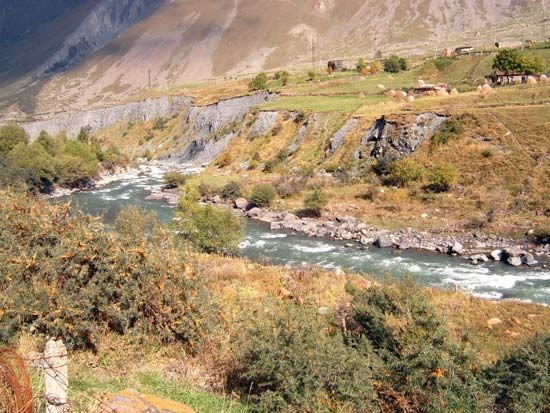
The river’s diverse landscape also supports hunting and wildlife observation. The northern section features shoals, boulders, and cedar-lined limestone banks, while the southern stretches are characterized by lush vegetation, including cypresses, oaks, and various species of gardenias, orchids, and ixias, which provide a scenic backdrop for small game hunting and nature exploration.1
How does the Suwannee River contribute to the local ecosystem and water supply?
The Suwannee River plays a vital role in the regional ecosystem, originating in the Okefenokee Swamp and flowing through diverse habitats that support a wide array of flora and fauna.14
Ecosystem Contributions
The river acts as a critical corridor for biodiversity. Its northern reaches, characterized by shoals and limestone banks, transition into southern stretches teeming with cypresses, oaks, and various plant species like gardenias and orchids. These environments provide essential habitats for numerous fish species, including bass, perch, catfish, and bream, as well as various small game. As a river system, it functions as a drainage network that sustains the surrounding wetlands, which are defined by their ability to manage water levels and support specialized vegetation adapted to waterlogged soils.14
Water Supply and Dynamics
The Suwannee is fed by numerous springs and several major tributaries, including the Withlacoochee, Alapaha, and Santa Fe rivers. While the river is a significant hydrological feature, its role in the broader water supply is tied to the complex drainage patterns of the region’s topography and bedrock.14
Sources
- Suwannee River — Encyclopædia Britannica
- Suwannee — Merriam-Webster
- Stephen Foster — Encyclopædia Britannica
- Swamp — Encyclopædia Britannica
Published on · 2 min read