Taquari River
The Taquari River is a waterway in south-central Brazil that rises in the state of Mato Grosso do Sul, near Alto Araguaia. It flows in a southwesterly…
What is Taquari River?
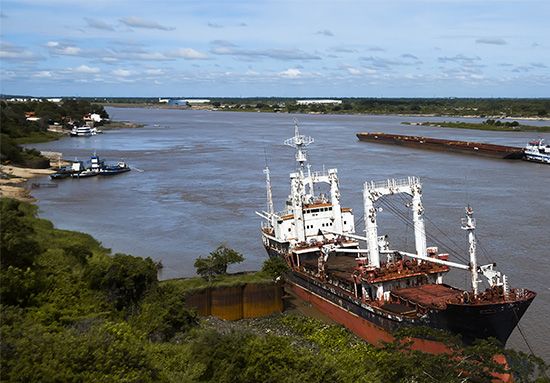
The Taquari River is a waterway in south-central Brazil that rises in the state of Mato Grosso do Sul, near Alto Araguaia. It flows in a southwesterly direction for approximately 350 miles (560 km), eventually crossing the floodplain of the Pantanal to join the Paraguay River east of Corumbá.12
The river serves as one of the key tributaries of the upper Paraguay River system, which sustains the Pantanal—one of the world’s largest freshwater wetlands. The headstreams of the Taquari are notable for the presence of diamond washings. As part of the Pantanal ecosystem, the river contributes to a region that is vital for biodiversity, water purification, and climate stabilization, though it faces ongoing environmental challenges due to human activity.21
What makes the Pantanal one of the world’s largest wetlands?
The Pantanal is recognized as one of the world’s largest freshwater wetlands due to its immense scale and unique hydrological cycle. Covering an estimated area between 54,000 square miles (140,000 square km) and 81,000 square miles (210,000 square km), it functions as a gigantic seasonal floodplain located primarily within the Brazilian states of Mato Grosso and Mato Grosso do Sul.23
Several factors contribute to its status and ecological significance:
- Seasonal Dynamics: During the summer rainy season (November–March), the Paraguay River and its tributaries, such as the Taquari and São Lourenço rivers, overflow their banks. This inundates the lowlands, creating a vast, shallow lake interspersed with swamps, marshes, and island-like high ground.24
- Hydrological Network: The region features a complex network of surface waterways and underground streams that facilitate water flow and drainage, which only partially occurs during the drier winter months.2
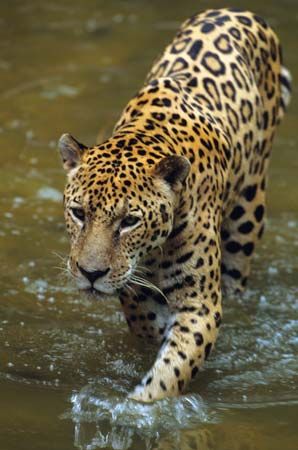
- Ecological Role: The sediments deposited by these floods provide high soil fertility, supporting diverse vegetation. The area serves as a critical sanctuary for a vast array of wildlife, including endangered species like the jaguar and giant otter, while performing essential functions such as water purification and climate stabilization.2
How do seasonal floods change the landscape of the Pantanal?
Seasonal floods fundamentally transform the Pantanal landscape by dictating its transition between a vast, interconnected wetland and a partially drained plain.
During the summer rainy season (November–March), the Paraguay River and its tributaries, such as the Taquari and São Lourenço rivers, overflow their banks. This inundation covers the lowlands, creating a massive, shallow lake environment characterized by innumerable swamps and marshes, while leaving only higher ground—such as levees and low hills—exposed as island-like features.245
As the drier winter season (April–September) arrives, the rivers withdraw into their banks. However, the landscape does not dry completely; the lowlands remain partially saturated, supported by a complex network of surface and underground streams. Beyond reshaping the terrain, these floods carry sediments that deposit essential nutrients, conferring great fertility on the soil. This nutrient-rich environment supports a diverse array of vegetation, including grasses, rushes, and vibrant flowers, which in turn sustains the region’s rich biodiversity.24
What types of wildlife are commonly found in the Pantanal region?
The Pantanal is a sanctuary for an exceptionally diverse range of wildlife, supported by its nutrient-rich, seasonally flooded landscape. The region hosts thousands of butterfly varieties, hundreds of fish species, and a vast array of mammals, reptiles, and birds.26
Mammals
The wetlands are home to many iconic species, including howler and capuchin monkeys, tapirs, capybaras, armadillos, and anteaters. Several endangered or rare animals also find refuge here, most notably the jaguar, giant anteater, marsh deer, and giant otter.26
Birds
With roughly 600 species, the birdlife is prolific. Common sightings include herons, ibises, ducks, and migratory geese. The region also supports the jabiru stork, the greater rhea, and the cobalt-blue hyacinth macaw, which is the world’s largest parrot.26
Reptiles and Fish
The waterways teem with anacondas, caimans, and various snakes, including the fer-de-lance and rattlesnakes. Notable fish species include the giant pirarucu.26
Sources
- Taquari River — Encyclopædia Britannica
- Pantanal — Encyclopædia Britannica
- Paraguay River — Encyclopædia Britannica
- Río de la Plata - Physiography of the Paraguay basin — Encyclopædia Britannica
- Brazil - Pantanal — Encyclopædia Britannica
- Brazil - Highlands, coastal regions, and the Pantanal — Encyclopædia Britannica
Published on · 3 min read