Tripura Plains
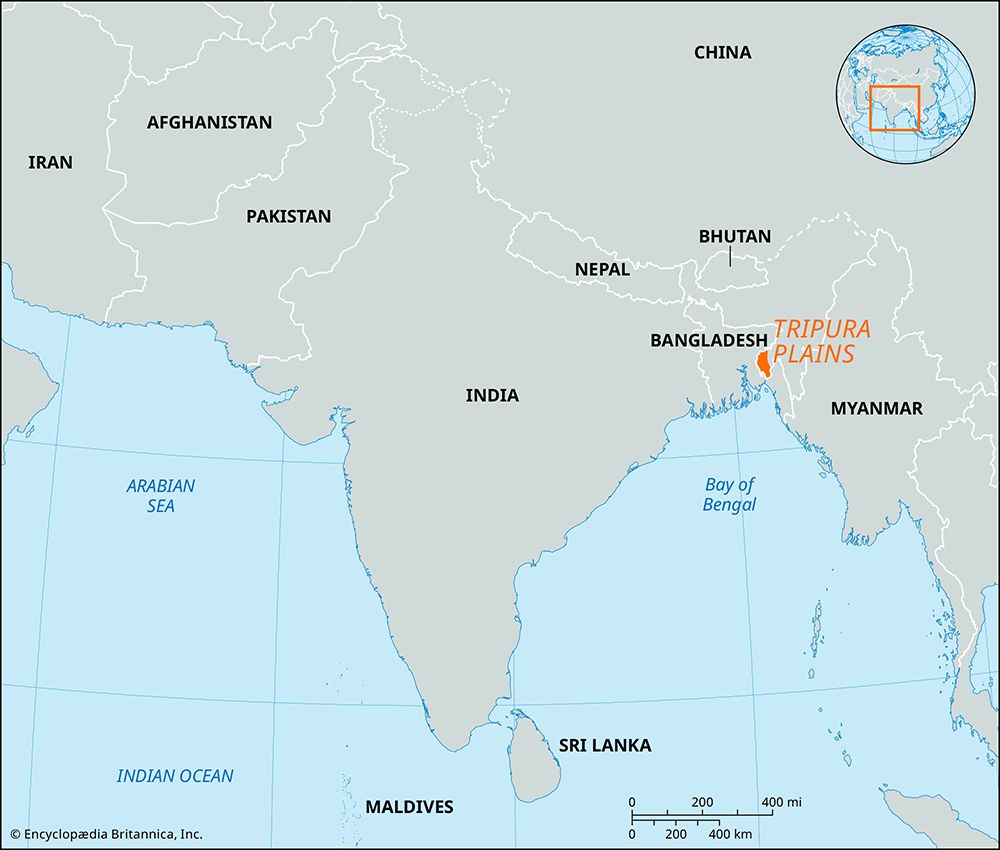
The Tripura Plains are a region covering approximately 1,600 square miles (4,150 square km) in the southwestern part of the Tripura state in northeastern…
What is Tripura Plains?
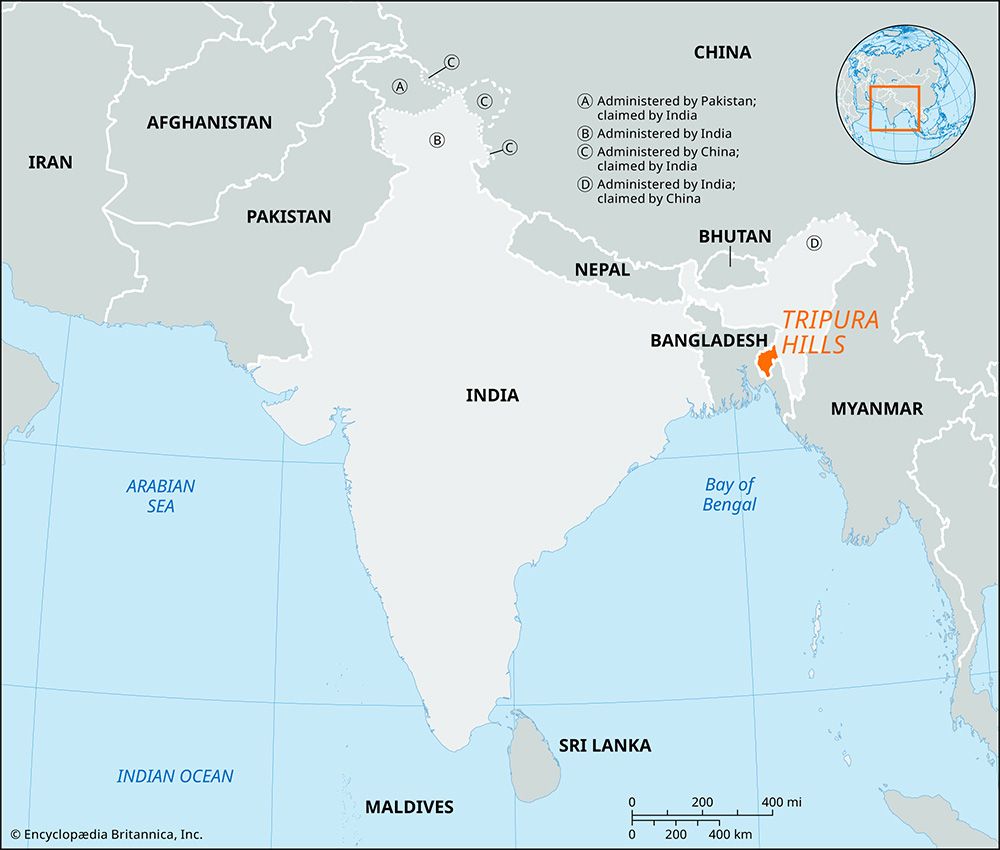
The Tripura Plains are a region covering approximately 1,600 square miles (4,150 square km) in the southwestern part of the Tripura state in northeastern India1. Situated west of the Tripura Hills, these plains form a section of the greater Ganges-Brahmaputra lowlands.12
The landscape is characterized by forest cover, lakes, and marshes. While the soil is generally thin and leached of minerals by tropical conditions, the region serves as the state’s agricultural hub. Principal crops include rice, jute, tea, and cotton, supplemented by horticulture, fish farming, and tree farming. Local industries include cloth weaving, fruit canning, and the production of bamboo, cane, and leather goods. Agartala is the principal city of the plains, with other notable towns including Belonia and Khowai. The area is also known as the Agartala Plain, where elevations remain below 200 feet (60 meters).13
What are the major crops grown in the Tripura Plains?
Agriculture serves as the primary occupation in the Tripura Plains. The major crops cultivated in this region include:
- Rice: The principal crop grown throughout the area.16
- Jute: A significant cash crop used for manufacturing items like sacking, burlap, and twine.16
- Tea: A major agricultural product of the region.1
- Cotton: Another key cash crop produced in the plains.16
In addition to these major crops, the region supports various forms of horticulture, including the cultivation of fruits such as pineapples, jackfruit, oranges, and mangoes, as well as coconuts and potatoes. Farmers also engage in tree farming and fish farming to supplement agricultural output.61
How do the Tripura Hills differ from the plains?
The Tripura Hills and the Tripura Plains differ significantly in their topography, elevation, and geological character.
Topography and Elevation
- Tripura Hills: This region is defined by a series of parallel, north-south-trending mountain folds that decrease in elevation toward the south and west. The terrain is rugged, with peaks reaching up to 3,280 feet (1,000 meters) in the Jampai Tlang range.25
- Tripura Plains: Located west of the hills, these plains are an extension of the Ganges-Brahmaputra lowlands. They are characterized by low-lying, open, and marshy terrain with elevations consistently below 200 feet (60 meters).21
Drainage and Soil
- Tripura Hills: The hills serve as the source for several rivers, including the Dhalai, Khowai, and Juri, which flow through deep valleys. The soils here are typically coarse-textured sandy loams that are largely devoid of humus.5
- Tripura Plains: The plains are drained by numerous rivers, such as the Gumti, and are dotted with lakes and marshes. While the soil is thin, the region remains the state’s primary agricultural hub.21
What role do the Ganges and Brahmaputra rivers play in this region?
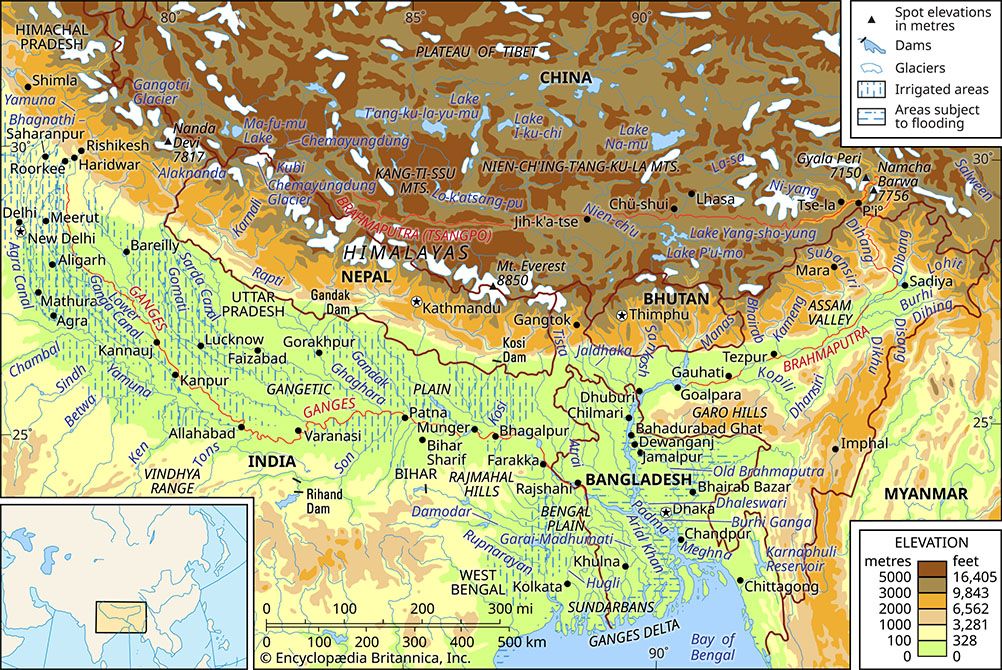
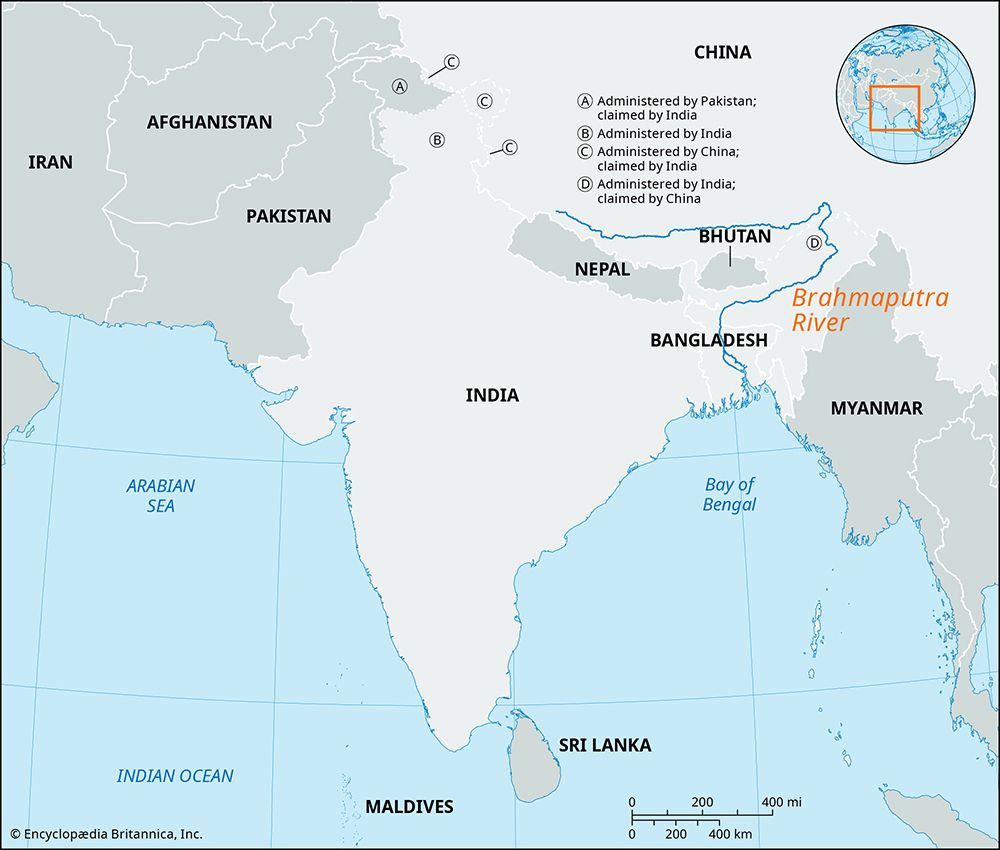
The Tripura Plains are geographically defined as a section of the greater Ganges-Brahmaputra lowlands, also known as the Eastern Plains. While the Tripura Plains themselves are drained by local rivers such as the Gumti, their physical character is fundamentally linked to the broader Ganges-Brahmaputra river system.12
The Ganges and Brahmaputra rivers play a critical role in the region’s landscape by:
- Forming Lowlands: The plains are an extension of the low-lying basins created by these two major river systems, resulting in terrain with elevations generally below 200 feet (60 meters).2
- Influencing Topography: The region is characterized by the marshy, lake-dotted environment typical of the lowlands associated with these river basins.12
- Sedimentation: The broader Ganges-Brahmaputra system is responsible for the world’s highest suspended sediment load, which has historically shaped the vast deltaic and lowland regions of northeastern India and Bangladesh.78
Sources
- Tripura Plains — Encyclopædia Britannica
- Tripura - Relief and drainage — Encyclopædia Britannica
- Tripura — Encyclopædia Britannica
- Tripura - Transportation — Encyclopædia Britannica
- Tripura Hills — Encyclopædia Britannica
- Tripura - Agriculture — Encyclopædia Britannica
- India - The Ganges-Brahmaputra river system — Encyclopædia Britannica
- Brahmaputra River - Physiography — Encyclopædia Britannica
- Ganges River - Physiography — Encyclopædia Britannica
Published on · 3 min read