Triton
In Greek mythology, Triton is a demigod of the sea and a merman. He is traditionally depicted as a human from the waist up, possessing the tail of a fish.…
Who is Triton in Greek mythology and what is his parentage?
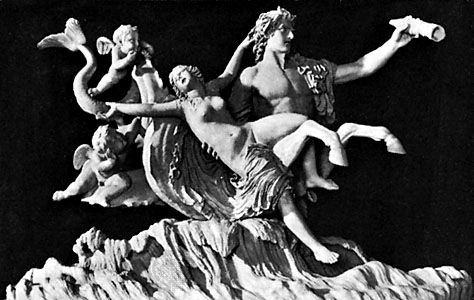
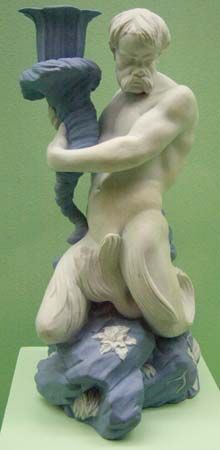
In Greek mythology, Triton is a demigod of the sea and a merman. He is traditionally depicted as a human from the waist up, possessing the tail of a fish. His primary attribute is a twisted seashell, which he blows to either raise or calm the waves of the ocean.1
Regarding his parentage, Triton is the son of the sea god Poseidon and his wife, the sea goddess Amphitrite. According to the poet Hesiod, he resided with his parents in a golden palace located in the depths of the sea. While he is a specific mythological figure, he is sometimes represented as one of many similar beings known collectively as Tritons.1
How does Triton’s role in Greek mythology differ from that of his father, Poseidon?
In Greek mythology, the roles of Poseidon and his son Triton differ significantly in status, power, and function.
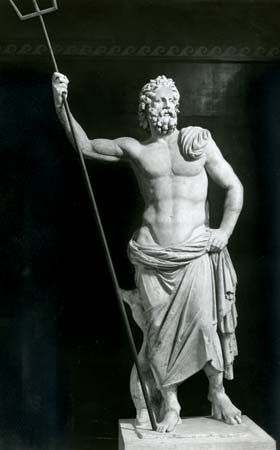
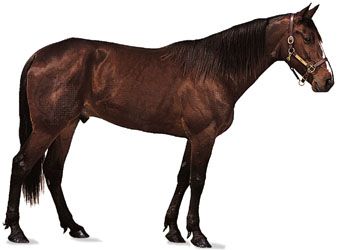
Poseidon is one of the 12 Olympians and a major deity in the Greek pantheon, second in power only to his brother Zeus. As a god, he holds dominion over the sea, earthquakes, and horses. His influence is vast, involving him in the governance of the divine order, conflicts with other gods, and the fates of mortals, such as his decade-long persecution of Odysseus in the Odyssey.41
Triton, by contrast, is a demigod and a merman who serves as a specialized guardian of the sea and its creatures. While Poseidon wields the trident as a symbol of his supreme authority, Triton is characterized by his role as a herald of the deep, using a twisted conch shell to raise or calm the ocean’s waves. Unlike his father, who is a central figure in major mythological epics and political disputes, Triton is often depicted as a more localized or decorative figure, sometimes appearing as one of many similar beings rather than a singular, ruling power.35
How does Triton compare to other sea deities in Greek mythology?
In Greek mythology, Triton is distinct from other sea deities due to his specific role as a herald and his status as a demigod, rather than a supreme ruler of the waters. His comparison to other figures reveals a hierarchy of divine power and function:
- Poseidon: As one of the Poseidon](https://www.britannica.com/topic/Poseidon):** As one of the 12 Olympians, Poseidon is the supreme god of the sea, earthquakes, and horses. While Triton serves as a guardian of sea creatures and a herald who uses a conch shell to manipulate waves, Poseidon wields absolute authority over the ocean and divine order, often influencing the fates of mortals and gods alike.1674
- Oceanus: Unlike Triton, who is a merman and demigod, Oceanus was a Titan. He was conceived as the vast river encircling the Earth and was considered by some ancient sources to be the begetter of all things and the gods themselves, placing him in a much more primordial and foundational category than Triton.8
- Nereus: Known as the “Old Man of the Sea,” Nereus is a god noted for his wisdom, prophetic gifts, and ability to shapeshift. While Triton is often depicted as a singular, muscular figure or one of many “Tritons,” Nereus is characterized by his dignity and his role as a father to the Nereids, serving as a more sagacious and ancient presence in the Aegean depths.57
How is Triton typically depicted in ancient Greek art and literature?
In ancient Greek art and literature, Triton is consistently characterized as a merman and demigod of the sea, born to Poseidon and his wife, Amphitrite.
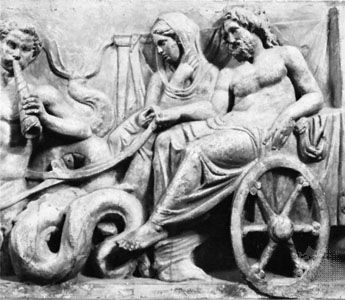
His physical depiction is distinct: he is typically represented as human from the waist up, possessing the tail of a fish below. In artistic and literary traditions, he is often portrayed as a hearty, muscular, and cheerful figure. While he is sometimes depicted as a singular, specific deity dwelling in a golden palace beneath the sea, he is also frequently generalized as one of many similar beings known as “Tritons,” which serve as the male counterparts to mermaids.
Triton’s primary attribute is a twisted conch shell, which he blows to raise or calm the ocean’s waves, effectively creating the roar of the sea. Additionally, he is sometimes shown carrying a trident—similar to his father—and may be depicted riding in a chariot drawn by seahorses.
Sources
- Triton — Encyclopædia Britannica
- Triton — Encyclopædia Britannica
- triton and Mermaids — Merriam-Webster
- Poseidon: Top Questions — Encyclopædia Britannica
- Poseidon — Encyclopædia Britannica
- Oceanus — Encyclopædia Britannica
- Nereus — Encyclopædia Britannica
- sea-god — Merriam-Webster
- polytheism - Natural forces and objects — Encyclopædia Britannica
- triton shell — Encyclopædia Britannica
Published on · 4 min read