Trogon
Trogons, members of the family Trogonidae, are distinctive nonpasserine birds found in tropical regions worldwide. They are primarily characterized by their…
What are the main characteristics that distinguish trogons from other bird families?
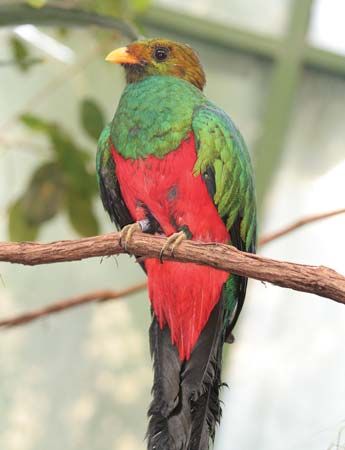
Trogons, members of the family Trogonidae, are distinctive nonpasserine birds found in tropical regions worldwide. They are primarily characterized by their brilliant, often iridescent plumage, typically featuring a bright red or yellow belly contrasted against dark upperparts.12
Key physical and behavioral traits include:
- Unique Foot Structure: Trogons possess heterodactylous feet, a unique arrangement where the second (inner) toe is fixed rearward.13
- Bill Morphology: They have short, broad, and curved bills that are often serrated (dentate) and feature bristles at the base.13
- Tail Characteristics: Their graduated tails consist of 12 feathers and are typically carried in a closed, square-tipped fashion, often displaying a black-and-white pattern on the underside.1
- Nesting Habits: As hole nesters, they often utilize natural tree cavities or excavate their own in rotten wood, and some species even nest within the arboreal structures of wasps or termites.1
- Physical Build: They generally have rounded wings, short legs, and weak feet, with eyes ringed by colorful bare skin.1
Where are trogons typically found in the world, and what types of habitats do they prefer?
Trogons are found across the warm regions of the world, with their distribution spanning three primary geographic areas: the New World (ranging from the southwestern United States and the West Indies down to Argentina), sub-Saharan Africa, and a region stretching from India to Malaya and the Philippines.1
While they inhabit these diverse global locations, they are most abundant and varied within the American tropics. Regarding their preferred habitats, most species reside in hot lowland forests, though some are also found in mountainous regions.1
How many species of trogons are there, and which are some of the most notable or colorful ones?
There are approximately 35 species of birds within the family Trogonidae. These birds are widely recognized for their brilliant, often iridescent plumage, which typically features a striking contrast between a bright red or yellow belly and a darker chest and upperparts.14
Among the most notable members of this family are the quetzals (genus Pharomachrus). These birds are particularly famous for their vibrant coloration and impressive tail feathers:
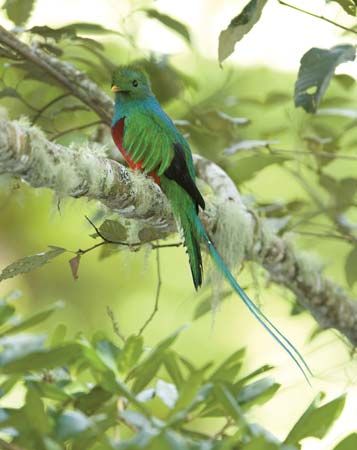
- Resplendent Quetzal: Perhaps the most iconic species, it is known for its long, flowing blue-green tail plumes that can reach up to 90 cm (35 inches) in length. It features a gold-green head and breast, a blue back, and a red belly. Historically sacred to the Mayas and Aztecs, it remains the national emblem of Guatemala1.13
- Golden-headed Quetzal: Another striking member of the genus, distinguished by its unique coloration and elongated tail feathers.3
What are some unique physical features of trogons besides their feet?
Beyond their unique feet, trogons possess several distinctive physical characteristics that define their appearance and anatomy:
- Bill Structure: They have a short, broad, and curved bill. In many species, the bill is serrated (dentate), which is a notable feature for these forest birds.13
- Tail Characteristics: Trogons feature a graduated tail consisting of 12 feathers. This tail is typically carried in a closed, square-tipped position and often displays a distinct black-and-white pattern on the underside.1
- Eye Markings: A characteristic feature of the trogon is the presence of colorful, bare skin that forms a ring around the eye.1
- Plumage and Crests: These birds are known for their brilliant, often iridescent plumage, which typically contrasts a dark chest and upperparts with a bright red or yellow belly. Some species, such as the resplendent quetzal, possess unique features like a rounded, hairlike crest on the head and exceptionally long, flowing tail plumes.1
- Wing Shape: Their wings are characteristically rounded.1
Sources
- Trogon — Encyclopædia Britannica
- trogon — Merriam-Webster
- Trogonidae — Merriam-Webster
- Quetzal — Encyclopædia Britannica
- Plumage — Encyclopædia Britannica
Published on · 3 min read