Turdidae
The Turdidae family, commonly known as thrushes, comprises hundreds of species of songbirds found globally, with the exception of polar regions and certain…
What are the defining characteristics of birds in the Turdidae family?
The Turdidae family, commonly known as thrushes, comprises hundreds of species of songbirds found globally, with the exception of polar regions and certain islands.1
Defining characteristics of the family include:
- Physical Features: Members range from 11.5 to 33 cm (4.5 to 13 inches) in length. They are generally characterized by slender bills and stout legs and feet, with the lower leg (tarsus) being “booted”—meaning it is covered in front by a single long scale rather than multiple small ones.12
- Plumage: While many species are not brightly colored, they often feature patches of red, yellow, or blue on otherwise plain plumage. Young birds typically exhibit spotted plumage in their first year.2
- Behavior and Diet: Thrushes are renowned for their singing abilities. They occupy diverse arboreal and terrestrial habitats, feeding primarily on insects and fruit, though some species also consume snails or earthworms.12
- Nesting: Most species build open, cup-shaped nests, in which they lay three to six pale, often bluish eggs.2
Which well-known bird species belong to the Turdidae family?
The Turdidae family includes many of the world’s most celebrated songbirds. Notable species within this group include:
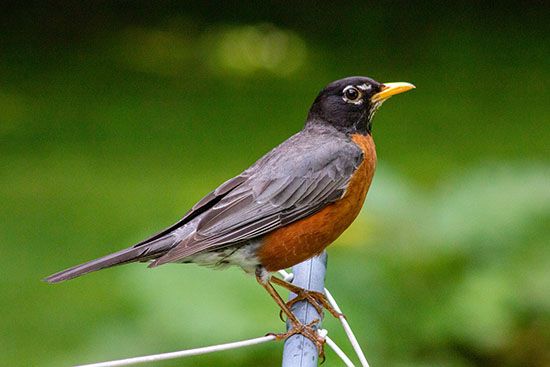
- American robin (Turdus migratorius): A familiar North American bird known for its reddish-orange breast.2
- European blackbird (T. merula): A common and well-known thrush found across Europe.2
- Nightingale (Luscinia megarhychos): Renowned for its complex and beautiful song.2
- Wood thrush (Hylocichla mustelina): A forest-dwelling species recognized for its flute-like vocalizations.2
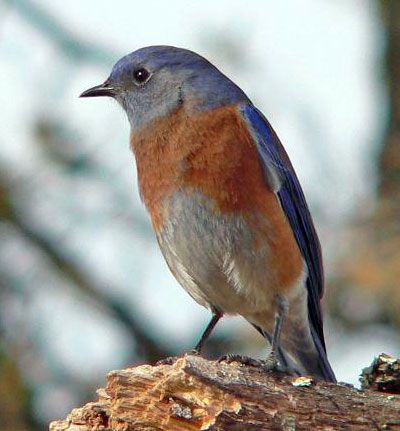
- Bluebirds (Sialia): Often featured in literature and poetry.2
- Varied thrush (Ixoreus naevius): A species native to western North America, distinguished by its orange-brown underparts and black breast markings.6
The family also includes species that are now extinct, such as the Kittlitz’s (or Bonin) thrush and the Raiatea thrush. Please note that the term “thrush” can also refer to a fungal infection or a veterinary condition in animals, which are unrelated to the bird family.27
How are Turdidae birds distributed around the world?
The Turdidae family is a widely distributed group of songbirds found across the globe, with the notable exception of polar regions and certain isolated islands.28
Their distribution spans a vast array of environments, from lowland habitats to montane forest undergrowth. For example, the golden mountain thrush (Zoothera dauma) is highly widespread, occurring across the majority of the Asian mainland and ranging from Japan to Australia. In Africa, the orange ground-thrush (Z. gurneyi) is found in the southeastern regions of the continent.3
In the New World, the family is represented by species such as the varied thrush (Z. naevia), which inhabits northwestern North America, and the Aztec thrush (Z. pinicola), which is restricted to the highlands of Mexico. While the family is globally pervasive, historical records indicate that some island-specific species, such as the Raiatea thrush, have faced extinction.32
What makes the American robin a typical member of the Turdidae family?
The American robin (Turdus migratorius) is a quintessential member of the Turdidae family, embodying the core characteristics that define this group of songbirds.
As a typical member of the family, the American robin exhibits several key traits:
- Physical Morphology: It possesses the slender bill and stout legs characteristic of the family, with the lower leg being smooth rather than scaly. Its size, approximately 25 cm (10 inches), falls well within the typical range for the family, which spans 11.5 to 33 cm.92
- Vocal Ability: Like other renowned members of the Turdidae, such as the nightingale and wood thrush, the American robin is a celebrated songbird.29
- Nesting and Reproduction: Its nesting habits—constructing a cup-shaped nest using twigs, grass, and a molded inner layer of mud—align with the family’s general nesting behaviors. The production of bluish-green eggs is also a common feature among many thrush species.2
- Taxonomic Classification: It belongs to the genus Turdus, the namesake genus of the family, which includes many other well-known thrushes.29
Sources
- Thrush — Encyclopædia Britannica
- Turdidae — Encyclopædia Britannica
- Turdidae — Merriam-Webster
- Passeriform - Evolution and paleontology — Encyclopædia Britannica
- tinamou — Encyclopædia Britannica
- varied thrush — Merriam-Webster
- thrush — Merriam-Webster
- Ground thrush — Encyclopædia Britannica
- Robin — Encyclopædia Britannica
Published on · 3 min read