Paridae
Paridae is a family of songbirds within the order Passeriformes. This family comprises approximately 55 species of small, gregarious birds, including titmice…
What is Paridae?
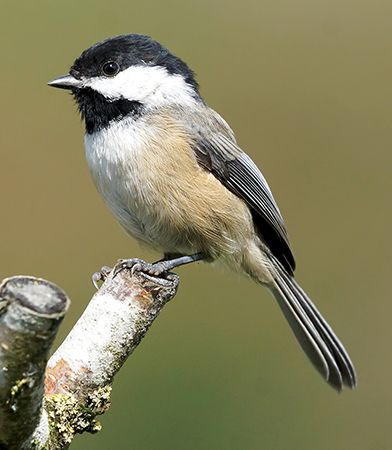
Paridae is a family of songbirds within the order Passeriformes. This family comprises approximately 55 species of small, gregarious birds, including titmice and chickadees, which are primarily found in Africa and the Northern Hemisphere.1
These birds typically range from 7.5 to 20 cm (3 to 8 inches) in length. They are characterized by their active and curious nature, strong feet, rounded wings, and short, stout, pointed bills with nostrils concealed by thick feathers. Known for being quite trainable, they feed mainly on insects but also consume fruit. A well-known representative of this family in North America is the black-capped chickadee, while the European willow tit is a similar species often noted in cultural references.1
What are the main differences between chickadees and titmice?
While chickadees and titmice are closely related members of the family Paridae, they are distinguished primarily by their classification and physical characteristics.
Taxonomic and Physical Differences
- Genus Classification: Chickadees belong to the genus Poecile, while North American titmice belong to the genus Baeolophus.45
- Physical Appearance: Titmice are generally larger, ranging from 11.5 to 20 cm in length, whereas chickadees are typically smaller (e.g., the black-capped chickadee is about 13 cm). Additionally, many titmice, such as the tufted titmouse, are distinguished by a prominent crest on their heads, a feature not found in chickadees.46
- Naming: The name “chickadee” is onomatopoeic, imitating the birds’ distinct call notes. The term “titmouse,” conversely, is derived from Middle English and was reshaped by folk etymology to include the word “mouse,” despite the bird having no relation to the rodent.45
Both groups are highly athletic, nonmigratory, and share similar survival strategies, such as storing food in bark crevices to endure harsh winters.6
How do songbirds like those in the Paridae family learn their vocalizations?
Songbirds, including members of the Paridae family, acquire their vocalizations through a process of vocal learning that often involves both innate predispositions and observational imitation.78
While many species possess a genetically determined, crude template of their species-typical song, most songbirds must hear adult vocalizations during a sensitive period to develop a normal, refined song. This learning process frequently occurs in two distinct phases:7
- Observational Learning: Young birds listen to adult models, such as territorial neighbors or parents, to establish a mental template of the song.7
- Motor Practice: During a later stage, the bird begins to sing, using auditory feedback to match its own vocal output to the stored template. If a bird is deafened before this practice phase, it typically fails to develop a normal song.7
The degree of reliance on learning varies; some species develop idiosyncratic songs based on their environment, while others exhibit local “dialects.” Ultimately, this learning allows birds to balance the need to advertise their species identity with the need to establish individual identity for mating and territorial defense.79
What are some other common families of birds found in the Northern Hemisphere?
The Northern Hemisphere is home to a diverse array of bird families, many of which are widespread across temperate forests, grasslands, and coastal regions. Beyond the Paridae (tits), several other prominent families include:
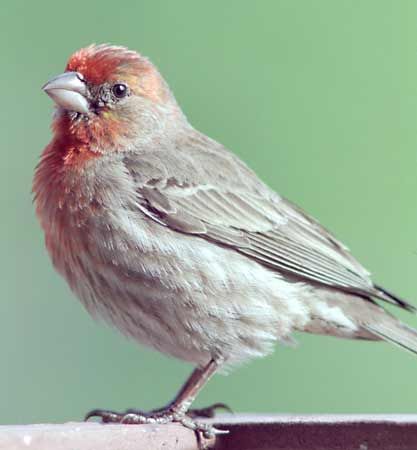
- Fringillidae: Often called true finches, this large group includes grosbeaks and chaffinches. They are well-known for their strong, seed-cracking bills and highly developed songs.10
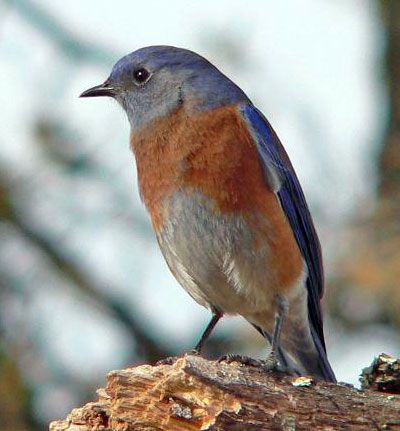
- Turdidae: This family consists of thrushes, robins, and bluebirds. They are among the most renowned songbirds globally and are found in a variety of habitats throughout the Northern Hemisphere.11
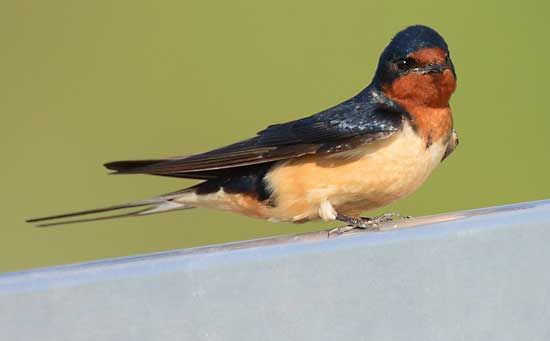
- Hirundinidae: Comprising swallows and martins, these birds are highly adapted for aerial insect-feeding, characterized by long, pointed wings and strong flight.12
- Sylviidae: This family includes Old World warblers. In North America, the role of foliage-gleaning insectivores is often filled by the related Parulidae (wood warblers).1213
- Alcidae: This family includes auks, murres, and puffins. These are compact, streamlined marine birds specifically adapted for swimming in the oceans and coastal waters of the Northern Hemisphere.14
- Alaudidae: Known as larks, these are primarily ground-dwelling birds of open fields and plains, celebrated for their beautiful, often soaring, flight songs.12
Sources
- Paridae — Encyclopædia Britannica
- psittaciform — Encyclopædia Britannica
- Reproductive behaviour - Birds — Encyclopædia Britannica
- Chickadee — Encyclopædia Britannica
- Titmouse — Encyclopædia Britannica
- titmouse — Merriam-Webster
- Animal learning - Song learning — Encyclopædia Britannica
- Bird - Sound — Encyclopædia Britannica
- Why do parrots talk? — Encyclopædia Britannica
- Fringillidae — Encyclopædia Britannica
- Passeriform - Annotated classification — Encyclopædia Britannica
- Turdidae — Encyclopædia Britannica
- Coraciiform - Evolution and paleontology — Encyclopædia Britannica
- Coraciiform - Habitat selection and ecological diversity — Encyclopædia Britannica
- Temperate forest - Fauna — Encyclopædia Britannica
- Charadriiform - General features — Encyclopædia Britannica
Published on · 3 min read