Snares Penguin
The conservation status of the Snares penguin (Eudyptes robustus) is currently listed as vulnerable on the IUCN Red List of Threatened Species. While this…
How does the conservation status of Snares penguins compare to other penguin species?
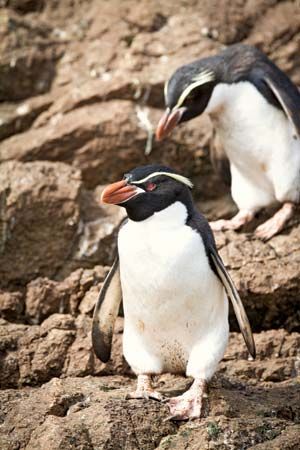
The conservation status of the Snares penguin (Eudyptes robustus) is currently listed as vulnerable on the IUCN Red List of Threatened Species. While this classification is shared with the Fiordland penguin, the underlying population trends and threats differ significantly among species.12
- Relative Stability: Unlike several other penguin species, the Snares penguin population is considered relatively stable, with estimates of approximately 26,000 breeding pairs. This stability is largely attributed to the extreme remoteness of the Snares Islands and strict access regulations, which have kept their habitat free from the invasive mammals that threaten other species.1
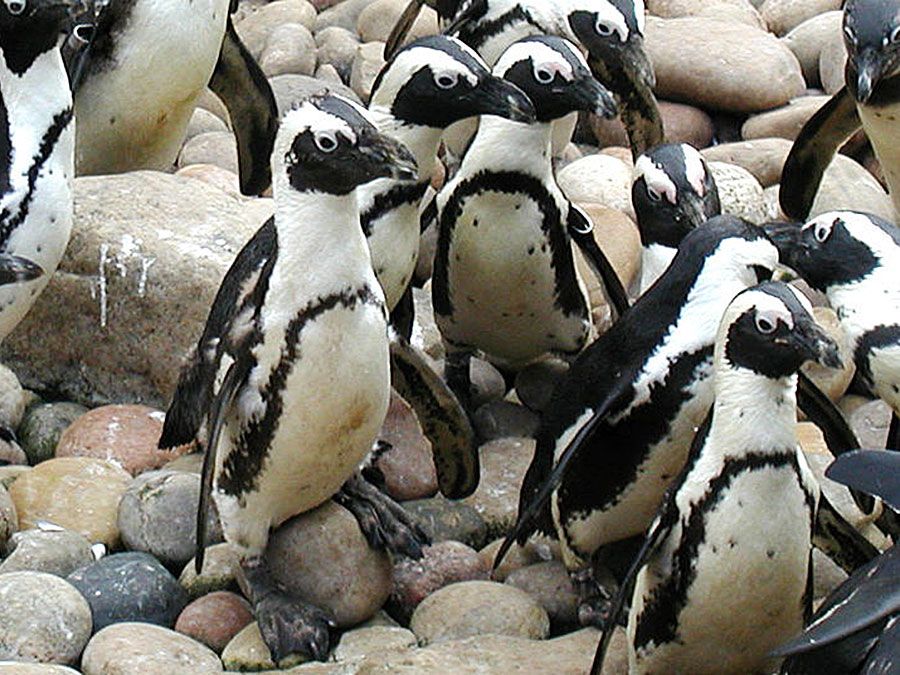
- Comparative Threats: Other crested penguins face more severe pressures. For instance, Fiordland penguins have experienced significant declines due to habitat fragmentation and predation by introduced species. Similarly, the erect-crested penguin has been listed as endangered since 2000 due to sharp population drops. Meanwhile, the African penguin has faced a more dire trajectory, recently being reclassified as a critically endangered species following massive population crashes linked to overfishing.234
What role do Snares penguins play in their ecosystem?
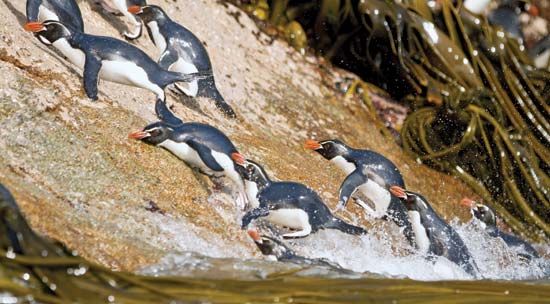
Snares penguins (Eudyptes robustus) play a significant role in the ecosystem of the Snares Islands, primarily through their impact on local vegetation and their position in the marine food web.
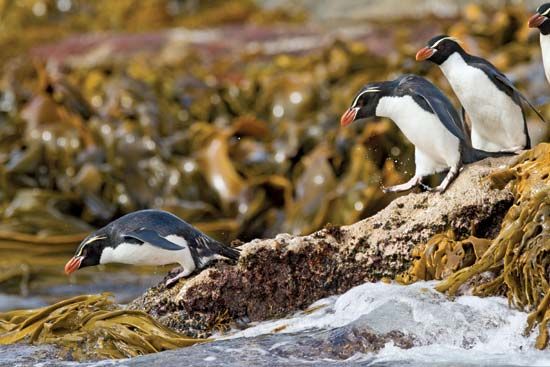
- Forest Modification: These penguins nest in dense colonies of up to 1,500 breeding pairs beneath forests of tree daisies (Olearia lyallii and Brachyglottis stewartiae). Their nesting activities, which include excavating bowl-shaped nests and depositing large amounts of nutrient-rich droppings, exert a substantial physical and chemical toll on the forest floor. This pressure is so significant that colonies are often forced to relocate to different parts of the forest each year, influencing forest growth and soil composition.1
- Marine Trophic Interactions: As predators, Snares penguins help regulate populations of krill, squid, and fish in the Southern Ocean. Conversely, they serve as a food source for marine predators such as Hooker’s sea lions, while their eggs and chicks are preyed upon by skuas and giant fulmars, linking the terrestrial and marine environments.1
What is the average lifespan of a Snares penguin in the wild?
In the wild, the Snares penguin (Eudyptes robustus) may live as long as 20 to 22 years.1
How do scientists study and monitor Snares penguin populations?
Scientists study and monitor Snares penguin (Eudyptes robustus) populations primarily through controlled, limited access to their habitat. Because the species is restricted to the remote Snares Islands, New Zealand authorities enforce strict regulations, granting access only to scientific expeditions that hold special permits.1
This restricted access helps maintain the islands’ status as a sanctuary free from invasive mammals, which protects the penguins from the threats that impact other species. By limiting human presence, researchers can observe the population in a relatively undisturbed state. Historically, these monitoring efforts have allowed ecologists to track population trends, such as the fluctuations between 23,000 and 30,000 breeding pairs recorded between 1985 and 2008.1
While specific modern tracking technologies are not detailed in the available records, the stability of the population is largely attributed to the islands’ isolation and the rigorous protection of their habitat.1
Sources
- Snares penguin — Encyclopædia Britannica
- African penguin — Encyclopædia Britannica
- Fiordland penguin — Encyclopædia Britannica
- erect-crested penguin — Encyclopædia Britannica
- Antarctica - Birds — Encyclopædia Britannica
- penguin - General features — Encyclopædia Britannica
Published on · 3 min read