Sylviidae
Sylviidae is a family of small, active songbirds within the order Passeriformes. Often referred to as Old World warblers, these birds are typically…
What is Sylviidae?
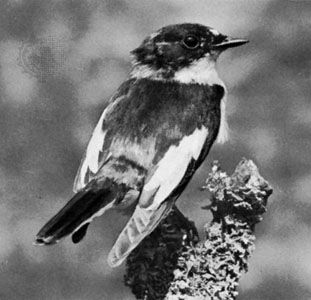
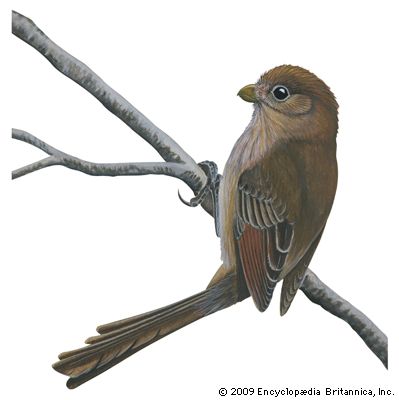
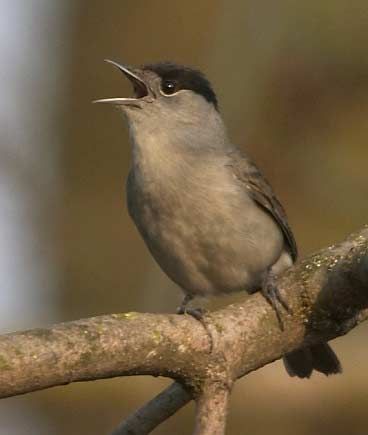
Sylviidae is a family of small, active songbirds within the order Passeriformes. Often referred to as Old World warblers, these birds are typically dull-colored—featuring shades of green, olive, brown, and black—and range from 9 to 26 cm in length.12
Key characteristics of the family include:
- Physical traits: They possess thin bills adapted for gleaning insects, long nostrils with a covering flap, and 10 primary feathers in each wing.12
- Habitat: They are found in diverse environments, including woodlands, brushlands, and marshes across Europe, Asia, Africa, and Australia, with some representatives like the kinglet and gnatcatcher inhabiting the Americas.12
- Behavior: They are known as capable singers and are closely related to thrushes and Old World flycatchers.12
While sometimes classified as a subfamily (Sylviinae) of Muscicapidae, the group includes well-known species such as the blackcap and whitethroat) and whitethroat.12
How do Old World warblers differ from New World wood warblers?
Old World warblers and New World wood warblers are distinct groups of small songbirds that share superficial similarities in form and habits but belong to different families.31
Key Differences
- Taxonomy: Old World warblers belong to the family Sylviidae, whereas New World wood warblers belong to the family Parulidae.34
- Physical Traits: Old World warblers typically have 10 primary feathers in each wing, while New World wood warblers have nine.4
- Appearance: Old World warblers are generally drab, featuring muted colors like green, olive, brown, and black. In contrast, New World wood warblers are often brightly colored, earning them the nickname “butterflies of the bird world”.31
- Geography: Old World warblers are primarily found in Europe, Asia, Africa, and Australia. New World wood warblers are found mainly in North and Central America, with many species being highly migratory.31
- Evolutionary Relationships: Old World warblers are closely related to thrushes and Old World flycatchers, while New World wood warblers are more closely related to tanagers World wood warblers are more closely related to tanagers.3
What unique nesting behaviors do tailorbirds exhibit?
Tailorbirds, belonging to the genus Orthotomus within the Old World warbler family, are renowned for their unique and skillful nesting behavior. Unlike many birds that build simple cup-shaped nests, tailorbirds construct a protective, purse-shaped container by sewing together the edges of one or more living leaves.839
To create this structure, the bird uses its long, slender bill to punch a series of holes along the edges of the leaves. It then draws plant fibers, insect silk, or even stolen household thread through these holes to form loops, which are then knotted on the outer side to hold the leaves securely in place. This specialized technique creates a hidden, secure pocket where the bird can safely raise its young.893
Other members of the Sylviidae family, such as cisticola, prinia, and wren-warbler, also exhibit sewing behaviors, though the tailorbird remains one of the most famous examples of this architectural ingenuity.83
What are the main physical characteristics of songbirds?
Songbirds, which belong to the suborder Passeri (or oscines) within the order Passeriformes, are defined by several key physical characteristics:
- Vocal Anatomy: The most distinguishing feature of songbirds is a highly developed syrinx, the vocal organ located at the base of the trachea. In true songbirds, this structure is complex, consisting of specialized cartilages and membranes controlled by multiple pairs of minute muscles, allowing for sophisticated vocal control.1011
- Perching Feet: As members of the order Passeriformes, songbirds possess a specialized “perching” foot. This foot type features four toes—three directed forward and one backward (the hallux)—which are well-developed and free from one another, enabling the bird to grip branches securely.1213
- Size and Diversity: Songbirds are generally small to medium-sized land birds, typically ranging from 12.5 to 20 cm in length and 15 to 30 grams in weight, though the group encompasses a wide range of sizes from tiny kinglets to large crows.1411
- Structural Features: Taxonomically, they are characterized by specific skeletal traits, such as the aegithognathous structure of the palate, and unique cellular features like spermatozoa with a coiled head.15
Sources
- Sylviidae — Encyclopædia Britannica
- Sylviidae — Merriam-Webster
- warbler — Encyclopædia Britannica
- wood warbler — Encyclopædia Britannica
- Sylvicolidae — Merriam-Webster
- parulid — Merriam-Webster
- parulid — Merriam-Webster
- Tailorbird — Encyclopædia Britannica
- Passeriform - Nesting — Encyclopædia Britannica
- Syrinx — Encyclopædia Britannica
- Passeriform — Encyclopædia Britannica
- Passeriform - Feet and legs — Encyclopædia Britannica
- Passeriform - Size range and structural diversity — Encyclopædia Britannica
- Passeriform - Distinguishing taxonomic features — Encyclopædia Britannica
- Songbird — Encyclopædia Britannica
- psittaciform - Feet — Encyclopædia Britannica
Published on · 3 min read