Upper Yosemite Fall
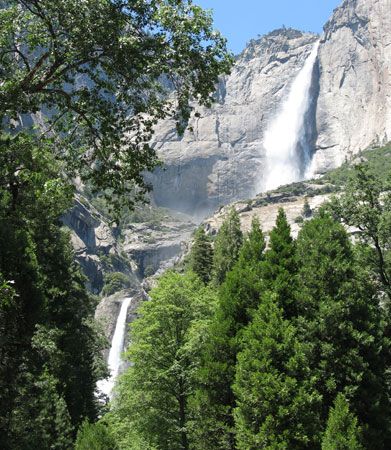
Upper Yosemite Fall is a prominent cataract located on the west slope of the Sierra Nevada within Yosemite National Park in east-central California. It…
What is Upper Yosemite Fall?
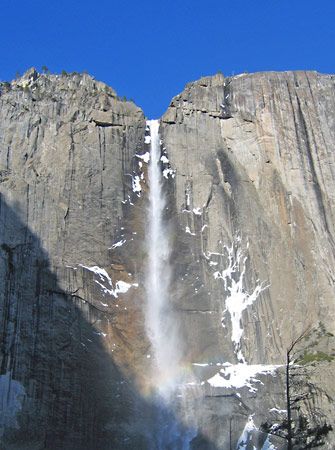
Upper Yosemite Fall is a prominent cataract located on the west slope of the Sierra Nevada within Yosemite National Park in east-central California. It represents the upper portion of the larger Yosemite Falls system, which is recognized as the highest waterfall in North America.12
With a vertical drop of 1,430 feet (436 meters), the fall is formed by water tumbling over the edge of a hanging tributary valley. Because it is primarily fed by melting snow, its volume is highly seasonal; it reaches peak flow during May and June but can diminish significantly or even run dry during periods of low precipitation. Its dramatic height and scenic beauty make it one of the most popular attractions in the park.12
What are the other two sections of Yosemite Falls?
Yosemite Falls is composed of three distinct sections, formed by the interruption of vertical rock joints by horizontal ones. In addition to the Upper Yosemite Fall, the other two sections are:
- The Middle Cascades: This is the series of intermediate drops located between the upper and lower falls.
- The Lower Yosemite Fall: This is the final section of the system, which features a vertical drop of 320 feet (98 meters).2
Together with the 1,430-foot Upper Yosemite Fall, these sections create a total drop of 2,425 feet (740 meters), making the entire system the highest waterfall in North America.2
How do glaciers help form hanging valleys?
Hanging valleys are formed through the process of differential glacial erosion. In a glacier system, a large trunk glacier possesses a greater volume of ice and discharge than the smaller tributary glaciers that feed into it. Consequently, the trunk glacier has a much higher capacity to erode and deepen its path, carving a deep, U-shaped valley at a faster rate than the smaller side valleys.34
Because the depth of ice is a primary factor in the deepening process, the tributary glaciers are unable to erode their troughs as rapidly as the main glacier. As a result, when the ice eventually retreats, the floors of the tributary valleys are left at a higher elevation than the floor of the main valley. These discordant junctions are known as hanging valleys. After deglaciation, streams flowing from these elevated valleys often tumble over the steep walls of the main trough, creating waterfalls such as Yosemite Falls.435
We could dive deeper into how glacial landforms like cirques and moraines contribute to the overall shaping of mountain landscapes.
What other famous landmarks are in Yosemite National Park?
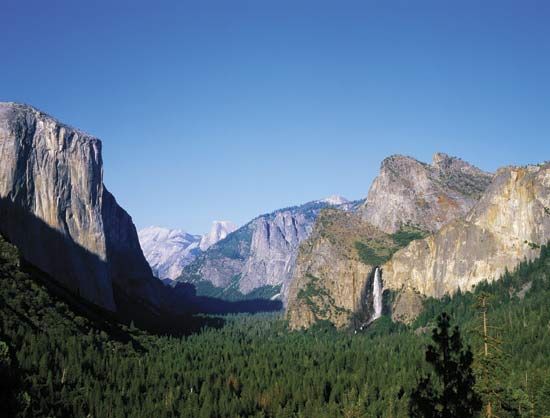
Yosemite National Park is home to numerous iconic natural landmarks, particularly within the glacially carved Yosemite Valley. Some of the most notable include:
- El Capitan: A massive granite buttress that rises 3,600 feet above the valley floor, serving as a premier destination for climbers.7
- Half Dome: A prominent granite dome reaching an elevation of 8,836 feet, known for its commanding views of the surrounding landscape.7
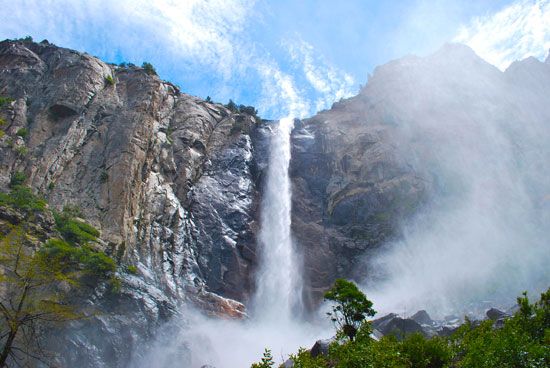
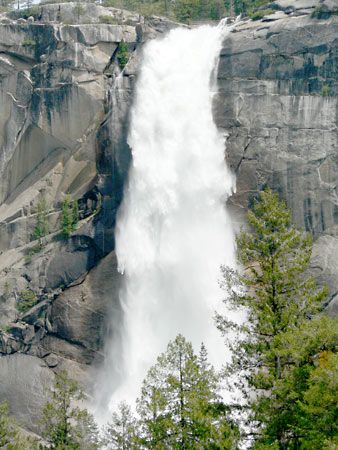
- Waterfalls: Beyond Yosemite Falls, the park features several other renowned cascades, including Bridalveil Fall, Nevada Fall, Ribbon Fall, and Vernal Fall.7
- Mariposa Grove: Located in the southern part of the park, this area is famous for its stands of giant sequoias.7
- Mount Lyell: At 13,114 feet, this is the highest summit within the park.7
- Tioga Pass: An important mountain pass that provides an eastern entrance to the park across the Sierra Nevada ridgeline.7
Sources
- Upper Yosemite Fall — Encyclopædia Britannica
- Yosemite Falls — Encyclopædia Britannica
- glacial landform - Hanging valleys — Encyclopædia Britannica
- glacial valley — Encyclopædia Britannica
- Yosemite Valley — Merriam-Webster
- river - Falls attributable to differential erosion — Encyclopædia Britannica
- Yosemite National Park — Encyclopædia Britannica
Published on · 3 min read