El Capitan
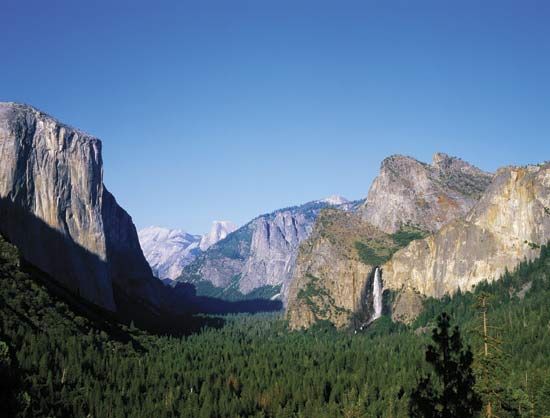
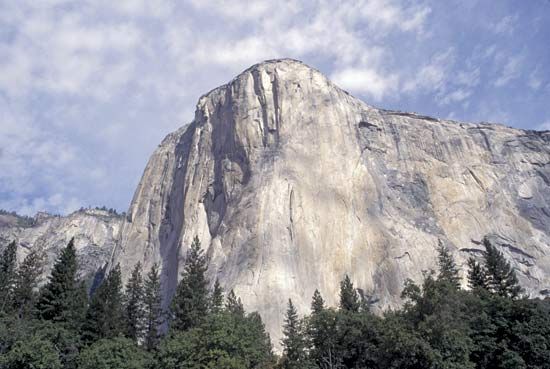
El Capitan is a prominent granite monolith located in Yosemite National Park in east-central California. Standing 7,569 feet above sea level, it towers…
What is El Capitan?
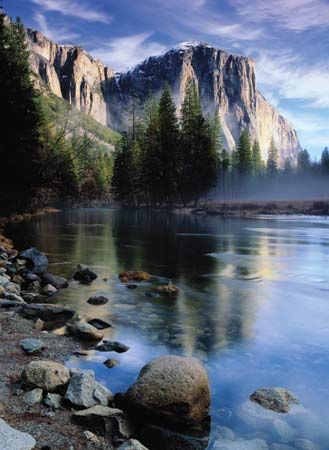
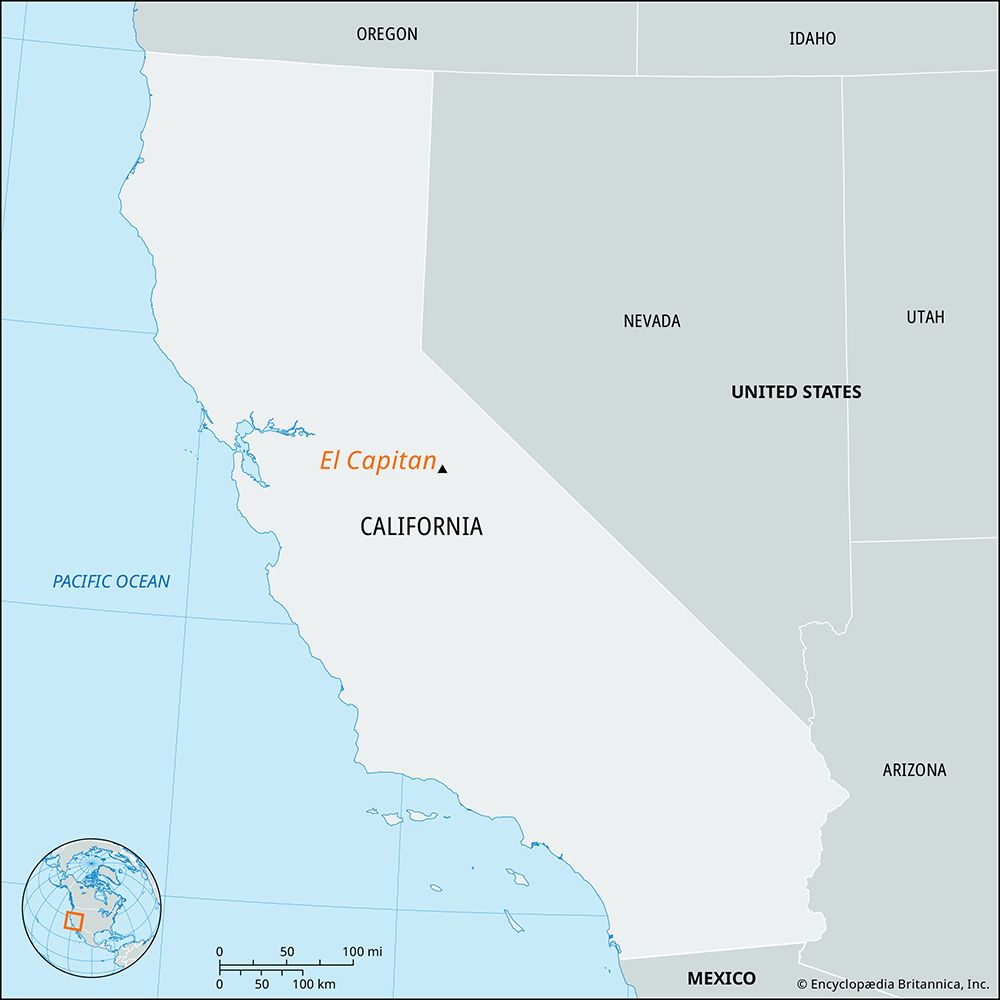
El Capitan is a prominent granite monolith located in Yosemite National Park in east-central California. Standing 7,569 feet above sea level, it towers approximately 3,600 feet over the western end of Yosemite Valley.1
The name is derived from the Spanish for “The Captain,” a translation of the Indigenous name To-tock-ah-noo-lah, meaning “Rock Chief” or “Captain”. While once considered unclimbable, the peak was first successfully ascended in 1958 by a team led by Warren Harding, who established the famous “Nose” route. Today, it is a world-renowned destination for climbers, including Alex Honnold, who famously completed the first free solo ascent of the mountain in 2017.1
How was the granite monolith of El Capitan formed?
The provided search results do not contain specific information regarding the geological formation process of the El Capitan monolith. While the articles confirm that El Capitan is a granite buttress located in Yosemite National Park and note that glaciation has sculpted the deep U-shaped valleys of the region, they do not detail the specific tectonic or magmatic history that formed this particular rock feature.12
What is the significance of the ‘Nose’ route in climbing history?
The “Nose” route on El Capitan is a landmark in climbing history because it proved that the mountain’s massive, vertical walls were not impossible to scale.
In 1957, Warren Harding led an expedition to tackle the prow where the southeastern and southwestern faces of the monolith meet. The effort was a monumental undertaking, requiring 45 days of climbing spread over more than a year. The team utilized pitons and drilled bolt holes to secure fixed ropes, a technique that allowed them to overcome the sheer granite face. On November 12, 1958, Harding and his team successfully reached the summit, marking the first ascent of the peak and establishing the Nose as one of the most iconic and challenging routes in the world.1
What are some other famous landmarks in Yosemite National Park?
Yosemite National Park is home to numerous iconic natural landmarks, particularly within the glacially carved Yosemite Valley. Some of the most notable features include:
- Half Dome: A massive granite formation that rises to 8,836 feet (2,693 metres), offering commanding views from its summit.4
- Yosemite Falls: One of the world’s highest cataracts, this series of waterfalls consists of the Upper Yosemite Fall, Lower Yosemite Fall, and intermediate cascades, with a total drop of 2,425 feet (740 metres).24
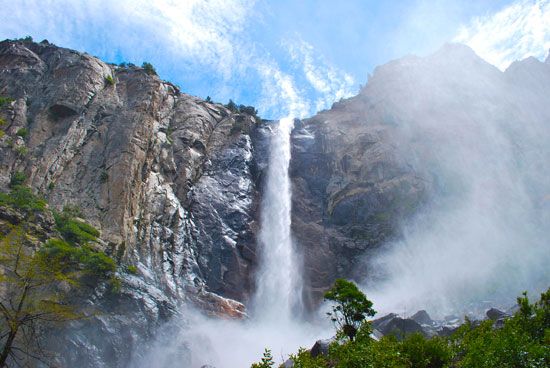
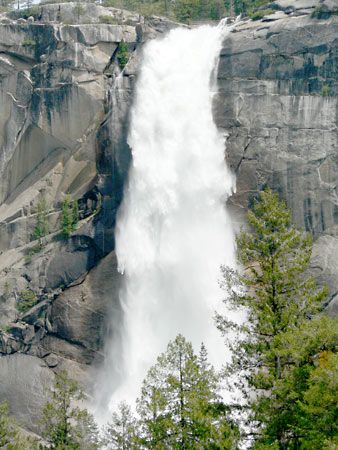
- Other Waterfalls: The valley features several other prominent falls, including Bridalveil, Nevada, Ribbon, and Vernal falls.4
- Mariposa Grove: Located in the southern part of the park, this area is famous for its groves of giant sequoias.4
- High Peaks: The park contains many summits exceeding 10,000 feet, with Mount Lyell serving as the highest point at 13,114 feet (3,997 metres).4
Sources
- El Capitan — Encyclopædia Britannica
- Yosemite National Park — Encyclopædia Britannica
- North America - 1.6 to 1.3 billion years ago — Encyclopædia Britannica
- Yosemite Falls — Encyclopædia Britannica
Published on · 2 min read