Valley of the Queens
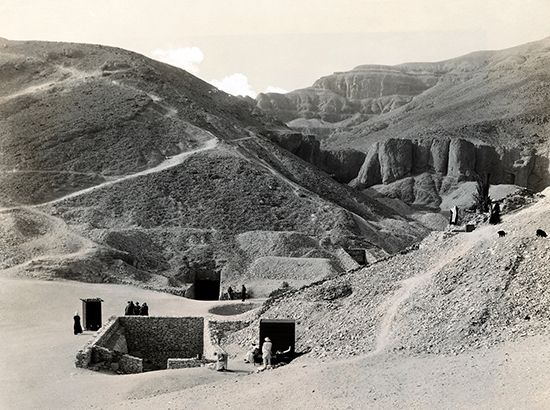
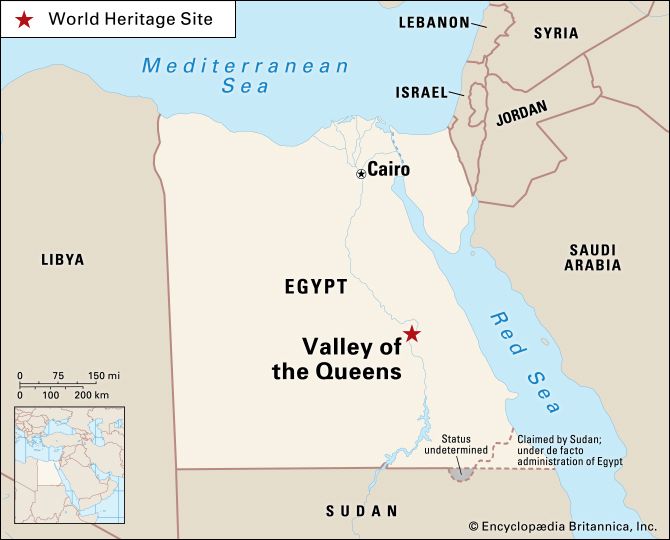
The Valley of the Queens served as the burial site for queens and certain royal children during the 19th and 20th dynasties of ancient Egypt. Among the most…
Who were the main individuals buried in the Valley of the Queens?
The Valley of the Queens served as the burial site for queens and certain royal children during the 19th and 20th dynasties of ancient Egypt. Among the most notable individuals interred there are:1
- Nefertari: The favourite queen of Ramses II.1
- Sitre: The wife of Ramses I, whose tomb is considered one of the earliest in the necropolis.1
- Princes Khaemwese and Amonhirkhopsef: Royal children of the Ramesside period.1
- Titi: A queen of the Ramesside era.1
While the valley contains more than 90 known tombs, it is distinct from the Valley of the Kings, which was primarily reserved for pharaohs and select high-ranking officials.12
Are there any interesting legends or myths associated with the Valley of the Queens?
While there are no specific myths or legends unique to the Valley of the Queens itself, the site is deeply rooted in the broader religious mythology of ancient Egypt. The tombs were designed not merely as burial chambers, but as functional gateways to the afterlife, reflecting the complex beliefs held by the Egyptians regarding death and the divine.15
The primary “legend” of the valley is the journey of the deceased through the underworld, a concept central to Egyptian religion. The walls of these tombs were often adorned with scenes and texts—such as the Book of the Dead—that served as magical maps for the soul. These texts described a perilous journey through 12 zones of the underworld, corresponding to the 12 hours of the night, where the deceased faced a harrowing judgment presided over by the god Osiris.52
The goal of this journey was to achieve immortality by conforming to maat, or cosmic order. Those who succeeded were believed to live on in various forms, such as in the “Elysian Fields” or among the stars with the sun god.52
What role did the Valley of the Queens play in ancient Egyptian religious beliefs about the afterlife?
The Valley of the Queens served as a sacred necropolis for royal women and children during the 19th and 20th dynasties of ancient Egypt, functioning as a physical and spiritual bridge to the afterlife. In Egyptian belief, a tomb was considered a “home for the dead,” designed to provide the deceased with everything necessary for their existence in the next world.17
These tombs were constructed to facilitate the soul’s transition, often featuring an entrance passage leading to halls and a sarcophagus chamber where the body was laid to rest. Much like the royal burials in the nearby Valley of the Kings, these spaces were equipped with furniture, utensils, and personal effects to sustain the individual in the afterlife. The walls were frequently adorned with scenes and magical texts intended to guide the deceased through the perils of the underworld, ensuring their successful passage into eternity. By providing these elaborate environments, the ancient Egyptians sought to preserve the status and well-being of their royalty beyond death, reflecting their profound commitment to cosmic order and the promise of resurrection.174
What are some of the most notable tombs found in the Valley of the Queens?
The Valley of the Queens contains more than 90 known tombs, which served as the final resting places for royal women and children of the 19th and 20th dynasties. Among these, several stand out for their historical and artistic significance:
- Nefertari: As the favourite queen of Ramses II, her tomb is widely considered the most notable and beautifully decorated in the valley.
- Princes Khaemwese and Amonhirkhopsef: These tombs are significant for their association with the royal sons of the Ramesside period.
- Queen Titi: A prominent Ramesside queen whose tomb is frequently cited among the most important sites in the necropolis.
- Sitre: The tomb of this queen, who was the wife of Ramses I, is believed to be the earliest in the valley.
These tombs typically feature an entrance passage leading to a series of halls and a sarcophagus chamber, reflecting the standard architectural design used to prepare royalty for the afterlife.1
Sources
- Valley of the Queens — Encyclopædia Britannica
- Nefertiti — Encyclopædia Britannica
- Luxor: Top Questions — Encyclopædia Britannica
- Valley of the Kings — Encyclopædia Britannica
- hell - Egypt — Encyclopædia Britannica
- ancient Egyptian religion - The world of the dead — Encyclopædia Britannica
- Tomb — Encyclopædia Britannica
- 21 Tombs Around the World - Tutankhamen’s tomb (near Luxor, Egypt) — Encyclopædia Britannica
- Tutankhamun — Encyclopædia Britannica
- Egyptian art and architecture - Royal tombs — Encyclopædia Britannica
- Egyptian art and architecture - Private tombs — Encyclopædia Britannica
Published on · 3 min read