Valley of the Kings
The Valley of the Kings served as the primary burial site for pharaohs during the New Kingdom of ancient Egypt, specifically covering the 18th, 19th, and…
What historical period does the Valley of the Kings cover, and why was it chosen as a burial site?
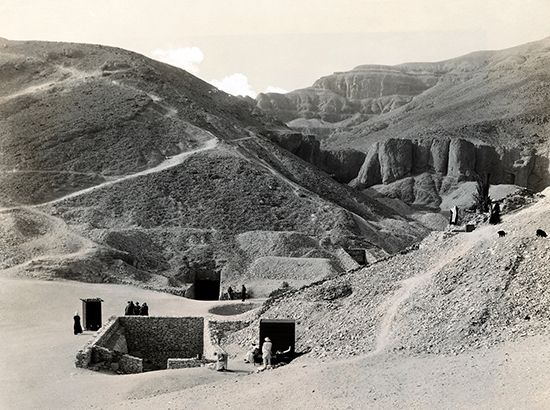
The Valley of the Kings served as the primary burial site for pharaohs during the New Kingdom of ancient Egypt, specifically covering the 18th, 19th, and 20th dynasties (approximately 1539–1075 BCE).12
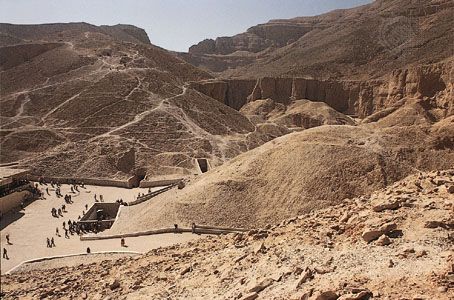
The site was chosen primarily for security. During the New Kingdom, Egyptian rulers sought to protect their royal burials from the rampant looting and desecration that had plagued earlier, more visible monuments like the pyramids. By moving burials to a remote, lonely valley in the western hills behind Dayr al-Baḥrī, the pharaohs could conceal their tombs deep within the heart of the mountain. This location was further favored because it was dominated by a natural mountain peak that resembled a pyramid, maintaining a symbolic connection to the traditional royal funerary form while providing the necessary seclusion to hide the tomb entrances.31
How has the discovery of the Valley of the Kings influenced our understanding of ancient Egyptian culture and beliefs?
The discovery of the Valley of the Kings has profoundly shaped our understanding of ancient Egyptian culture, particularly regarding their religious beliefs and funerary practices during the New Kingdom.51
Insights into Religious Beliefs
The tombs serve as a primary source for studying Egyptian concepts of the afterlife. The walls are adorned with elaborate, illustrated magical texts—such as the “Book of That Which Is in the Underworld,” the “Book of Gates,” and the “Book of the Heavenly Cow”—which were designed to guide the deceased through the perils of the nether regions. These texts reveal a complex, multifaceted view of the afterlife, where the king had to navigate trials and accompany the sun god on his nightly journey1. Astronomical figures painted on burial chamber ceilings further illustrate the deep integration of celestial observation into their spiritual worldview.1
Cultural and Artistic Legacy
The excavation of these tombs, most notably the near-intact tomb of Tutankhamun, provided an unprecedented look at the artistry and craftsmanship of the era. The discovery of golden masks, chariots, jewelry, and even preserved floral offerings has allowed historians to move beyond historical records to appreciate the material culture and daily life of the royal court. These findings demonstrate the immense wealth and resources dedicated to ensuring the pharaoh’s transition to the next world, reflecting a society where the king’s divine status was central to the national identity.51
What are some of the most famous tombs found in the Valley of the Kings?
The Valley of the Kings contains over 60 known tombs, many of which are significant for their historical, artistic, or architectural contributions. Some of the most famous include:
- Tutankhamun (KV 62): Perhaps the most famous tomb in the valley, it was discovered by Howard Carter in 1922. Unlike most other royal burials that were plundered in antiquity, this tomb was found largely intact, providing an unprecedented collection of treasures, including the king’s golden mask and sarcophagus.173
- Seti I (KV 17): Widely considered the finest tomb in the valley, it extends 328 feet (100 meters) into the mountain. It is renowned for its spectacular burial chamber, which features a barrel-shaped ceiling decorated to represent the vault of heaven, alongside extensive, well-preserved funerary texts and paintings.8
- Hatshepsut (KV 20): This is the longest tomb in the valley, with a burial chamber located nearly 700 feet (215 meters) from the entrance, descending 320 feet (100 meters) into the rock.1
- Ramses VI (KV 9): Originally built for Ramses V, this tomb was annexed by Ramses VI and remains one of the most impressive royal tombs in Thebes.5
- Tomb 5: The largest and most complex structure in the valley, it was built to contain the burials of many of the sons of Ramses II. It features a central pillared hall and dozens of chambers across two levels.1
How many tombs have been discovered in the Valley of the Kings, and who were they built for?
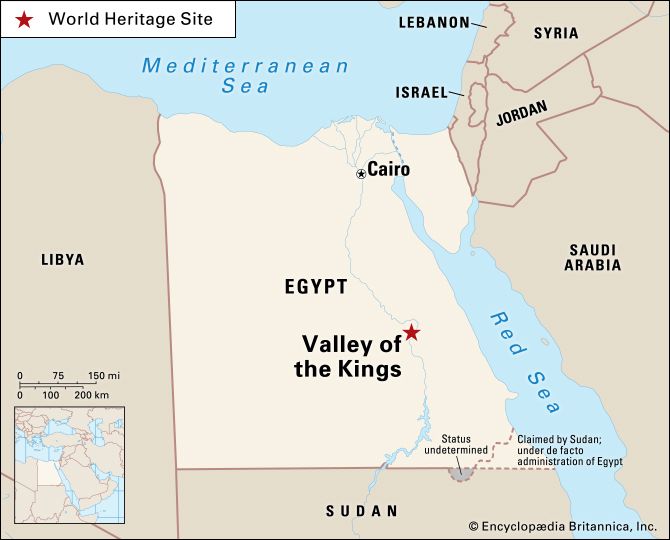
There are 62 known tombs in the Valley of the Kings, a burial site located in the hills behind Dayr al-Baḥrī near the ancient city of Thebes.11
These tombs were primarily constructed for the pharaohs of the 18th, 19th, and 20th dynasties (c. 1539–1075 BCE), spanning from the reign of Thutmose I to Ramses X.21
In addition to the kings, the valley served as the final resting place for several queens, a few high-ranking officials, and the numerous sons of Ramses II, who were interred in the massive, complex structure known as Tomb 5.2
Sources
- Valley of the Kings — Encyclopædia Britannica
- Luxor: Top Questions — Encyclopædia Britannica
- ancient Egyptian architecture - Tombs — Encyclopædia Britannica
- Valley of the Queens — Encyclopædia Britannica
- 21 Tombs Around the World - Tutankhamen’s tomb (near Luxor, Egypt) — Encyclopædia Britannica
- Were All Egyptian Pharaohs Buried in Pyramids? — Encyclopædia Britannica
- Thutmose III - Adornment of Egypt — Encyclopædia Britannica
- Tutankhamun: Top Questions — Encyclopædia Britannica
- Ramses VI — Encyclopædia Britannica
- Tutankhamun — Encyclopædia Britannica
Published on · 4 min read