Waitomo
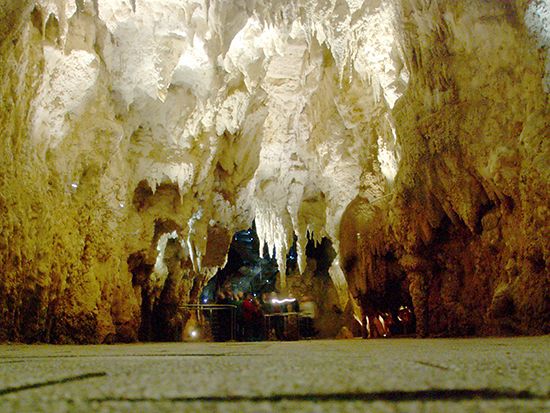
Waitomo refers to a system of limestone caves located in the north-central region of New Zealand's North Island, approximately 50 miles south of Hamilton.
What is Waitomo?
Waitomo refers to a system of limestone caves located in the north-central region of New Zealand’s North Island, approximately 50 miles south of Hamilton.1
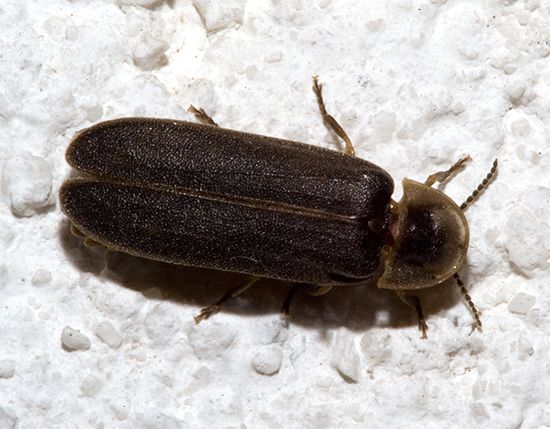
These caves are renowned for their elaborate geological formations, including stalactites and stalagmites, such as the Blanket Chamber and the White Terrace. The primary attraction for visitors is the Glowworm Grotto, where a boat journey along an underground river allows guests to view the cave ceilings illuminated by thousands of glowworms. These specific glowworms, belonging to the genus Arachnocampa, produce their signature blue-green light through a chemical reaction involving luciferin and luciferase within modified excretory organs.123
How do stalactites and stalagmites form in limestone caves?
Stalactites and stalagmites are types of speleothems—secondary mineral deposits formed by water in limestone caves. Their creation begins when rainwater infiltrates soil, absorbing carbon dioxide to form a dilute carbonic acid4. As this acidic water percolates through limestone bedrock, it dissolves calcium carbonate (calcite).45
When this mineral-rich water enters a cave, the carbon dioxide escapes into the cave atmosphere, reducing the water’s ability to hold the calcite in solution and causing it to precipitate.45
- Stalactites: These form on the ceiling as water emerges from a joint and hangs as a pendant drop. A ring of calcite is deposited where the drop touches the rock. As drops fall, they leave behind these rings, eventually building a hollow, icicle-like structure.46
- Stalagmites: These grow upward from the cave floor. They are formed by the mineral matter remaining in the water droplets after they fall from the ceiling or a stalactite. Unlike stalactites, they do not have a central canal and are composed of superimposed layers.46
What is bioluminescence and how does it function in nature?
Bioluminescence is the production and emission of light by living organisms, a phenomenon often referred to as “cold light” because it is highly efficient, releasing almost no heat during the process.89
How It Functions
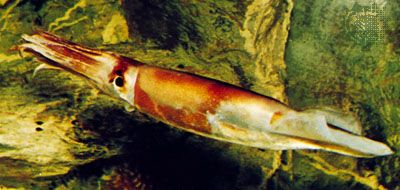
At its core, bioluminescence is a form of chemiluminescence resulting from a chemical reaction. While the specific structures used to emit light vary widely across species—ranging from modified excretory organs in glowworms to complex photophores in squids and fish—the underlying chemical mechanism is remarkably consistent.81011
The reaction typically involves:
- Luciferin: A light-emitting molecule that acts as the substrate.910
- Luciferase: An enzyme that catalyzes the reaction.910
- Oxygen: Required to oxidize the luciferin.39
- Energy: In many cases, molecules like ATP provide the necessary energy to drive the process.10
When these components interact, the chemical energy is converted directly into radiant energy, causing the organism to glow.38
Occurrence in Nature
Bioluminescence has evolved independently across many taxonomic groups, including bacteria, fungi, insects, and various marine invertebrates. It is most prevalent in the ocean, where it serves diverse purposes such as attracting prey, signaling for mates, or providing defense. Interestingly, it is not found in true plants, amphibians, reptiles, birds, or mammalsbird-animal), or mammals.89121110
What other unique wildlife is native to New Zealand?
Due to New Zealand’s prolonged geographic isolation, the country is home to a unique array of wildlife that evolved independently from the rest of the world.1314
Unique Native Fauna
- Tuatara: Often called a “living fossil,” this beak-headed reptile is the sole survivor of an ancient order that diverged from lizards and snakes approximately 250 million years ago. They are notable for possessing a vestigial third, or parietal, eye on the top of their heads.131516
- Flightless Birds: In the absence of predatory mammals, New Zealand became a haven for flightless birds. Beyond the famous kiwi, other notable species include the weka and the takahe, which was once feared extinct.13
- Other Native Species: The islands are also home to primitive species of frogs and two species of bats, as well as various skinks and geckos14.
Flora
The country’s isolation also fostered a distinct botanical landscape, with nearly nine-tenths of its indigenous plants being peculiar to New Zealand. Much of the land was historically covered in mixed evergreen forests, with the false beech serving as a predominant tree along the mountain chains.13
Sources
- Waitomo — Encyclopædia Britannica
- New Zealand - Relief of New Zealand — Encyclopædia Britannica
- How Do Glowworms Glow? — Encyclopædia Britannica
- cave - Depositional materials and features — Encyclopædia Britannica
- stalactite and stalagmite — Encyclopædia Britannica
- cave - Solution caves — Encyclopædia Britannica
- cave deposit — Encyclopædia Britannica
- Bioluminescence - The role of bioluminescence in metabolism — Encyclopædia Britannica
- Bioluminescence - The range and variety of bioluminescent organisms — Encyclopædia Britannica
- Bioluminescence — Encyclopædia Britannica
- Bioluminescence: Top Questions — Encyclopædia Britannica
- glowworm — Encyclopædia Britannica
- Why are people from New Zealand called Kiwis? — Encyclopædia Britannica
- New Zealand - Plant and animal life — Encyclopædia Britannica
- Kiwi — Encyclopædia Britannica
- tuatara — Encyclopædia Britannica
- New Zealand — Encyclopædia Britannica
- tuatara — Merriam-Webster
Published on · 3 min read