Viti Levu
Viti Levu serves as the primary economic hub of Fiji, distinguishing itself from other islands through its concentration of urban infrastructure…
How does Viti Levu’s economy compare to other islands in Fiji?
Viti Levu serves as the primary economic hub of Fiji, distinguishing itself from other islands through its concentration of urban infrastructure, administrative power, and industrial capacity.12
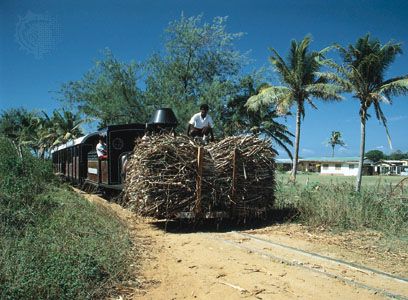
While both Viti Levu and Vanua Levu support significant sugarcane production and have regions with predominantly Indian populations, Viti Levu hosts the country’s three largest urban centers: the capital, Suva, the rapidly growing suburb of Nasinu, and the industrial port city of Lautoka. Furthermore, Viti Levu contains the nation’s primary international airport at Nadi, an oil-fuel installation, and a unique goldfield at Vatukoula, which are not found on the smaller islands.12
In contrast, while smaller islands and rural areas of larger islands often feature indigenous Fijian populations living in traditional villages, Viti Levu’s economy is more heavily integrated into the national commercial sector, including manufacturing and international logistics. Tourism remains a vital component across the archipelago, though many resorts are specifically situated on smaller offshore islands to offer secluded, traditional-style accommodations.324
What are the main geographical features of Viti Levu, including its mountains and rivers?
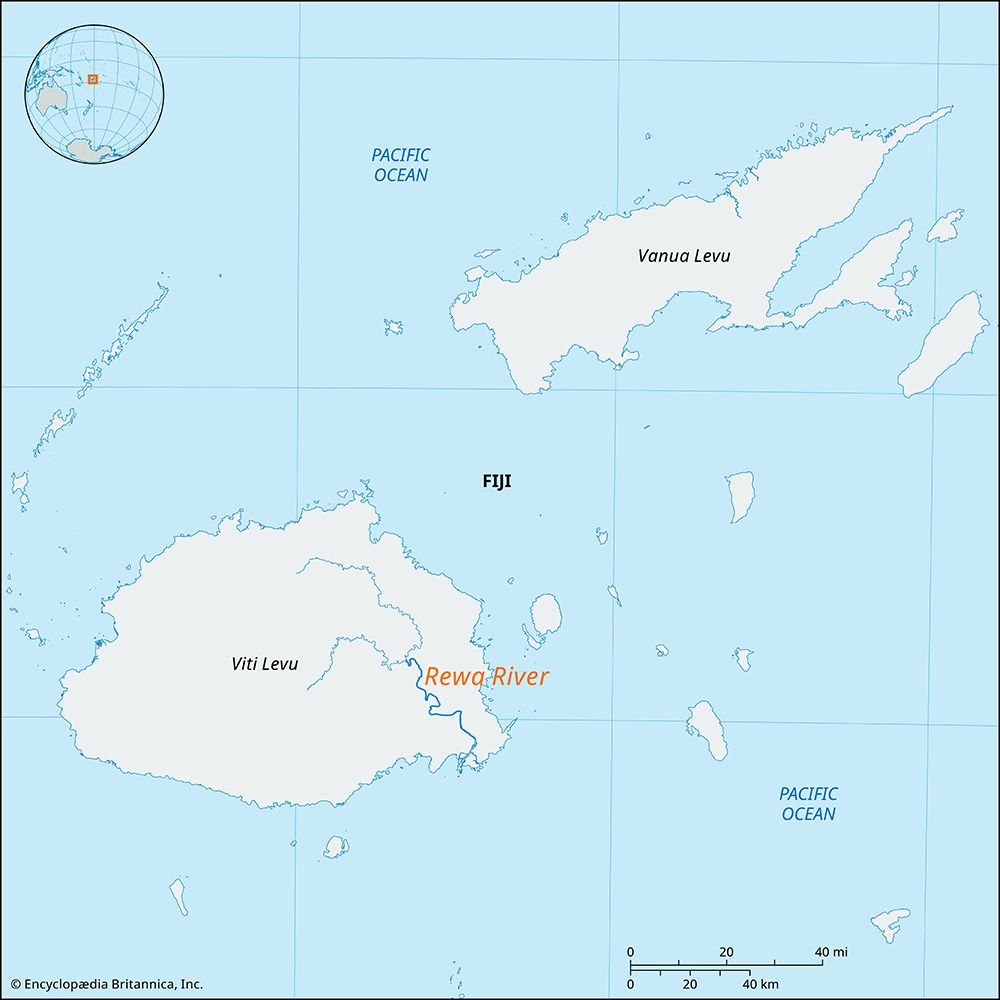
Viti Levu, the largest island in Fiji, is defined by its volcanic origins and rugged topography. The island is bisected by a central, jagged mountain range featuring numerous inactive volcanoes. The highest point on the island—and in all of Fiji—is Tomanivi (formerly Mount Victoria), which reaches an elevation of 4,344 feet (1,324 meters).17
This central mountain range serves as the source for the island’s primary river systems, including the Rewa, Navua, Sigatoka (Singatoka), and Ba (Mba) rivers. The Rewa River, which is the longest and most significant stream in Fiji, drains one-third of the island and flows southeast to its mouth near Suva.78
These rivers create fertile valleys and deltas that are essential for agriculture, supporting the cultivation of crops such as sugarcane, rice, tobacco, and pineapples. Beyond the central highlands, the terrain transitions into plateaus and coastal lowlands, which, while accounting for less than one-fifth of the island’s total area, serve as the primary hubs for settlement and commercial activity.187
How has Viti Levu’s infrastructure developed to support tourism and local industries?
Viti Levu’s infrastructure has been strategically developed to support its role as the economic and logistical heart of Fiji. To facilitate tourism and industry, the island features a comprehensive transportation network, including a coastal highway that circles the island and connects major urban centers like Suva and Lautoka.19
For international connectivity, the island hosts the country’s primary international airport at Nadi, which is vital for the tourism sector, as well as a secondary international airport at Nausori. Industrial infrastructure is equally robust; Lautoka serves as a leading sugar export port, supported by private railroads and trucking networks that transport sugarcane from local farms to the city’s sugar mill. Additionally, the island supports light-industrial activities—such as boatbuilding, brewing, and manufacturing—and maintains specialized facilities like the oil-fuel installation at Vunda Point and the goldfield at Vatukoula. While urban areas rely on modern road and bus systems, river transport remains essential for moving agricultural produce from more remote interior regions to market.10139
What is the cultural and historical significance of Viti Levu to the Fijian people?
Viti Levu, meaning “Great Fiji,” serves as the historical and contemporary heart of Fiji. Its significance is rooted in both its ancient settlement patterns and its role as the center of modern Fijian society.
Historical Significance
Archaeological evidence indicates that the fertile delta regions of southeastern Viti Levu supported large, dense populations in antiquity. These early inhabitants developed complex irrigation systems for taro cultivation and protected their settlements with massive ring-ditch fortifications. The island was a focal point for the Lapita culture, whose skilled navigators and horticulturists eventually spread to Tonga and Samoa. Traditional Fijian society on the island was highly hierarchical, organized through kinship clans known as mataqali, and governed by paramount chiefs who led confederations formed through alliances or warfare.1
Cultural and Modern Significance
Today, Viti Levu remains the country’s primary hub. It hosts the capital, Suva, which is the nation’s commercial and administrative center. The island’s population reflects a diverse demographic history, including indigenous Fijians and descendants of indentured labourers who arrived to work in the sugar industry](https://www.britannica.com/topic/indentured-labor) who arrived to work in the sugar industry.111213
Sources
- Viti Levu — Encyclopædia Britannica
- Fiji - Economy of Fiji — Encyclopædia Britannica
- Fiji - Services — Encyclopædia Britannica
- Fiji - Agriculture, forestry, and fishing — Encyclopædia Britannica
- Vanua Levu Island — Encyclopædia Britannica
- Fiji - Settlement patterns — Encyclopædia Britannica
- Fiji - Relief — Encyclopædia Britannica
- Rewa River — Encyclopædia Britannica
- Lautoka — Encyclopædia Britannica
- Fiji - Transportation — Encyclopædia Britannica
- history of Fiji — Encyclopædia Britannica
- history of Fiji - Early history and culture of Fiji — Encyclopædia Britannica
- Fiji - Ethnic groups — Encyclopædia Britannica
Published on · 3 min read