Rewa River
The Rewa River is the longest and most significant waterway in Fiji, located in the South Pacific Ocean. It originates on the slopes of Tomanivi, the highest…
What is Rewa River?
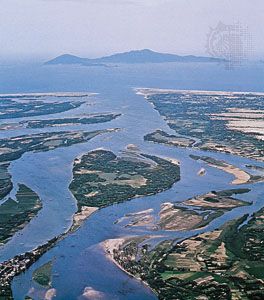
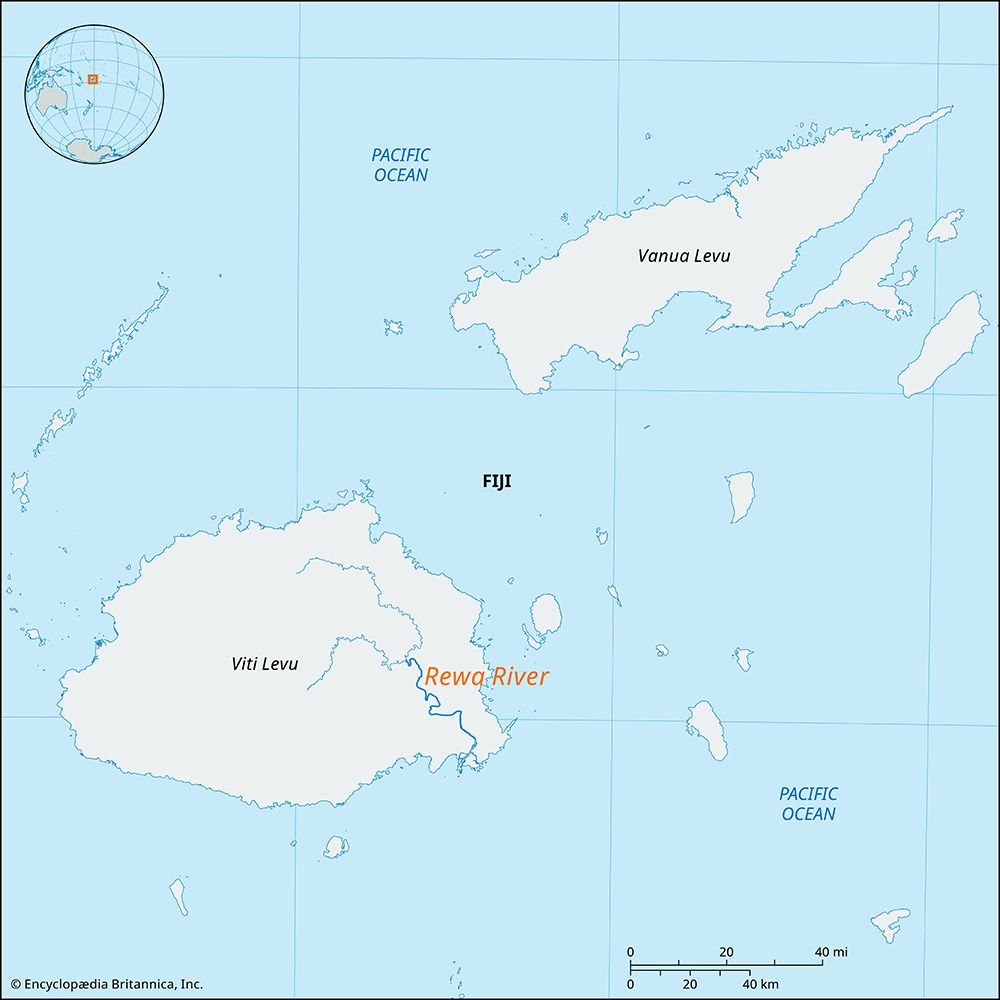
The Rewa River is the longest and most significant waterway in Fiji, located in the South Pacific Ocean. It originates on the slopes of Tomanivi, the highest point in Fiji, and flows southeast for 90 miles (145 km) before reaching its mouth at Laucala Bay near the national capital, Suva.1
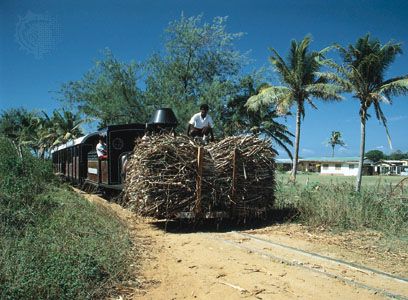
The river is vital to the region, as it drains one-third of the island of Viti Levu. Its fertile valley and deltas are essential for agricultural production, including rice, vegetables, and dairy. Additionally, the river is navigable by small steamers for approximately 50 miles (80 km) upstream.1
It is important to note that while there is a city named Rewa in Madhya Pradesh, India, that region is watered by the Tons River, not the Rewa River.2
What is the significance of Mount Tomanivi in Fiji?
Mount Tomanivi—formerly known as Mount Victoria—is the highest point in Fiji, reaching an elevation of 4,344 feet (1,324 meters).3
Located on Viti Levu, the country’s largest island, the mountain is a central feature of the island’s primary mountain range, which is composed of many inactive volcanoes. Its significance lies largely in its role as a climatic divider: the range separates Viti Levu into a wet southeastern section, which receives approximately 120 inches of rainfall annually, and a drier northwestern section, which receives between 70 and 90 inches. Additionally, the mountain serves as the headwaters for major waterways, including the Rewa River, which supports the island’s fertile agricultural valleys and deltas.3
How do rivers like the Rewa support agriculture in island nations?
Rivers like the Rewa River are vital to agriculture in island nations primarily by creating fertile environments through the deposition of alluvium. As rivers flow, they carry sediment—including silt, sand, clay, and organic matter—which is deposited along their banks and at their mouths to form floodplains and deltas. These alluvial deposits yield highly fertile soil that supports the production of essential crops such as rice, vegetables, and dairy.145
Beyond soil enrichment, these river systems provide necessary water for irrigation. In tropical regions, managing this water is critical; farmers often employ complex systems of drainage and dikes to control floodwaters and ensure fields remain productive, even in areas with heavy rainfall. While high sediment loads can sometimes pose challenges for infrastructure or transportation, the nutrient-rich plains created by these rivers remain the backbone of agricultural productivity for many island communities.67
What are some other major rivers in the Pacific Islands?
Beyond the Rewa River in Fiji, the Pacific Islands are home to several significant river systems, particularly on the large island of New Guinea in Papua New Guinea. These rivers are characterized by high sediment loads and the creation of vast, swampy plains and deltas.18
Key rivers in the region include:
- Fly River: Known for its extremely low gradient as it nears the coast, this river meanders across sediment plains and is a major drainage feature of the island.8
- Sepik River: A major river system that, along with the Ramu, flows through areas characterized by extensive sago swamps.89
- Ramu River: Approximately 450 miles long, this river flows through the Central Depression of New Guinea. It is notable for the Yonki hydroelectric project, which provides significant electricity to the highlands.10
- Purari River: Rising in the Bismarck Range, this river flows into the Gulf of Papua through a large, well-settled swampy delta.5
In New Zealand, the landscape features numerous other notable rivers, such as the Waikato River, Clutha River, and Buller River, which differ significantly in character from the tropical, sediment-heavy rivers of the northern Pacific.1
Sources
- Rewa River — Encyclopædia Britannica
- Rewa — Encyclopædia Britannica
- Viti Levu — Encyclopædia Britannica
- Agricultural technology - Water management — Encyclopædia Britannica
- Papua New Guinea - Drainage and soils — Encyclopædia Britannica
- alluvial deposit — Encyclopædia Britannica
- alluvium — Encyclopædia Britannica
- list of rivers - Oceania (Pacific region) — Encyclopædia Britannica
- Ramu River — Encyclopædia Britannica
- Purari River — Encyclopædia Britannica
- Solomon Islands - Land — Encyclopædia Britannica
- Fiji - Transportation — Encyclopædia Britannica
- Papua New Guinea - Agriculture, forestry, and fishing — Encyclopædia Britannica
Published on · 3 min read