Werra River
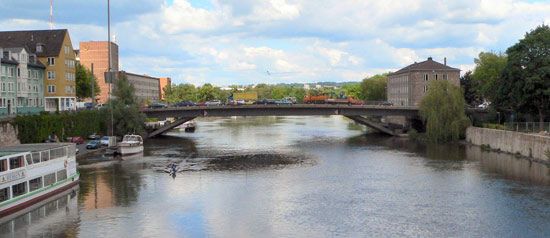
The Werra River is a 181-mile (290 km) river located in central Germany. It originates on the southwestern slopes of the Thüringer Wald (Thuringian Forest)…
What is Werra River?
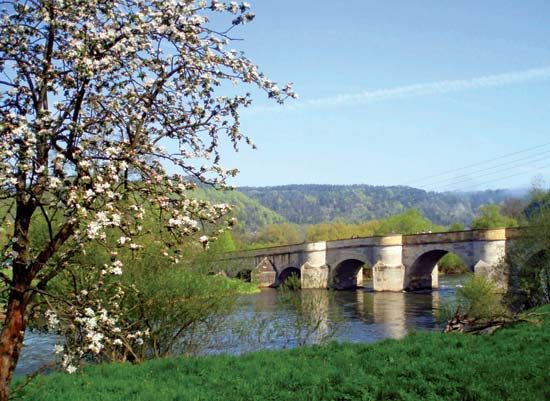
The Werra River is a 181-mile (290 km) river located in central Germany. It originates on the southwestern slopes of the Thüringer Wald (Thuringian Forest), situated just north of Eisfeld.12
The river flows in a generally northward direction until it reaches the city of Münden. At this point, the Werra joins the Fulda River to form the Weser River, a major waterway that continues north through Germany to the North Sea.13
What is the Fulda River?
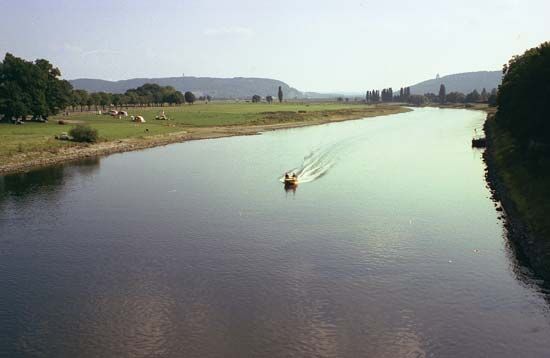
The Fulda River is a 135-mile (218 km) river in central Germany that serves as a primary headstream of the Weser River. It originates on the Wasserkuppe in the Rhön mountains and flows northward, passing through cities such as Fulda and Kassel.4
Historically, the river valley functioned as a vital trade route between northern and southern Germany during the Middle Ages. Today, the Fulda basin is characterized by wooded hills, agricultural land, and recreational sites, including the Edersee reservoir. At Münden, the Fulda converges with the Werra River to form the Weser, which eventually flows into the North Sea.421
How is the Weser River used for transportation in Germany?
The Weser River serves as a vital transport artery in western Germany, facilitating both inland shipping and international trade.
Inland Navigation and Infrastructure
The river is highly engineered to support commercial traffic:
- Canal Connectivity: Near Minden, the Mittelland Canal crosses the Weser via an aqueduct, linking the river to the Ruhr district and the Rhine River in the west, as well as to the waterways of Berlin in the east.2
- Navigability: Between Minden and Bremen, the river has been straightened and equipped with eight hydroelectric dams. This section is navigable for ships up to 1,200 tons deadweight, handling a significant portion of shipping traffic for the lower Weser harbors.2
- Additional Links: The Küsten Canal connects the lower Weser to the Dortmund-Ems Canal, and a smaller canal links Bremerhaven to the Elbe River2.
Seaports and Trade
The Weser ports of Bremen and Bremerhaven are critical hubs that handle a substantial share of Germany’s total tonnage and container traffic, with Bremen specializing in general cargo.5
What are the major cities located along the Weser River?
The Weser River flows through several significant urban centers in Germany. The principal cities located along its course include:
- Münden: Situated at the confluence of the Fulda and Werra rivers, this city marks the official beginning of the Weser.2
- Kassel: Located along the upper reaches of the river system, Kassel is a major city historically linked to the river’s geography.2
- Minden: Positioned where the river exits the mountains and enters the North German Plain, Minden serves as a critical junction for both road and water traffic, notably where the Mittelland Canal crosses the river.26
- Bremen: A major port city and capital of the state of Bremen, it is situated approximately 43 miles from the North Sea and has long been a vital center for international trade and industry.21
- Bremerhaven: Founded as an outer port for Bremen, this city is located near the river’s estuary and is a key hub for maritime commerce and fishing.21
Sources
- Werra River — Encyclopædia Britannica
- Weser River — Encyclopædia Britannica
- Werra — Merriam-Webster
- Fulda River — Encyclopædia Britannica
- Germany - Seaports — Encyclopædia Britannica
- Bremen — Encyclopædia Britannica
- Minden — Encyclopædia Britannica
Published on · 3 min read