Why Are Holstein Cows So Popular?
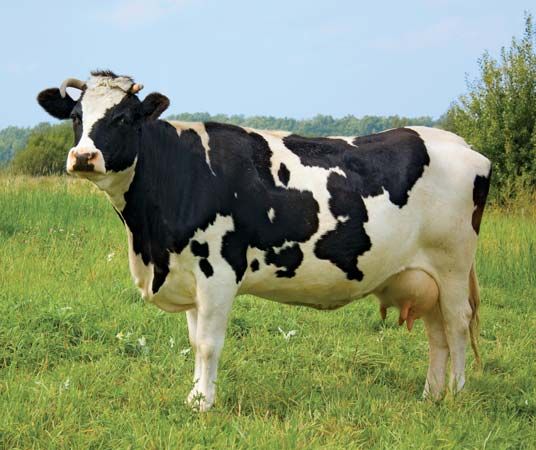
The Holstein-Friesian is the most popular dairy breed globally primarily due to its unmatched milk production volume. In the United States, they account for…
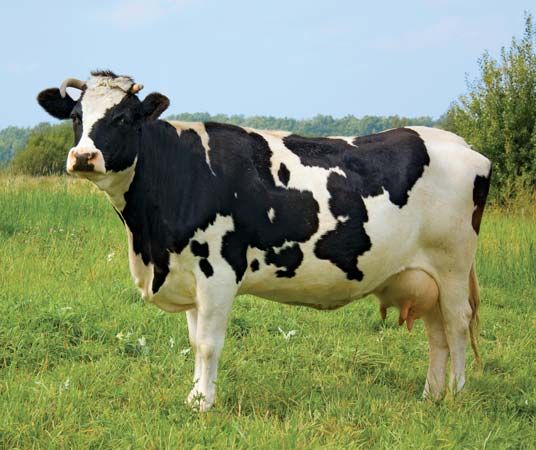
Why are Holstein cows so popular?
The Holstein-Friesian is the most popular dairy breed globally primarily due to its unmatched milk production volume. In the United States, they account for approximately 9 out of 10 dairy cows and produce nearly the entire national milk supply.12
Key factors contributing to their dominance include:
- High Productivity: Holsteins consistently outperform other breeds in annual milk yield. A 2021 report indicated they averaged over 11,793 kg (26,000 pounds) of milk per cow, significantly higher than breeds like the Brown Swiss or Jersey.12
- Ease of Management: They possess a calm temperament and are highly adaptable to various farming environments, including both grazing and confinement systems.12
- Genetic Improvement: Through selective breeding, artificial insemination, and modern genomic testing, breeders have successfully maintained and enhanced the breed’s productive traits.1
- Beef Contribution: Beyond dairy, Holstein steers are a significant source of beef, accounting for an estimated 32–60 percent of prime beef harvested in the U.S. between 2002 and 2018.12
How does genomic testing help farmers improve dairy herds?
Genomic testing enhances the efficiency of dairy herd improvement by allowing for more accurate selection of breeding stock based on their DNA rather than relying solely on traditional progeny testing.3
Historically, breeders relied on progeny testing, which requires waiting for a sire’s daughters to mature and produce milk records to evaluate his genetic value—a process that can take years. Genomic selection, however, utilizes large segments of DNA (30,000–50,000 bases) to evaluate an animal’s genetic potential directly. By scanning these segments for associations with economically significant traits—such as milk production or the secretion of casein—breeders can identify superior animals much earlier in life.43
This approach offers several advantages:
- Increased Accuracy: It provides a more precise assessment of an individual’s genotype without needing to wait for physical performance data.3
- Faster Progress: By reducing the reliance on long-term progeny testing, farmers can shorten the generation interval, accelerating the rate of genetic gain within the herd.35
- Targeted Selection: It allows for the identification of specific genes that control desirable traits, enabling more informed mating decisions.3
What are the main differences between Holstein and Jersey milk?
The primary difference between milk from Holstein-Friesian and Jersey cows lies in the balance between total volume and concentration of solids.
- Milk Volume: Holsteins are prized for their superior milk-producing ability, consistently yielding a much higher volume of milk per cow than any other dairy breed.617
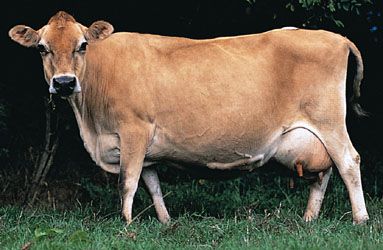
- Composition: While Holsteins produce the greatest quantity, Jersey milk is notably richer in butterfat, protein, and other milk solids. Because of this high concentration, Jersey cattle are often in demand for operations where butter or cheese production is a primary focus.267
The following table illustrates the differences in annual production averages based on 2021 U.S. data:
Breed
Milk Yield (lbs)
Protein (lbs)
Fat (lbs)
Holstein-Friesian
26,404
836
1,034
Jersey
18,570
690
904
Source: Council on Dairy Cattle Breeding (CDCB) annual herd-average report for 2021.1
In summary, Holsteins are the industry standard for maximizing total milk output, whereas Jerseys are valued for the efficiency and richness of their milk components.267
How did artificial insemination change the dairy industry?
Artificial insemination transformed the dairy industry by drastically increasing the reach and impact of genetically superior sires. Before its widespread adoption, a bull could naturally mate with only 30 to 50 cows per year; with artificial insemination, a single bull can now sire thousands of offspring annually, with some records exceeding 50,000 daughters.31
This technology fundamentally changed dairy breeding in several key ways:
- Accelerated Genetic Gain: By allowing breeders to use the most desirable sires more extensively, the industry has achieved consistent, long-term improvements in milk production and other economically significant traits.91
- Enhanced Progeny Testing: Artificial insemination works in tandem with progeny testing, where the daughters of young sires are evaluated to identify the top performers. Once identified, these superior bulls are used globally to influence the genetic destiny of the herd.9
- Logistical Efficiency: The development of cryopreservation (semen freezing) in the late 1940s allowed for the long-term storage and transport of genetic material, making high-quality breeding accessible across vast distances.103
Sources
- Why are Holstein cows so popular? — Encyclopædia Britannica
- Holstein-Friesian — Encyclopædia Britannica
- Animal breeding - Progeny testing — Encyclopædia Britannica
- Animal breeding - DNA — Encyclopædia Britannica
- Animal breeding - Accuracy of selection — Encyclopædia Britannica
- Jersey — Encyclopædia Britannica
- Dairy cattle breeds — Encyclopædia Britannica
- dairy product — Encyclopædia Britannica
- artificial insemination — Encyclopædia Britannica
- Origins of agriculture - Artificial breeding — Encyclopædia Britannica
Published on · 3 min read