Why Do Cats Have Whiskers?
Cats possess whiskers, or vibrissae, primarily to function as highly sensitive touch receptors that are vital for their survival. These specialized, stiff…
Why do cats have whiskers?
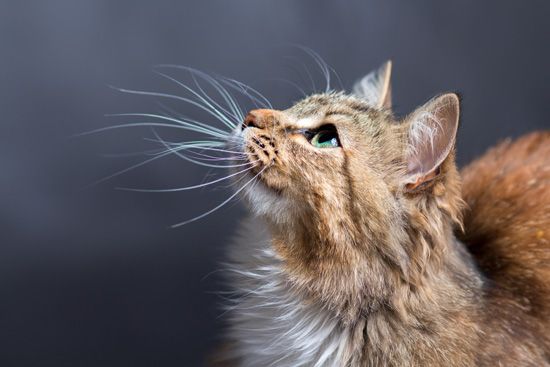
Cats possess whiskers, or vibrissae, primarily to function as highly sensitive touch receptors that are vital for their survival. These specialized, stiff hairs are located on the face and the back of the forelegs, allowing cats to detect subtle vibrations and changes in their environment.1
This sensory capability is essential for navigation and hunting, particularly because cats are crepuscular animals active during low-light conditions like dawn and dusk. Whiskers enable them to detect obstacles and move through their surroundings without collision, even in total darkness.1
Beyond navigation, whiskers serve as a tool for communication. By moving their facial whiskers forward or backward, cats signal their emotional state: pushing them forward often indicates curiosity or a hunting instinct, while pulling them back against the face typically signals fear or aggression.1
How do whiskers help cats communicate their emotions?
Cats use the movement of their facial whiskers to signal their internal state and intentions to others. By adjusting the position of these specialized hairs, a cat provides clear visual cues about its mood.1
- Curiosity or Hunting: When a cat is feeling inquisitive or is focused on prey, it typically pushes its whiskers forward. During a predatory pounce, the whiskers are often spread wide to maximize sensory input while the cat remains alert.12
- Fear or Aggression: When a cat feels threatened, angry, or submissive, it tends to pull its whiskers back against its face. In states of fear or submission, the whiskers may flatten completely as the cat crouches to appear smaller and less threatening to a potential aggressor.12
These movements work in tandem with other forms of body language, such as ear positioning and tail posture, to create a complex system of non-verbal communication.2
Are there other animals that have vibrissae?
Yes, many animals and even some plants possess vibrissae, which serve as specialized tactile organs. While commonly associated with the whiskers of mammals like cats, the term applies to various sensory structures across the natural world:
- Birds: Many insect-feeding birds have hairlike feathers around their bills and eyes that function as vibrissae, helping them navigate and capture prey.34
- Insects: Certain flies possess paired bristles near their mouths that are classified as vibrissae.3
- Plants: Some insectivorous plants utilize sensitive hairs that function similarly to vibrissae to detect the presence of prey.3
- Humans: Historically, the term was also used to describe the hairs found inside the human nostril.4
The word itself is derived from the Latin vibrare, meaning to wave, brandish, or vibrate, reflecting the sensitive nature of these structures as they interact with the environment.4
Why should you never trim a cat’s whiskers?
You should never trim a cat’s whiskers because they are not merely decorative; they are essential sensory organs that function as vital touch receptors. Known as vibrissae, these specialized hairs are deeply embedded in the skin and connected to a complex network of nerves.
Trimming them significantly impairs a cat’s ability to navigate and interact with its environment. Because cats are crepuscular—most active at dawn and dusk—they rely on these sensitive hairs to detect vibrations and objects in low-light conditions. By sensing subtle changes in air currents and physical obstacles, whiskers allow a cat to move safely through its surroundings without bumping into items. Furthermore, because whiskers are used to communicate mood and intentions, removing them strips a cat of a primary method for expressing its emotional state to others.1
We could dive deeper into how these sensory structures aid in a cat’s hunting success or explore the biological differences between whiskers and regular fur.
Sources
- Why do cats have whiskers? — Encyclopædia Britannica
- cat - Body language and communication — Encyclopædia Britannica
- Vibrissae — Encyclopædia Britannica
- Did you know? — Merriam-Webster
Published on · 3 min read