Why Do Horses Need Horseshoes?
Horseshoes are primarily used to protect a horse's hooves from cracking or wearing down when the animal travels or works on hard, rough surfaces. Because a…
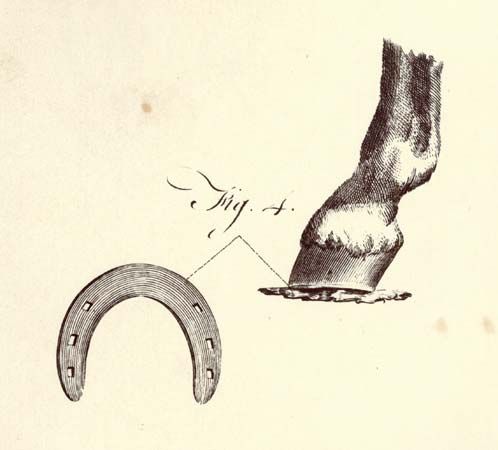
Why do horses need horseshoes?
Horseshoes are primarily used to protect a horse’s hooves from cracking or wearing down when the animal travels or works on hard, rough surfaces. Because a horse’s hoof is dense and lacks sensitivity, these U-shaped metal plates can be securely nailed into place without causing pain.12
Beyond basic protection, horseshoes serve several functional purposes:
- Enhanced Performance: They provide additional traction and stability, which is essential for horses involved in racing or other activities requiring speed and agility.1
- Historical Significance: The practice of shoeing, which dates back to Roman times, played a vital role in the evolution of metallurgy and the trade of the blacksmith.12
While horseshoes are also famously associated with superstition and good luck due to their iron composition and shape, their primary utility remains the physical preservation of the horse’s foot.3
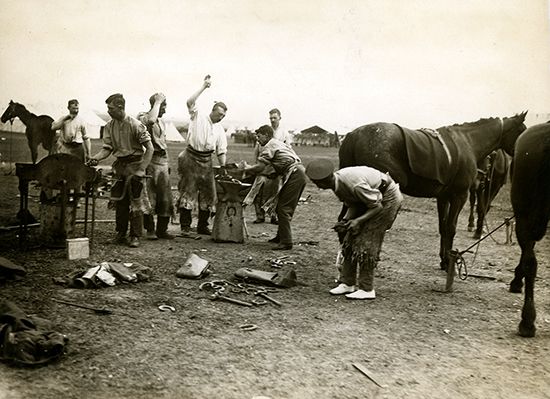
What is the role of a farrier in horse care?
A farrier is a specialized professional who focuses on the care of a horse’s feet. While the term historically referred to a blacksmith who provided general veterinary care, today it specifically denotes an expert in horseshoeing and hoof maintenance.45
The role involves several essential tasks:
- Hoof Preparation: The farrier cleans, trims, and shapes the horse’s hooves using specialized tools like rasps and knives. This process is painless for the animal because the hoof is composed of tough, nerveless material.45
- Shoe Fitting: Farriers select or forge U-shaped iron shoes. They often heat the metal in a forge to modify its shape on an anvil so that it perfectly fits the individual hoof.5
- Application: Once the shoe is shaped and cooled, the farrier securely affixes it to the hoof using nails.5
While the profession has declined in industrialized regions due to the reduced use of horses in agriculture and transport, the farrier remains vital for the health and mobility of modern horses.5
How do wild horses keep their hooves healthy without shoes?
Wild horses maintain their hooves through natural wear rather than human intervention. Like the nails and claws of other mammals, a horse’s hoof is composed of keratin and grows continuously throughout the animal’s life. In the wild, the length of the hoof is naturally controlled by the constant friction and wear that occurs as the horse moves across various terrains.6
While domestic horses often require regular trimming by a professional to prevent their hooves from growing long or uneven—which can lead to joint stress and cracking—wild horses avoid these issues through their natural lifestyle. Because they are constantly on the move, the rate of growth is balanced by the rate of wear, keeping the hoof at an optimal length for movement and endurance.76
What are the different materials used to make horseshoes?
Horseshoes are primarily constructed from metal, a practice that has been central to the development of metallurgy since the Roman era.13
While the provided information highlights that the horseshoe is traditionally a U-shaped metal plate designed to protect the hoof from wear on hard or rough surfaces, it does not specify the various types of metal alloys or synthetic materials used in modern farriery. The primary function of these metal plates remains the prevention of cracking and splitting, while also providing necessary traction and stability for horses engaged in demanding activities like racing or jumping.13
Sources
- Why do horses need horseshoes? — Encyclopædia Britannica
- Why are horseshoes lucky? — Encyclopædia Britannica
- horseshoe — Encyclopædia Britannica
- Did you know? — Merriam-Webster
- blacksmith — Encyclopædia Britannica
- Livestock farming - Management — Encyclopædia Britannica
- hoof — Encyclopædia Britannica
Published on · 3 min read