Mammal
Mammals exhibit a vast range of sizes, from massive marine giants to tiny terrestrial creatures.
What are some of the largest and smallest known mammal species?
Mammals exhibit a vast range of sizes, from massive marine giants to tiny terrestrial creatures.
Largest Mammals
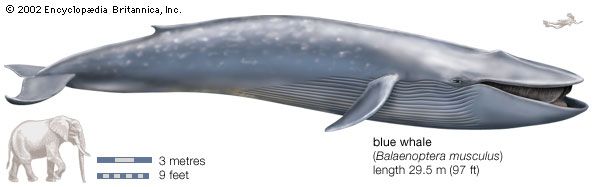
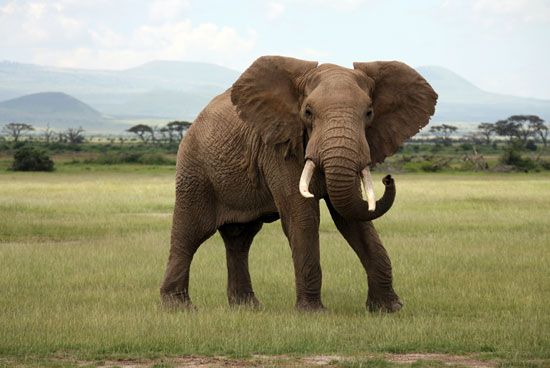
The blue whale is the largest mammal—and the largest animal—to have ever lived. These massive cetaceans can reach lengths exceeding 30 meters (98 feet) and weigh up to 180 metric tons. On land, the African bush elephant holds the title for the largest living animal, with some males weighing as much as 10,886 kg (24,000 pounds).123
Smallest Mammals
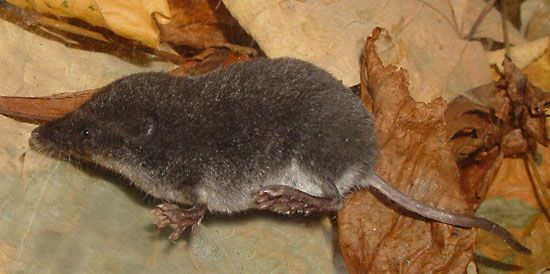
Among living species, the Etruscan shrew is recognized as the smallest mammal, weighing less than 3 grams. Another contender is the bumblebee bat, which weighs approximately 1.7–2.0 grams. Additionally, the extinct genus Batodonoides included species such as B. vanhouteni that may have been even smaller, though estimates based on fossilized teeth overlap with the size range of the bumblebee bat.45
How has the evolution of mammals been influenced by major events in Earth’s history?
The evolution of mammals has been profoundly shaped by major geological and climatic events throughout Earth’s history.
The Rise of Mammals and the K–T Extinction
Mammals originated in the Triassic Period from therapsids, but their major diversification occurred following the K–T extinction 66 million years ago. The eradication of dinosaurs left numerous ecological niches vacant, triggering an explosive adaptive radiation of placental mammals and marsupials.789
Tectonic Shifts and Isolation
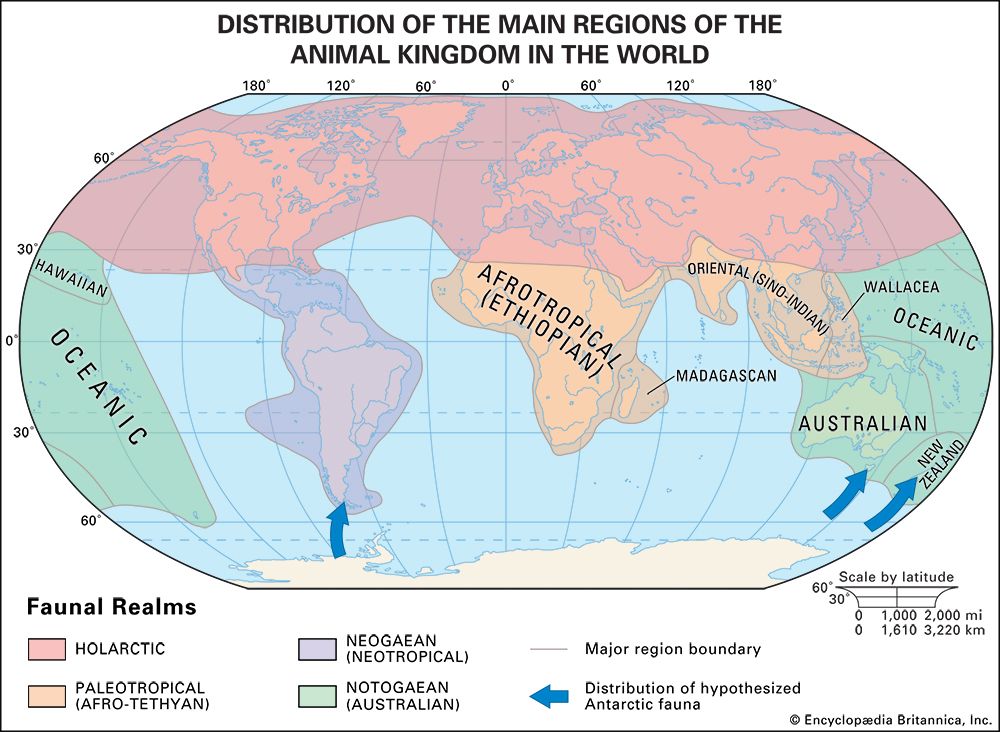
The breakup of the supercontinent Pangea played a critical role in mammalian development. As continents drifted apart, isolated landmasses allowed for the evolution of unique, specialized faunas. For example, South America and Australia served as evolutionary laboratories where marsupials diversified in relative isolation from placental predators.1011712
Climate Change and Migration
Global cooling during the late Eocene and Miocene epochs transformed forests into grasslands, driving the evolution of grazing mammals with specialized teeth and limbs for running. Later, the formation of the Panama land bridge about 3 million years ago reconnected North and South America, leading to intense competition that resulted in the extinction of many endemic South American lineages. Finally, the end of the Ice Age saw a significant extinction event, likely accelerated by the hunting efficiency of early humans.911137
How do different mammals care for their young?
Mammals provide parental care through a variety of strategies, primarily driven by the need to ensure offspring survival, which is often a costly investment for the parent.14
Nourishment and Lactation
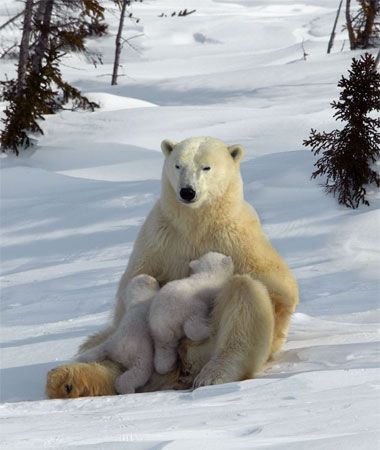
A defining characteristic of mammalian parental care is the production of milk by the female’s mammary glands14. This milk provides an efficient energy source for rapid growth, with its composition—rich in fats, proteins, and sugars—varying significantly between species to meet specific developmental needs. The process of lactation is hormonally regulated and stimulated by the suckling of the newborn, which triggers the release of hormones like oxytocin to facilitate milk ejection.1516
Developmental States at Birth
The level of care required often depends on the condition of the young at birth:16
- Precocial young: Born relatively well-developed and mobile, often after a longer gestation period (e.g., many large grazing mammals and hares) large grazing mammals and hares).14
- Altricial young: Born blind, hairless, and helpless, requiring more intensive maternal care (e.g., rabbits, carnivores, and most rodents).16
- Marsupials: Born at an extremely early stage of development, they must crawl to the brood pouch to attach to a nipple and continue their development for months.1718
Protective Behaviors
Beyond feeding, mothers often engage in behaviors such as licking the newborn, which serves to clean the young and establish a unique social bond. Many mammals also construct specialized nests, dens, or burrows to protect their offspring from predators and environmental stressors. While female-only care is the most common pattern in mammals due to the physiological necessity of gestation and lactation, biparental care does occur in some species.1814
How do mammals regulate their body temperature?
Mammals regulate their body temperature through a process known as thermoregulation, which allows them to maintain a relatively constant internal temperature regardless of their environment. As endotherms, mammals generate heat internally through their metabolism generate heat internally through their metabolism.202122
Physiological Mechanisms
The hypothalamus in the brain acts as the primary control center, integrating signals from thermosensors in the skin, spinal cord, and deep body tissues.2021
- Heat Generation: When the body is cold, mammals increase metabolic heat production, shiver, or utilize thermogenesis by brown adipose tissue.2021
- Heat Loss: When the body is overheated, mammals promote heat loss through perspiration, panting, and vasodilation, which increases blood flow near the skin surface.2021
- Insulation: Mammals also conserve heat by reducing blood flow to the skin (vasoconstriction) and fluffing their fur.21
Behavioral and Adaptive Strategies
Mammals supplement these internal processes with behavioral responses, such as seeking shelter, adjusting posture, or migrating. During periods of extreme environmental stress or food scarcity, some mammals enter states of torpor or hibernation, significantly lowering their metabolic rate and body temperature to conserve energy.2324
Sources
- mammal: Top Questions — Encyclopædia Britannica
- blue whale — Encyclopædia Britannica
- 14 Questions About Aquatic Animals Answered - Which animal is both the biggest mammal and the largest living creature on Earth? — Encyclopædia Britannica
- Batodonoides — Encyclopædia Britannica
- Queen Mab’s Stable: 7 of the Smallest Animals — Encyclopædia Britannica
- How much does an elephant weigh? — Encyclopædia Britannica
- Cenozoic Era - Cenozoic life — Encyclopædia Britannica
- mammal - The evolution of the mammalian condition — Encyclopædia Britannica
- Tertiary Period - The rise of mammals — Encyclopædia Britannica
- Pangea: Top Questions — Encyclopædia Britannica
- plate tectonics - Evolution — Encyclopædia Britannica
- Tertiary Period - Mammalian migration between North and South America — Encyclopædia Britannica
- mammal - Diversity — Encyclopædia Britannica
- mammal - Implantation, gestation, and birth — Encyclopædia Britannica
- Animal social behavior - Social interactions involving the costs and benefits of parental care — Encyclopædia Britannica
- mammal - Estrus and other cycles — Encyclopædia Britannica
- Reproductive behaviour - Parental care — Encyclopædia Britannica
- Animal social behavior - Social interactions involving sex — Encyclopædia Britannica
- lactation — Encyclopædia Britannica
- Biosphere - Temperature — Encyclopædia Britannica
- How Does the Human Body Maintain Its Temperature? — Encyclopædia Britannica
- Thermoreception - Behaviour and thermoregulation — Encyclopædia Britannica
- Endotherm — Encyclopædia Britannica
- dinosaur - Ectothermy and endothermy — Encyclopædia Britannica
- mammal - Response to environmental cycles — Encyclopædia Britannica
Published on · 4 min read