Why Do Horses Sleep Standing Up?
It is a common misconception that horses sleep exclusively while standing. In reality, horses utilize both standing and lying positions to fulfill their…
Why Do Horses Sleep Standing Up?
It is a common misconception that horses sleep exclusively while standing. In reality, horses utilize both standing and lying positions to fulfill their sleep requirements.12
Horses doze while standing to remain vigilant against predators. Because they are large animals with straight backs, rising from the ground is a slow process that leaves them vulnerable to attack. To avoid this, they utilize a “stay apparatus”—a specialized system of tendons, ligaments, and muscles that locks their leg joints in place, allowing them to rest without collapsing.312
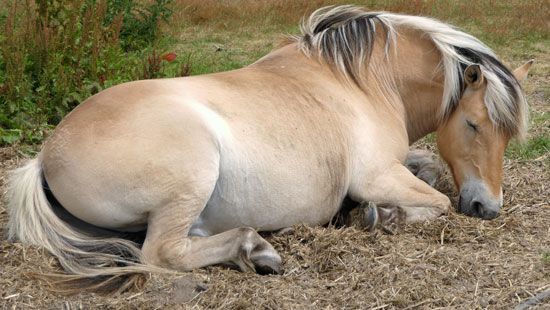
However, this standing rest is only a light sleep. For essential REM sleep, which is necessary for health and memory consolidation, horses must lie down. They typically do this in short intervals, often while a companion stands nearby to act as a lookout.123
What is the stay apparatus in horses?
The stay apparatus is a specialized biological mechanism in horses that allows them to rest while standing without collapsing. It consists of a sophisticated system of tendons, ligaments, and muscles that stabilizes and effectively locks the major joints in the animal’s legs.23
By engaging this system, a horse can relax its body and enter a state of light sleep while remaining upright. This adaptation is essential for survival, as it allows the horse to remain vigilant and ready to flee immediately if threatened by predators, avoiding the time-consuming process of rising from a lying position. While the stay apparatus facilitates essential rest, horses must still lie down for short intervals to achieve REM sleep, which is necessary for memory consolidation and overall health.23
Why do horses need REM sleep?
For horses, REM (rapid eye movement) sleep is essential for their overall health and well-being. Similar to humans, this deep sleep phase is closely associated with memory consolidation, which helps the animal process and store information. Additionally, scientists believe that REM sleep plays a vital role in brain development and the processing of emotions.34
Because horses are prey animals, they do not achieve this deep sleep while standing; the “stay apparatus” only allows them to enter a light dozing state while upright. To reach the REM stage, they must lie down, typically in short, frequent intervals totaling one to three hours per day. During these periods, they often rely on a companion to act as a lookout, ensuring they remain safe from predators while their bodies are in a more vulnerable position.32
How do herd dynamics help horses stay safe while sleeping?
Herd dynamics are essential to the safety of horses because they allow the animals to mitigate the risks associated with deep sleep. While horses can safely doze while standing using their stay apparatus, they must lie down to achieve REM sleep, a state that leaves them vulnerable to predators due to the time required to stand up and flee.31
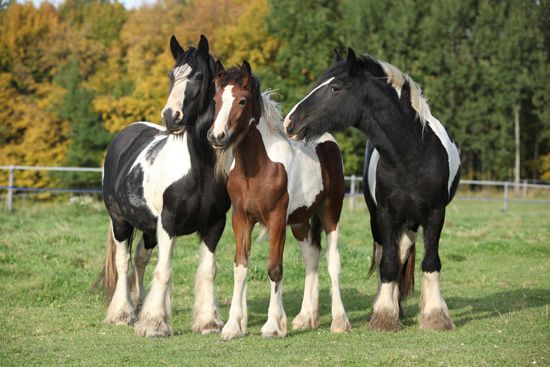
To manage this vulnerability, horses in a group employ a cooperative strategy: they take turns acting as a lookout. While one or more horses lie down to rest, a companion remains standing nearby to monitor the environment for potential threats. This social behavior ensures that the resting horse can safely enter a deep sleep state, knowing that the herd will provide an early warning if danger approaches.613
Sources
- 18 Questions About Farming Answered - Why do horses sleep standing up? — Encyclopædia Britannica
- Why Do Horses Sleep Standing Up? — Encyclopædia Britannica
- How do horses sleep? — Encyclopædia Britannica
- REM sleep — Encyclopædia Britannica
- REM sleep: Top Questions — Encyclopædia Britannica
- horse - Behaviour — Encyclopædia Britannica
Published on · 2 min read