How Do Horses Sleep?
Horses utilize two distinct methods for sleep, depending on the depth of rest required.
How do horses sleep?
Horses utilize two distinct methods for sleep, depending on the depth of rest required.
Standing Sleep
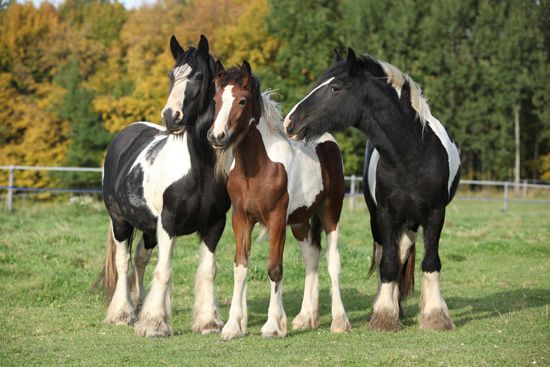
Most of a horse’s rest occurs while standing, which allows for a quick escape from predators. This is made possible by the “stay apparatus,” a specialized system of tendons, ligaments, and muscles that locks the leg joints in place, enabling the animal to doze without falling.12
Lying Down
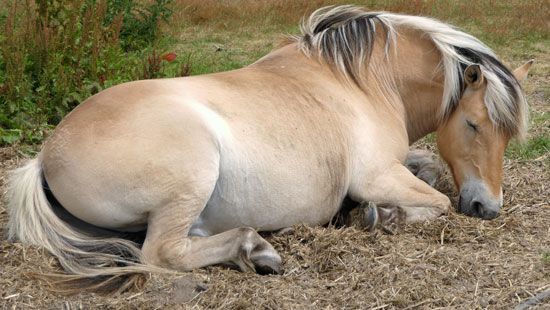
For deep REM (rapid eye movement) sleep, which is essential for memory consolidation and overall health, horses must lie down. Because rising from a lying position takes time and leaves them vulnerable, they only do so for short intervals, totaling about one to three hours per day. During these periods, they often rely on a companion to act as a lookout for potential threats.12
What is the stay apparatus?
The stay apparatus is a specialized anatomical system in horses consisting of tendons, ligaments, and muscles that stabilizes and locks the major joints in their legs.21
By engaging this system, a horse can effectively lock its legs in place, allowing it to doze or enter a light sleep phase while standing without the risk of falling. This adaptation is crucial for survival, as it enables the animal to remain upright and ready to flee quickly if threatened by predators, avoiding the vulnerability associated with lying down.21
Why do horses need REM sleep?
Horses require REM (rapid eye movement) sleep because it is essential for their overall health, specifically facilitating memory consolidation and the processing of information.1
While horses can achieve light rest while standing, they must lie down to enter the deep REM phase. During this state, the brain exhibits high levels of activity, including the production of theta waves in the hippocampus, which is critical for storing memories and spatial navigation. Because REM sleep is associated with dreaming and complex neurological maintenance, it serves a vital function that standing “dozing” cannot fulfill.132
Due to the vulnerability of lying down, horses only engage in these deep sleep sessions for short, intermittent periods totaling one to three hours per day, often relying on a companion to act as a lookout for predators.13
We could dive deeper into the specific neurological processes that occur during REM sleep or explore how other prey animals manage their sleep cycles.
How do other prey animals sleep?
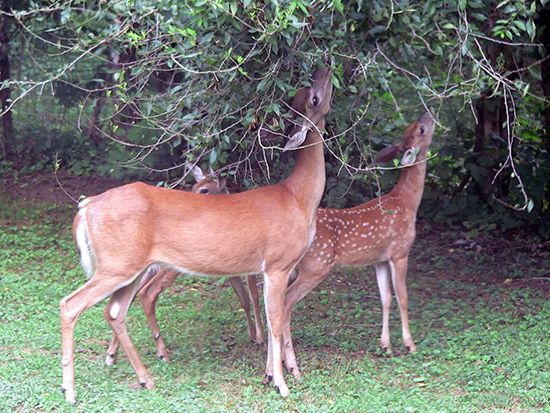
Prey animals have evolved diverse sleep strategies to balance the physiological necessity of rest with the constant need to remain vigilant against predators.
Many large herbivores, such as horses, utilize a “stay apparatus”—a system of tendons, ligaments, and muscles that locks their leg joints—to sleep while standing. This allows them to enter a light sleep phase while remaining ready to flee instantly if threatened. Because lying down makes these animals vulnerable and slower to rise, they limit deep REM sleep to short, intermittent intervals, often relying on group members to act as lookouts.14
While the specific mechanics vary, research indicates that REM sleep is a widespread phenomenon across the animal kingdom, observed in mammals, birds, and even some reptiles. Regardless of the species, this phase is characterized by heightened brain activity, suggesting that animals—like humans—process experiences or consolidate memory during these periods of rest.51
Sources
- How do horses sleep? — Encyclopædia Britannica
- Why Do Horses Sleep Standing Up? — Encyclopædia Britannica
- REM sleep — Encyclopædia Britannica
- 18 Questions About Farming Answered - Why do horses sleep standing up? — Encyclopædia Britannica
- Do animals dream? — Encyclopædia Britannica
Published on · 2 min read