Xi River System
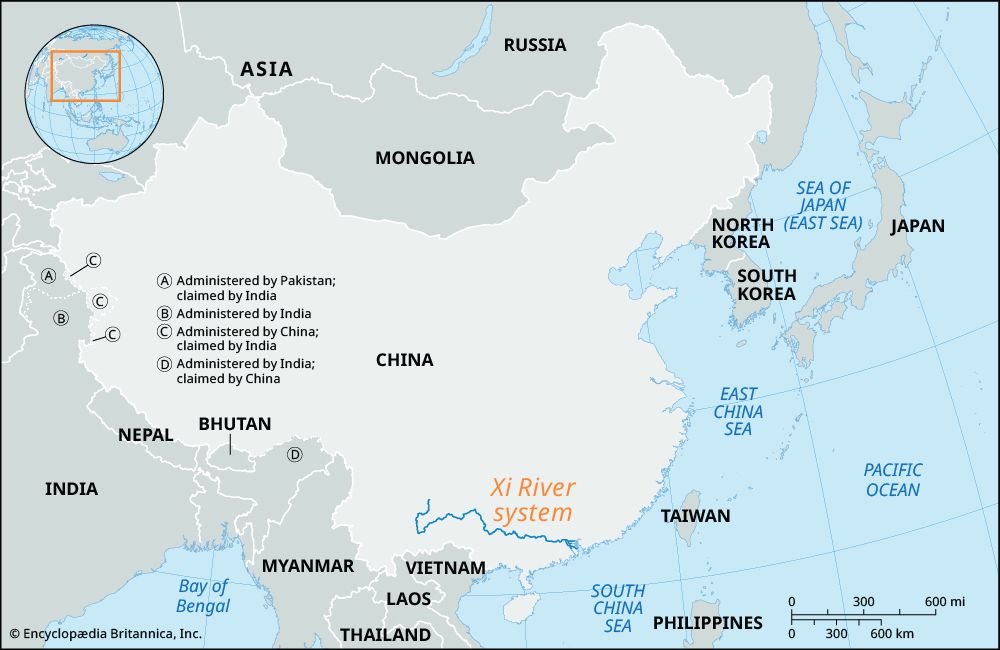
The Xi River system has been a fundamental force in the historical and economic development of southern China, primarily by serving as the region's primary…
How has the Xi River system influenced the historical development of the region?
The Xi River system has been a fundamental force in the historical and economic development of southern China, primarily by serving as the region’s primary commercial artery. By linking interior hubs like Wuzhou with major coastal centers such as Guangzhou, Hong Kong, and Macau, the river system facilitated essential trade and communication across the basin.1
Key influences include:
- Commercial Navigation: The system provides over 6,800 miles of navigable water routes, supporting a mix of steamships and traditional junks that have historically moved goods between the interior and the coast.1
- Agricultural Foundation: The Pearl River Delta, formed by the Xi and its tributaries, is one of the most densely populated and intensively cultivated regions in China. Its complex network of flood dikes and irrigation channels supports highly productive agriculture, including multiple annual rice crops.12
- Urban Development: Many cities, such as Wuzhou, emerged as vital gateways for trade, while others like Liuzhou developed as hubs for transporting regional forest products.13
What role does the Xi River system play in transportation and trade in the region?
The Xi River system serves as the primary commercial waterway of South China, functioning as a vital artery that connects the interior of the region with major coastal hubs.16
Transportation and Navigation
- Connectivity: The system links inland centers, such as Wuzhou, with significant delta cities including Guangzhou, Hong Kong, and Macau.1
- Capacity: The basin contains over 9,000 miles of water routes, with more than 6,800 miles currently in use. While large ships of up to 1,000 tons can navigate as far upstream as Wuzhou, smaller craft and junks ply the middle and upper courses, as well as the Bei and Dong rivers.16
- Operational Challenges: Navigation is frequently hampered by seasonal water fluctuations, rapids, and shallow channels in the delta, which prevent large oceangoing vessels from reaching Guangzhou directly. In some sections, such as the Yu River, river craft must still be manually hauled over rapids.12
Role in Trade
The river system is essential for moving goods between production sources and consumption destinations, particularly for bulk commodities. It remains a critical component of the regional economy, as water transport is often more cost-effective than rail or road alternatives for bulk freight.16
What are the major tributaries of the Xi River system?
The Xi River system is formed by a complex network of streams and tributaries that drain the mountainous regions of southern China. As the river flows eastward, it is joined by several significant waterways that contribute to its volume and reach.1
The major tributaries and headstreams include:
- Nanpan River: Generally considered the main headstream of the system, it rises in the Yunnan-Guizhou Plateau and flows through Yunnan province.1
- Beipan River: This river joins the Nanpan to form the Hongshui River.1
- Liu River: Serving as the major left- (north-) bank tributary, it joins the system at Shilong.1
- Yu River: A major right- (south-) bank tributary that rises in southeastern Yunnan and joins the system at Guiping.1
- Beilu River: This tributary joins the system on the right bank at Tengxian.1
- Gui River: This tributary joins the system on the left bank at Wuzhou.1
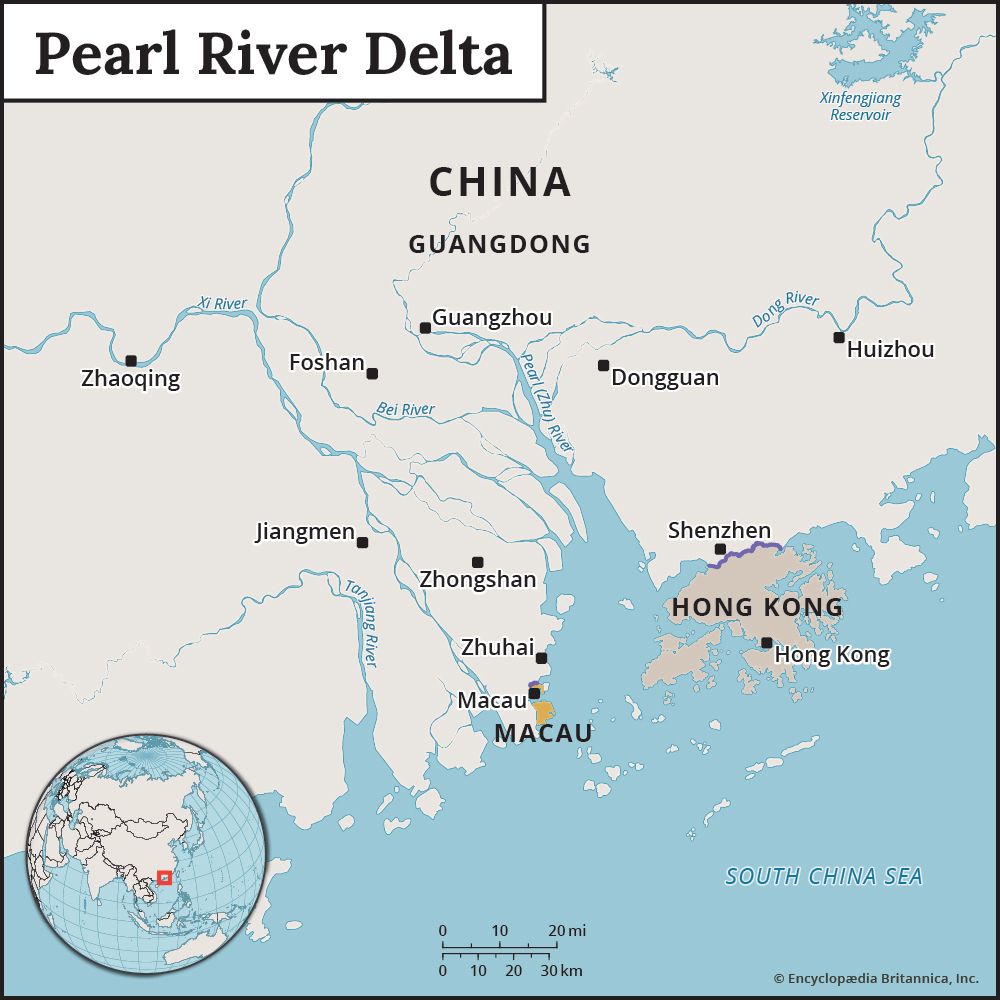
Additionally, the Pearl River Delta is formed by the convergence of the Xi, the Bei River, and the Dong River, which collectively facilitate the region’s extensive water transport network.1
What are some of the major cities located along the Xi River system?
The Xi River system supports several significant urban centers that serve as vital hubs for commerce, transportation, and agriculture. Key cities located along the system include:
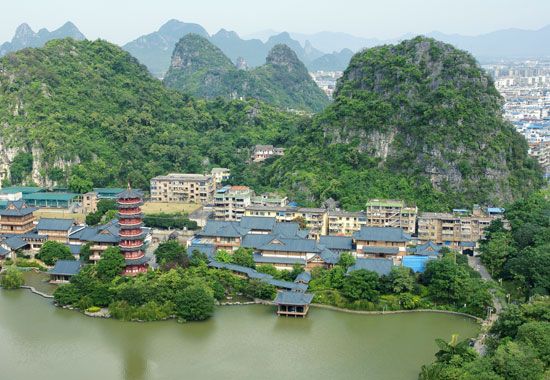
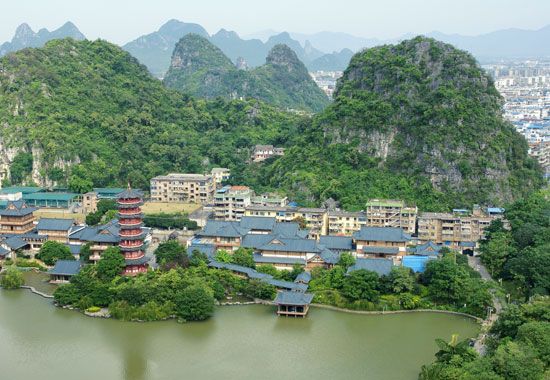
- Wuzhou: Situated at the confluence of the Xi and Gui rivers, this city is a major river port in the Guangxi region. It has historically served as a strategic commercial center and remains a critical link for trade between the interior and the coast.18
- Guangzhou: Located in the north of the Pearl River Delta, this major city is a central hub for international commerce. While it does not have direct access to the main channel of the Xi, it is intricately connected to the system’s network of waterways.19
- Guiping: Positioned at the junction where the Yu River joins the system, this town is a notable river center in the Guangxi region.1
- Tengxian: Located along the Xun River section, this town serves as a point where the Beilu River joins the system.1
- Gongchuan, Qianjiang, and Laibin: These towns are recognized as important river towns within the hilly regions of Guangxi, where the river functions as a primary artery for local commerce.1
- Macau and Hong Kong: While located at the mouth of the Pearl River estuary, these cities are integral to the broader delta region, which is formed by the convergence of the Xi, Bei, and Dong rivers.149
Sources
- Xi River system — Encyclopædia Britannica
- Xiang River — Encyclopædia Britannica
- Yu River — Encyclopædia Britannica
- Pearl River Delta — Encyclopædia Britannica
- Guangxi - Settlement patterns — Encyclopædia Britannica
- Guangdong - Transportation of Guangdong — Encyclopædia Britannica
- China - Waterways of China — Encyclopædia Britannica
- Wuzhou — Encyclopædia Britannica
- Guangdong - Drainage — Encyclopædia Britannica
Published on · 4 min read