Xiang River
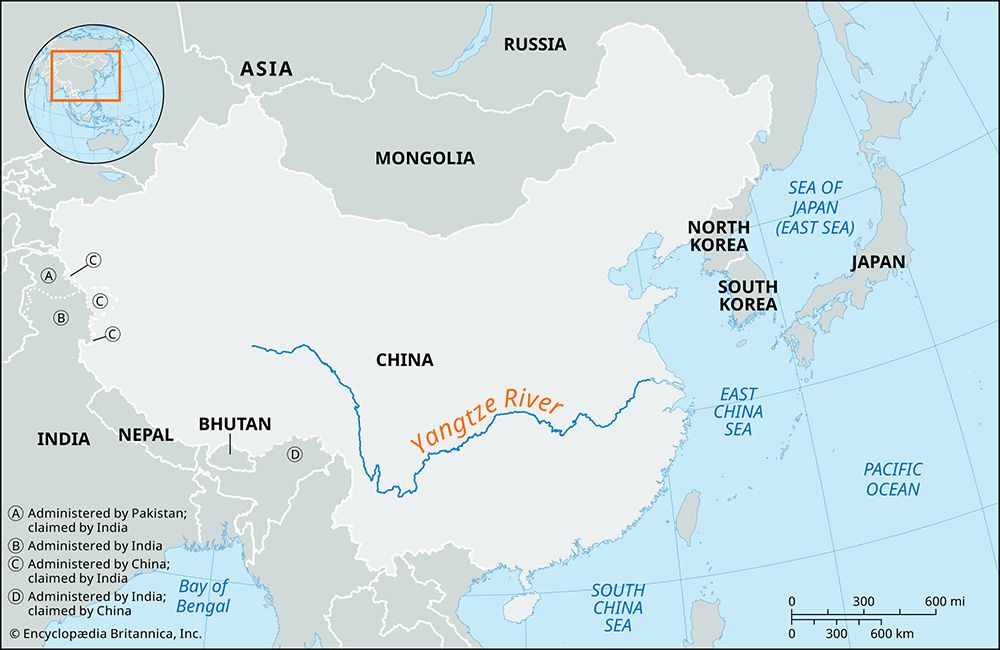
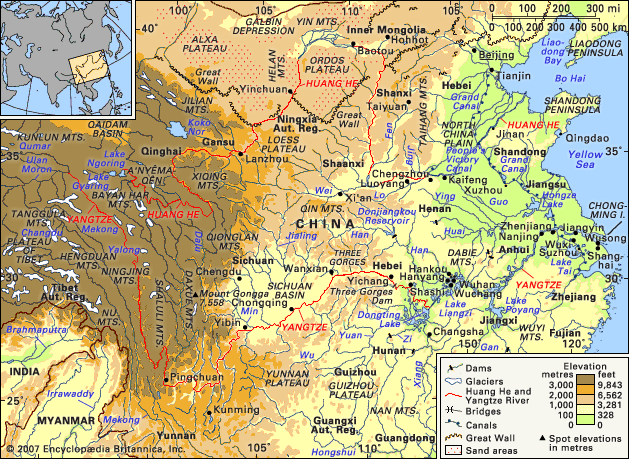
The Xiang River has a total length of 500 miles (800 km). It serves as one of the principal tributaries of the Yangtze River, which is the longest river in…
What is the length of the Xiang River and how does it compare to other major rivers in China?
The Xiang River has a total length of 500 miles (800 km). It serves as one of the principal tributaries of the Yangtze River, which is the longest river in China.12
In comparison to China’s major waterways, the Xiang is significantly shorter than the country’s primary arterial rivers. For instance, the Grand Canal spans approximately 1,100 miles (1,800 km). While the Xiang is an important regional waterway that historically provided a vital communication route between central China and the provinces of Guangdong and Guangxi, it functions as a tributary within the broader Yangtze River basin rather than as one of the nation’s three primary independent river systems, which are the Huang He, the Yangtze, and the Xi River.312
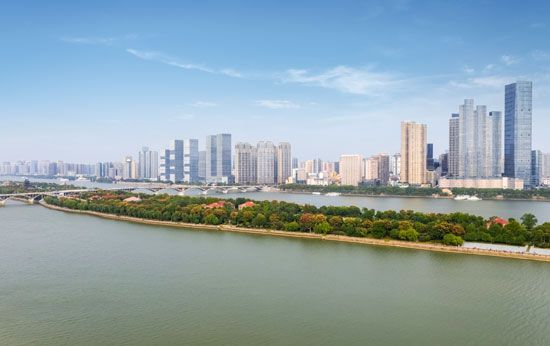
What is the historical and cultural significance of the Xiang River in Chinese civilization?
The Xiang River has served as a vital artery of communication and economic activity in southeastern China throughout historical times. Flowing through Hunan province, it functioned as the primary transport route connecting central China with the southern provinces of Guangdong and Guangxi until the development of railways in the 1930s.1
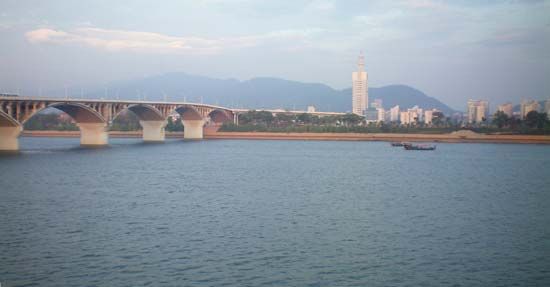
Culturally and economically, the river has been central to the development of major urban centers. Cities such as Changsha, Xiangtan, and Zhuzhou are situated along its banks, benefiting from the intersection of road, rail, and river networks. Historically, the river facilitated the movement of goods via various vessels, ranging from small steamboats to traditional junks, which could navigate as far as Hengyang or even Lingling during high water. While modern infrastructure has largely superseded its role as the chief communication artery, the Xiang remains an essential waterway within the Yangtze River basin, continuing to support regional trade and settlement patterns.51
What role does the Xiang River play in Chinese mythology and literature?
While the Xiang River is a major geographical feature of Hunan province, the provided search results do not contain specific information regarding its role in Chinese mythology or its direct representation in literature beyond the broader regional context of the Yangtze River basin.
However, the region surrounding the Xiang River is deeply linked to the development of ancient Chinese poetry. The southern Chu state, which encompassed the Yangtze valley, fostered a distinct literary tradition known as the Chuci (“Songs of Chu”). This tradition was heavily influenced by local shamanistic folk rites and legends observed by the poet Qu Yuan. Qu Yuan, who is central to this literary history, famously drowned himself in the Miluo River—a tributary of the Yangtze—an event that inspired the Dragon Boat Festival.
What are some of the major tributaries of the Xiang River?
The Xiang River is fed by several significant tributaries that contribute to its flow through Hunan province. These include:
- Xiao River: Joins the Xiang at Lingling, draining the mountains along the Hunan-Guangxi border.1
- Lei River: Flows from the border of Guangdong province and meets the Xiang at Hengyang.1
- Lu River: Joins the Xiang at Zhuzhou.1
- Lian River: Serves as the chief western tributary of the Xiang and joins it below Xiangtan.1
Sources
- Xiang River — Encyclopædia Britannica
- China - Waterways of China — Encyclopædia Britannica
- China - Drainage — Encyclopædia Britannica
- Yangtze River - The lower course — Encyclopædia Britannica
- Xiang — Merriam-Webster
- Hunan - Settlement patterns — Encyclopædia Britannica
- Chu — Merriam-Webster
- Qu Yuan — Encyclopædia Britannica
- Chinese literature - Poetry — Encyclopædia Britannica
- Yangtze River: Top Questions — Encyclopædia Britannica
- Xin River — Encyclopædia Britannica
Published on · 2 min read