5 Awesome Parasitic Plants
Parasitic plants are fascinating organisms that obtain water or nutrients from a host plant using a specialized organ called a haustorium. Here are five of…
What are 5 Awesome Parasitic Plants?
Parasitic plants are fascinating organisms that obtain water or nutrients from a host plant using a specialized organ called a haustorium. Here are five of the most remarkable examples:1
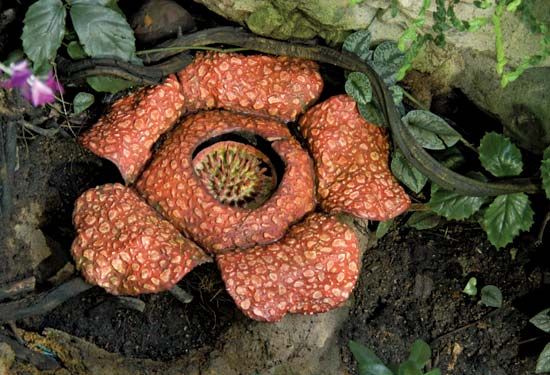
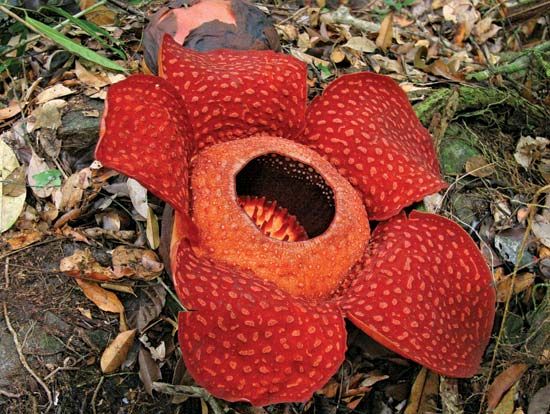
- Corpse Flower (Rafflesia arnoldii): This obligate parasite produces the world’s largest individual flower, which can reach nearly 1 meter in diameter. It lacks leaves and roots, living entirely inside its host vine until it emerges to bloom, emitting a scent of rotting flesh to attract pollinators.12
- Thurber’s Stemsucker (Pilostyles thurberi): A tiny, rootless parasite that lives inside the stems of shrubs in the pea family. It remains hidden until it breaks through the host’s bark to reveal its minute flowers.12
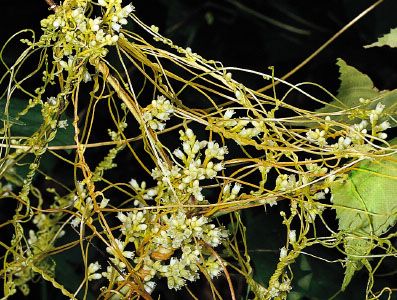
- Dodder (Cuscuta): Often appearing as a tangled mass of yellow, leafless vines, this parasite uses a “sense of smell” to detect volatile chemicals from potential hosts. Once attached, it siphons nutrients so aggressively that it can kill the host.2
- Dwarf Mistletoe (Arceuthobium): These parasites infect coniferous trees and employ a unique dispersal method: they use internal pressure to launch sticky, bullet-shaped seeds at speeds up to 90 km/hr.12
- Australian Christmas Tree (Nuytsia floribunda): A large, photosynthetic tree that acts as a facultative parasite. It uses root-based haustoria equipped with guillotine-like structures to sever the water-carrying vessels of neighboring plants.2
How do haustoria function to steal nutrients from a host plant?
The haustorium is a specialized organ that serves as the essential structural and functional link between a parasitic plant and its host. Its primary role is to enable the parasite to siphon water and nutrients directly from the host plant’s tissues.314
The process functions through the following mechanisms:
- Penetration: Depending on the species, the haustorium develops from either the roots or stems of the parasite. It physically penetrates the host’s outer tissues to reach the internal transport systems.31
- Vascular Union: Once inside, the haustorium establishes a direct vascular connection with the host. This union allows the parasite to tap into the host’s flow of water, minerals, and nutrients.31
- Nutrient Redirection: By integrating with the host’s vascular system, the parasite effectively redirects the host’s resources to support its own growth and reproduction.3
This connection is so intimate that it can cause significant damage to the host, often stunting its growth or reducing agricultural yields. While some parasites remain largely external, others grow entirely within the host, emerging only to flower.1
What is the difference between a hemiparasite and a holoparasite?
The primary difference between hemiparasites and holoparasites lies in their ability to perform photosynthesis and their subsequent dependence on a host plant for nutrition.5
- Hemiparasites: These plants possess chlorophyll and are capable of photosynthesis. While they are partially parasitic, they primarily rely on their hosts to obtain water and mineral nutrients. Some hemiparasites are facultative, meaning they can survive and reproduce without a host, while others are obligate.56
- Holoparasites: These plants are nonphotosynthetic and lack chlorophyll, often appearing in shades of cream, yellow, or purple. Because they cannot produce their own food, they are entirely dependent on their hosts for all nutrition. By definition, all holoparasites are obligate parasites, as they require a host to complete their life cycle.5
Morphologically, holoparasites often exhibit reduced or absent root systems and leaves, as these structures are unnecessary for their survival. In contrast, hemiparasites maintain the structures required for independent energy production.5
How do parasitic plants detect their hosts using chemical signals?
Parasitic plants utilize sophisticated chemical detection mechanisms to locate suitable hosts, ensuring their survival before their limited energy reserves are exhausted. These strategies vary depending on whether the parasite targets roots or stems:18
- Root Parasites: Many specialized parasites, such as those in the Orobanchaceae family (e.g., Striga and Orobanche), remain dormant in the soil until they detect specific chemical signals exuded by host roots. These signals are generally strigolactones, which act as hormones that trigger the germination of the parasite’s seeds.1
- Stem Parasites: Plants like dodder use airborne volatile organic compounds to “smell” nearby vegetation. Seedlings orient their growth toward these chemical cues, allowing them to locate and attach to preferred host species while bypassing unsuitable ones.18
Once a host is identified and contact is made, the parasite forms a haustorium to establish a vascular connection. Some species even employ “biohacking” by transferring microRNAs to the host, which can suppress the host’s natural defense mechanisms and facilitate nutrient flow.18
Sources
- parasitic plant — Encyclopædia Britannica
- 5 Awesome Parasitic Plants — Encyclopædia Britannica
- haustorium — Encyclopædia Britannica
- haustorium — Merriam-Webster
- holoparasite — Merriam-Webster
- hemiparasite — Merriam-Webster
- hemiparasitic — Merriam-Webster
- Doting on Dodder — Encyclopædia Britannica
Published on · 3 min read