8 of the World’s Most-Remote Islands
Some of the world's most remote islands are so far removed from other landmasses or major travel routes that they remain isolated even in the modern age.…
What are 8 of the World’s Most-Remote Islands?
Some of the world’s most remote islands are so far removed from other landmasses or major travel routes that they remain isolated even in the modern age. Here are eight examples of such remote locations:
- Kerguelen Islands: A windswept group in the Indian Ocean characterized by glaciers, mountains, and vast plains, serving as a haven for penguins and seals.1
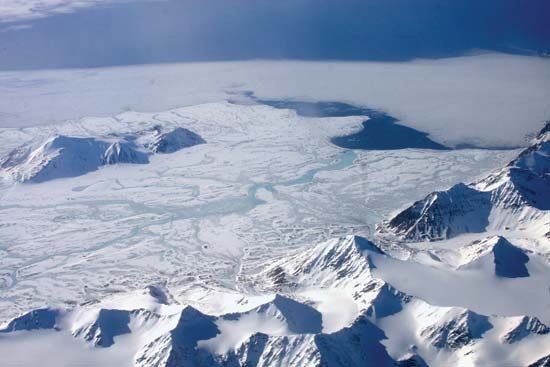
- Spitsbergen: The largest island of the Svalbard archipelago, located deep in the Arctic and home to the Svalbard Global Seed Vault.1
- Pitcairn Island: A small volcanic island in the South Pacific, famous as the refuge for the mutineers of the HMS Bounty.12
- Novaya Zemlya: A Russian-administered Arctic archipelago that served as a major site for nuclear testing during the Cold War.1
- Tristan da Cunha: An isolated group in the South Atlantic Ocean and the southernmost inhabited island in its territory.13
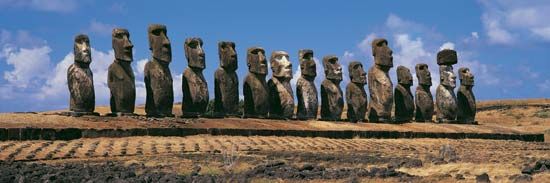
- Easter Island: A remote Chilean dependency in the South Pacific, renowned for its enigmatic moai statues.14
- South Georgia: Located in the Southern Ocean, this island is known for its rugged terrain and its connection to the expeditions of Sir Ernest Shackleton.1
- Diego Garcia: A coral atoll in the Indian Ocean that serves as a strategic military base.1
How do people living on such remote islands get their food and supplies?
People living on remote islands typically rely on a combination of subsistence activities and imported goods to meet their needs.
Subsistence and Local Production
Many islanders engage in subsistence farming and fishing as primary economic activities. Common staples include breadfruit, coconuts, bananas, taros, and potatoes, while livestock such as pigs and poultry are often raised for domestic consumption. In some regions, commercial activities like seaweed farming or the export of local products like lobster and crawfish help support the local economy.738
Imports and Infrastructure
Despite local production, remote islands are heavily dependent on external sources for many essential items. A significant portion of food—such as rice, meat, and vegetables—along with manufactured goods and fuel oil, must be imported via ocean freighters or air transport. These supplies often arrive from major international partners, and the reliance on processed imported foods has, in some cases, displaced traditional diets.78
Transportation between islands is frequently managed by government-operated small ships or domestic air services, which connect outlying atolls to main commercial centers.78
What makes an island officially considered ‘remote’ by geographers?
Geographers and explorers generally define an island as “remote” based on its significant distance from other landmasses or its isolation from established air routes and shipping lanes.
Rather than a single technical threshold, remoteness is characterized by the degree to which an island is removed from the rest of the world’s population and infrastructure. Key factors include:
- Geographic Isolation: The physical distance from the nearest inhabited landmass or major continent. For example, Tristan da Cunha is considered exceptionally remote because it lies approximately 2,100 km (1,300 miles) from the nearest inhabited island, St. Helena.
- Accessibility: The lack of regular, convenient transportation links. Islands that are far off the beaten path of global travel and trade networks are frequently categorized as remote because they are difficult to reach and sustain.
- Environmental Context: Extreme climates, such as those found in the Arctic or the Southern Ocean, often contribute to an island’s isolation, as harsh conditions further limit human settlement and connectivity.
How did early explorers navigate to find these isolated islands without modern technology?
Early navigators successfully traversed vast distances across open oceans long before the invention of modern instruments by relying on a sophisticated understanding of the natural world.
Celestial and Environmental Navigation
Without mechanical aids, ancient mariners, particularly Polynesian voyagers, utilized the Sun and stars as primary guides. By observing the rising and setting points of celestial bodies and the rotation of stars around the celestial pole, they could maintain a consistent heading.9
Beyond the heavens, navigators relied heavily on environmental clues:
- Meteorological Patterns: Sailors identified steady winds and assigned them names, creating a wind rose to track direction.9
- Natural Indicators: Navigators observed ocean swells, the behavior of migratory birds, and the presence of specific marine life to detect the proximity of land.10
- Piloting: Early coastal navigation, or piloting, involved memorizing sequences of landmarks, a technique that eventually evolved into the ability to cross open water by maintaining a mental map of the journey.11
The revival of these traditional, non-instrumental methods through the Polynesian Voyaging Society has demonstrated that these ancient techniques were highly effective for long-distance ocean travel.12
Sources
- 8 of the World’s Most-Remote Islands — Encyclopædia Britannica
- Pitcairn Island — Encyclopædia Britannica
- Tristan da Cunha — Encyclopædia Britannica
- list of islands - United States — Encyclopædia Britannica
- Easter Island — Encyclopædia Britannica
- Easter Island - History — Encyclopædia Britannica
- Micronesia - Economy — Encyclopædia Britannica
- Kiribati - Economy — Encyclopædia Britannica
- navigation - Development of marine navigation — Encyclopædia Britannica
- navigation - The marine chronometer — Encyclopædia Britannica
- navigation - Latitude measurements — Encyclopædia Britannica
- undersea exploration - Navigation — Encyclopædia Britannica
- navigation - Direction finding — Encyclopædia Britannica
- Migration - Navigation and orientation — Encyclopædia Britannica
- Polynesian culture - Contemporary Polynesia — Encyclopædia Britannica
- Migration - In coastal and pelagic regions — Encyclopædia Britannica
Published on · 4 min read