Abutilon
Abutilon is a genus comprising more than 100 species of herbaceous plants and partly woody shrubs within the mallow family (Malvaceae). Native to tropical…
What is abutilon?
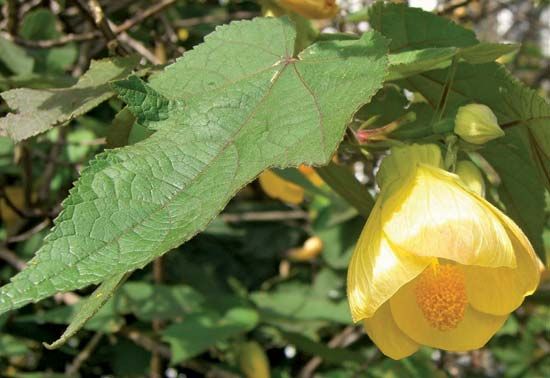
Abutilon is a genus comprising more than 100 species of herbaceous plants and partly woody shrubs within the mallow family (Malvaceae). Native to tropical and warm temperate regions, these plants are widely recognized for their attractive, five-petaled, and often nodding blossoms that range in color from white to deep orange.1
Many species are popular in cultivation:
- Chinese lantern (Abutilon ×hybridum): A fast-growing shrub often kept in greenhouses or outdoors in warmer climates.1
- Redvein flowering maple (A. pictum): A variegated-leaf shrub frequently grown as a houseplant.1
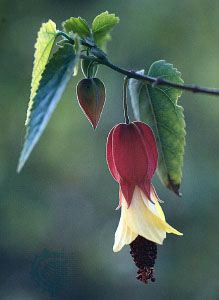
- Trailing abutilon (A. megapotamicum): A popular hanging plant known for its closed, yellowish-orange flowers.1
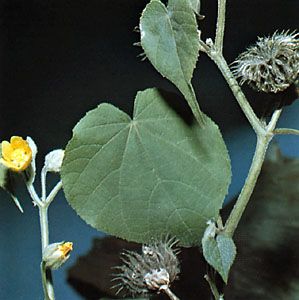
Conversely, some members of the genus are considered problematic. A. theophrasti, known as China jute, is an important fibre plant in Asia but is classified as a serious field weed in the United States, where it is commonly called velvetleaf or Indian mallow.12
What other plants belong to the Malvaceae family?
The Malvaceae family, also known as the mallow family, is a diverse group comprising approximately 243 genera and over 4,225 species of herbs, shrubs, and trees distributed worldwide. These plants are often characterized by their showy, five-petaled flowers and fibrous bark.23
The family includes a wide variety of economically and ecologically significant plants, ranging from food crops and fiber sources to popular ornamentals:24
- Food Crops: Cacao (Theobroma cacao), okra (Abelmoschus esculentus), durian (Durio zibethinus), and kola nut (Cola species).23
- Fiber Plants: Cotton (genus Gossypium), kapok (Ceiba pentandra), white jute (Corchorus capsularis), and kenaf (Hibiscus cannabinus).23
- Ornamentals: Hibiscus, hollyhock (Alcea rosea), baobab (Adansonia), and balsa (Ochroma pyramidale).23
- Other Notable Members: Marsh mallow (Althaea officinalis), linden (Tilia), and bottle tree (Brachychiton).25
How are fiber plants like China jute harvested and used?
Fiber plants like China jute (often referred to as jute) and kenaf are primarily harvested for their bast fibre, which is found in the inner bark of the stem.
Harvesting and Extraction
- Harvesting: Crops are typically harvested when the plants reach the flowering stage but before the seedpods fully mature to ensure the best balance of strength and luster.78
- Retting: Because the fibers are held together by gummy substances, they must undergo retting—a process using moisture and bacteria to dissolve these tissues. This is done via water retting (submerging stalks in ponds or tanks) or dew retting (exposing stalks to moisture in fields).79
- Separation: Once retted, the fibers are separated from the woody stalk through mechanical breaking and scutching, or by hand-stripping and beating.798
Uses
These fibers are valued for their strength and low cost, making them ideal for:
- Packaging: The primary use is for sacks, bags, and burlap, which are essential for storing agricultural commodities like grain, sugar, and flour.78
- Textiles: They are used in carpet backing, prayer rugs, and mats.78
- Cordage: Both fibers are widely used to produce twine, ropes, and rough cordage.78
- Industrial Applications: Kenaf is increasingly considered for newsprint and paper production, while short fibers (tow) are often used in manufacturing wallboard or paper.98
What makes a plant species considered an invasive weed?
A plant species is considered an invasive weed when it is a nonnative organism that establishes itself in a new environment and causes significant disruption to the local ecosystem. While many introduced species fail to survive in new habitats, invasive plants possess a competitive advantage—often due to a lack of natural predators—that allows them to thrive and displace native species.1112
Key factors that define these plants include:
- Competitive Dominance: Invasive plants often outcompete native flora for essential resources such as food, water, sunlight, and living space. For example, the common buckthorn creates dense vegetation that blocks sunlight, effectively displacing native plants.1112
- Rapid Colonization: Many invasive weeds are “fugitive” or “weedy” species specially adapted to thrive in disturbed environments. They typically exhibit high reproductive output and excellent dispersal capabilities, allowing them to spread rapidly across large areas.1314
- Ecological and Economic Harm: By replacing native vegetation, these plants reduce biodiversity and can cause significant economic damage to agriculture and grazing lands.1115
- Persistence: Many weeds produce seeds that can survive in the soil for decades, making them difficult to eradicate once established.1615
Sources
- abutilon — Encyclopædia Britannica
- list of plants in the family Malvaceae — Encyclopædia Britannica
- Malvaceae — Merriam-Webster
- Malvales - Malvaceae , Cistaceae, and Muntingiaceae — Encyclopædia Britannica
- mallow — Encyclopædia Britannica
- Malvales — Encyclopædia Britannica
- jute — Encyclopædia Britannica
- retting — Encyclopædia Britannica
- cotton - Cotton fiber processing — Encyclopædia Britannica
- kenaf — Encyclopædia Britannica
- invasive species — Encyclopædia Britannica
- habitat loss — Encyclopædia Britannica
- conservation - Removing invasive species — Encyclopædia Britannica
- ecological disturbance - Spatial distribution — Encyclopædia Britannica
- Cereal farming - Weeds — Encyclopædia Britannica
- weed - Biological control — Encyclopædia Britannica
Published on · 3 min read