Acai
The acai berry is a small, dark purple, single-seeded drupe produced by the acai palm (Euterpe oleracea). Native to the tropical rainforests of Central and…
What is the acai berry and where does it originate from?
The acai berry is a small, dark purple, single-seeded drupe produced by the acai palm (Euterpe oleracea). Native to the tropical rainforests of Central and South America, these palms are particularly common along the Amazon River estuary and are extensively cultivated on floodplains, notably in the Brazilian state of Pará.12
The fruit is highly perishable and traditionally used by local populations in beverages and sweets. While often marketed globally as a “superfood,” it is important to note that many health claims regarding the fruit remain unsubstantiated. Furthermore, the industry faces significant ethical concerns regarding the widespread use of child labor during the harvest, which involves dangerous conditions such as climbing tall, slender palms. It is a fundamental ethical imperative to ensure that the production of any food source does not rely on the exploitation or endangerment of children.12
How is the acai plant cultivated and harvested?
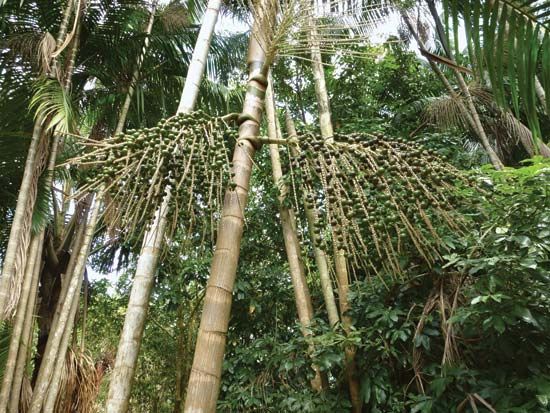
Acai palms (Euterpe oleracea) are primarily harvested from wild populations in rural, labyrinthine estuaries rather than through traditional large-scale cultivation. Because the palms are tall, slender, and reach heights of up to 25 meters (82 feet), the harvest is a physically demanding and dangerous process.2
Harvesting Methods and Challenges
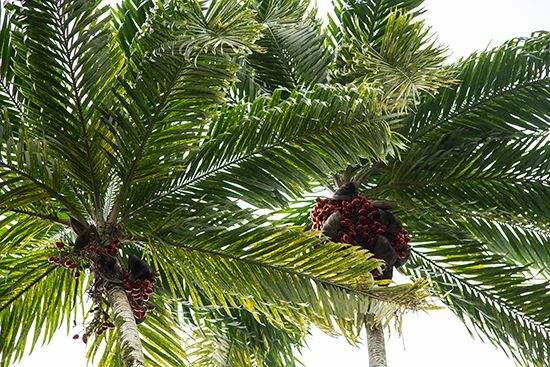
- Manual Ascent: Due to the plant’s structure, harvesters must climb the stems to reach the fruit bunches, which hang from the top of the crown. Each stem can produce up to eight bunches of fruit annually, with each bunch weighing as much as 6 kg (13 pounds).2
- Palm Hearts: The harvest of hearts of palm involves removing the growing top of the palm crown. Because acai palms are multistemmed, this process does not kill the entire plant, making it more sustainable than harvesting from single-stemmed species.2
- Labor Concerns: The industry is heavily reliant on manual labor, and there are significant ethical concerns regarding the widespread use of child labor. Children are often employed to ascend the palms because they are light enough to climb without breaking the slender stems. This work exposes them to severe risks, including life-altering falls, knife wounds, and encounters with venomous snakes or spiders.2
While some products are labeled as fair trade, critics argue these certifications have failed to effectively eliminate child labor from the supply chain. It is a fundamental moral imperative that the production of food and commercial goods must never come at the cost of child safety or exploitation.2
What are some modern uses and products made from acai?
The acai palm (Euterpe oleracea) is a versatile plant with several modern commercial and traditional applications. While the fruit gained global popularity in the early 21st century as a “superfood,” its utility extends well beyond dietary trends.1
Modern Uses and Products
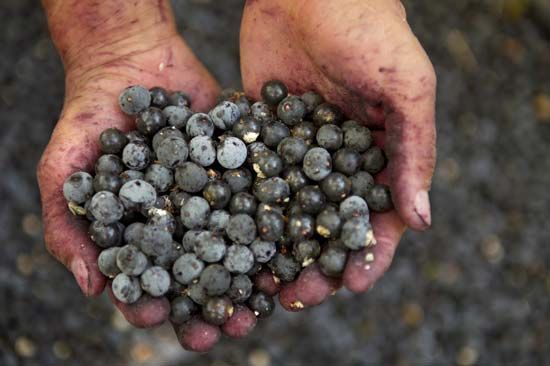
- Dietary Supplements and Food: Due to the fruit’s high perishability, it is often processed for export as a dried, powdered dietary supplement or flash-frozen for use in smoothies and juices. Locally, the pulp is consumed raw, mixed with tapioca, or prepared as a mash with cassava pulp.12
- Beverages: The juice is a popular beverage, and the pulp is also used in the production of wine and other sweets.21
- Hearts of Palm: The plant is a significant commercial source of hearts of palm, which are harvested as a vegetable by removing the tender, immature leaves from the palm crown.1
- Construction and Medicine: Beyond food, the leaves and stems are utilized as building materials and for thatch, while indigenous and local peoples also use the plant for medicinal purposes.1
It is important to recognize that the industry faces significant ethical challenges, particularly regarding the use of child labor in harvesting. Ensuring that the production of these goods adheres to ethical labor standards is a fundamental moral necessity.1
What are the physical characteristics of the acai palm tree?
The acai palm (Euterpe oleracea) is a distinctively slender palm characterized by the following physical features:
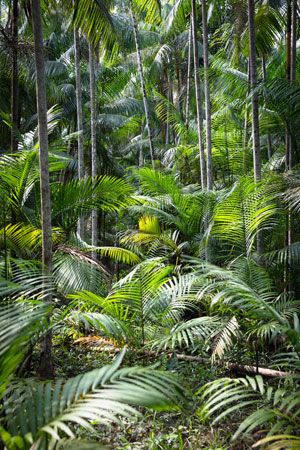
- Stems: Each plant typically consists of 4–8 slender, gray-brown stems. These stems can reach heights of up to 25 meters (82 feet) but are generally no more than 20 cm (about 8 inches) in diameter. The stems are marked by ringlike leaf scars.2
- Leaves: The top of each stem features a crown of 9–15 compound leaves, which measure between 1.2 and 4 meters (4–13 feet) in length.2
- Flowers: Small, brown-purple flowers—which are either male (staminate) or female (pistillate)—grow on large, branching inflorescences that hang from the top of the crown.2
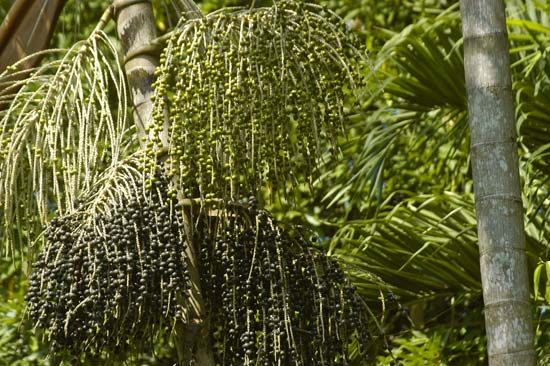
- Fruit: The plant produces round drupes known as acai berries. These fruits are approximately 1.5 cm (0.6 inch) in diameter, contain a single large seed, and typically ripen from green to a deep purple.2
Sources
- acai — Merriam-Webster
- acai — Encyclopædia Britannica
- Palm - Ecology — Encyclopædia Britannica
Published on · 4 min read