Peach Palm
The peach palm (Bactris gasipaes) is a species of palm in the Arecaceae family, widely cultivated from Central America to Ecuador for its edible fruits.…
What is Peach palm?
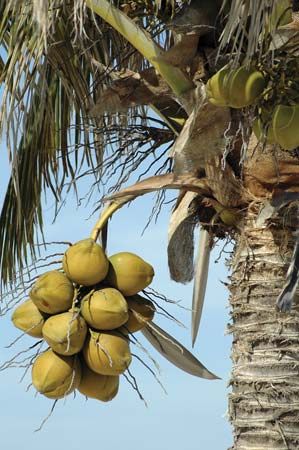
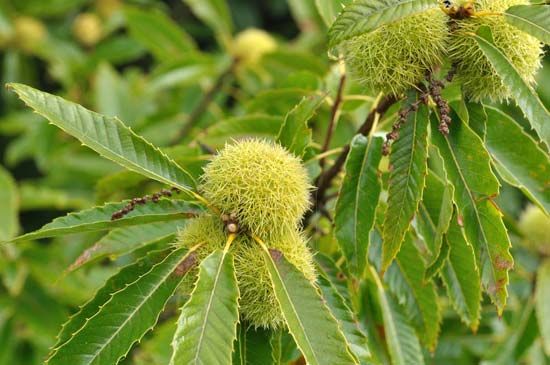
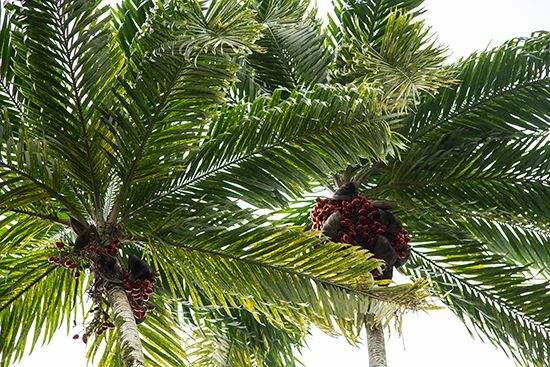
The peach palm (Bactris gasipaes) is a species of palm in the Arecaceae family, widely cultivated from Central America to Ecuador for its edible fruits. Often referred to as palm chestnuts, these fruits are typically boiled and served with salt or honey, or fermented into a beverage. The fruit’s mealy flesh surrounds a conical seed containing a white kernel with a flavor profile similar to coconut or roasted chestnut.1
Beyond its culinary uses, the peach palm is a versatile resource. The oil extracted from its seeds is used in local cooking, while the tree’s hard wood serves as a durable building material and is traditionally used for crafting bows. A mature tree typically reaches 18 meters (60 feet) in height and can produce several clusters of orange-yellow fruit.1
How is heart of palm harvested from trees?
Hearts of palm are harvested by removing the growing top of a palm’s crown. This edible portion consists of a whitish cylinder of tender, immature leaves.2
The impact of this harvest on the plant depends on the species:
- Single-stemmed species: Harvesting the heart typically kills the entire plant.
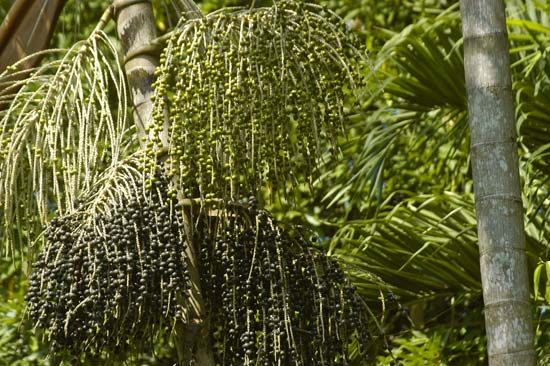
- Multistemmed species: For plants like the acai palm, the harvest can be performed without killing the entire plant, making it a more sustainable practice.2
In addition to the acai palm, the peach palm is widely cultivated in tropical America for both its fruits and its hearts. While these palms provide valuable food sources, the industry faces significant ethical challenges; for example, the harvest of acai is often labor-intensive and has been associated with the widespread use of child labor in rural, impoverished areas.32
What other types of palm trees produce edible fruit?
Many species of palm trees provide edible fruits, seeds, or other products that serve as vital food sources in tropical regions. Beyond the peach palm and the ubiquitous coconut, several other palms are economically and nutritionally significant:
- Date palm: Its fruit is a staple food in North Africa, the Arabian Peninsula, and parts of Asia Minor, and is widely consumed fresh or in various food products.4
- African oil palm: Primarily valued for its oil, which is extracted from the fruit coat and seeds and used in numerous edible products like margarine, chocolate, and bread.4
- Babassu palm: The ripe fruit is eaten as a nutritious food, and the mesocarp can be used to create chocolate-like beverages.1
- Sugar palm, palmyra palm, and toddy palm: These are frequently tapped for their inflorescences to produce sugar, vinegar, and fermented alcoholic beverages.4
- Jessenia and Oenocarpus: The pulp from these fruits is noted for having a protein content comparable to that of meat.4
- Betel palm: Its seeds are commonly used as a chewing substance across the Asian tropics.4
What are the main differences between peach palm and coconut palms?
The peach palm (Bactris gasipaes) and the coconut palm (Cocos nucifera) differ significantly in their distribution, versatility, and economic roles.
Distribution and Range
- Coconut Palm: It is a pantropical species, meaning it is found across tropical regions worldwide. It is famously associated with tropical shores and is one of the few palm species that occurs on more than one continent naturally or through human cultivation.14
- Peach Palm: This species is native to and primarily cultivated in tropical America, ranging from Central America south to Ecuador.6
Economic Versatility
- Coconut Palm: Known for its extreme versatility, almost every part of the tree is utilized. The fruit provides coconut water and flesh (copra), which is a major source of vegetable oil. The husk provides coir for ropes, and the shell is used for fuel and crafts.7
- Peach Palm: Primarily valued for its edible fruits, often called palm chestnuts, and as a source of hearts of palm. Its hard wood is also used for construction and bow making, and it is frequently used in agroforestry to provide shade for crops like coffee and cacao.67
Botanical Characteristics
- Coconut Palm: A single-stemmed palm that is pollinated by both wind and insects.1
- Peach Palm: A member of the genus Bactris, which is the second-largest palm genus with approximately 239 species. It typically reaches about 18 meters (60 feet) in height and produces clusters of orange-yellow fruits.64
Sources
- Peach palm — Encyclopædia Britannica
- heart of palm — Merriam-Webster
- acai — Encyclopædia Britannica
- Palm - Economic importance — Encyclopædia Britannica
- Babassu palm — Encyclopædia Britannica
- Palm - Ecology — Encyclopædia Britannica
- Palm - Distribution — Encyclopædia Britannica
Published on · 3 min read