Persimmon
A persimmon is the edible fruit of two specific trees belonging to the genus Diospyros. These trees are members of the Ebenaceae family.
What is a persimmon and which plant family does it belong to?
A persimmon is the edible fruit of two specific trees belonging to the genus Diospyros. These trees are members of the Ebenaceae family1.
The two primary types are:
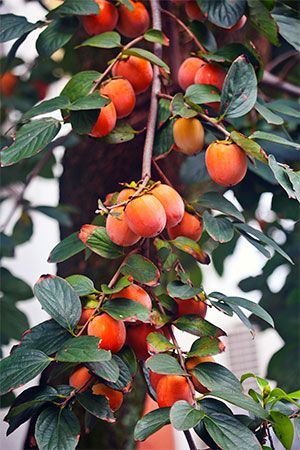
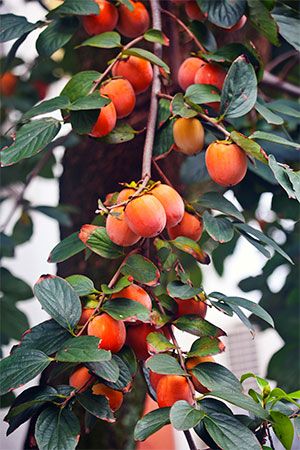
- Japanese persimmon (Diospyros kaki): A widely cultivated fruit in China and Japan, known for its tomato-like appearance and yellow-to-red color.1
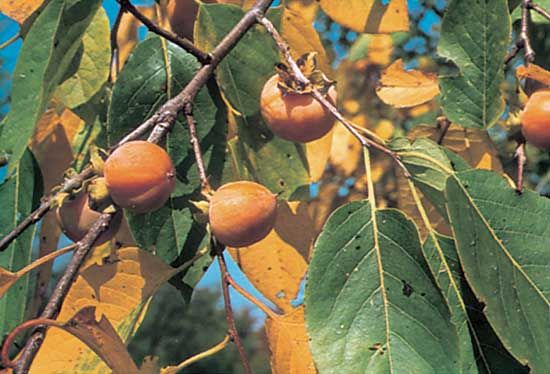
- American persimmon (D. virginiana): A smaller tree native to the United States, producing smaller, dark red to maroon fruits that are often gathered from the wild.1
While the Japanese variety is often grown commercially, the American species is frequently noted for its flavor when fully soft-ripe. Most persimmons are highly astringent until they reach a soft-ripe state, though some varieties like Fuyu are exceptions.1
What are the main varieties of persimmons cultivated worldwide?
The two primary species of persimmons cultivated for their fruit are the Japanese persimmon (Diospyros kaki) and the American persimmon (D. virginiana).12
- Japanese Persimmon (Diospyros kaki): Native to China, this is the most extensively grown variety worldwide. It produces large, tomato-like fruits that are typically yellow to red in color. While many varieties are highly astringent until they become soft-ripe, non-astringent types like Fuyu are also cultivated.12
- American Persimmon (D. virginiana): Native to North America, this species produces smaller, dark red to maroon fruits. Although often gathered from the wild, several superior varieties have been propagated for commercial use.12
Beyond these two, the genus Diospyros includes other fruit-bearing species such as the date plum (D. lotus), the black sapote (D. nigra), and the mabolo (D. blancoi). While hundreds of specific varieties have been developed within these species, the Japanese and American types remain the most commercially significant.2
How are persimmons grown and what are their optimal growing conditions?
Persimmons are cultivated as trees that thrive in specific climates depending on the species. The Japanese persimmon (Diospyros kaki) is grown commercially in regions such as California and the Gulf states, as well as extensively in China and Japan. These trees are hardy enough to tolerate temperatures as low as −18 °C (0 °F).1
The American persimmon (D. virginiana) is native to a range extending from the Gulf states north to central Pennsylvania and central Illinois. While large quantities of this fruit are gathered from the wild, superior varieties have been identified and propagated for commercial cultivation.1
Generally, these trees require environments that support their specific temperature tolerances. While the Japanese variety is often found in home gardens and commercial orchards, the American species is well-adapted to the climate of the eastern and southern United States.1
How are persimmons used in culinary traditions around the world?
Persimmons are versatile fruits enjoyed in various culinary traditions, primarily as a fresh dessert. They are frequently served with sugar or liqueur to enhance their natural sweetness.1
Beyond fresh consumption, the fruit is commonly stewed or prepared as jam. In many regions, particularly with the Japanese persimmon, the fruit is highly astringent until it reaches a soft-ripe state, at which point it becomes palatable and flavorful. While the American species is often gathered from the wild, it is also prized for its flavor when fully softened.1
These fruits are valued not only for their taste but also for their nutritional content, as they contain vitamin A and vitamin C1. Whether enjoyed as a simple snack or incorporated into cooked dishes, the persimmon remains a significant fruit in both home gardens and commercial markets across Asia, Europe, and the United States.1
Sources
- Persimmon — Encyclopædia Britannica
- Diospyros — Encyclopædia Britannica
- persimmon — Merriam-Webster
- Japanese persimmon — Merriam-Webster
Published on · 3 min read