Acarid
Arachnids utilize an open circulatory system and diverse respiratory mechanisms to sustain their metabolic needs.
How do arachnids breathe and circulate blood?
Arachnids utilize an open circulatory system and diverse respiratory mechanisms to sustain their metabolic needs.
Respiration
Arachnids breathe primarily through book lungs or tracheae. Book lungs consist of thin, vascularized plates arranged like the pages of a book within an internal pouch, allowing for gas exchange between the air and the hemolymph. Tracheal systems, similar to those in insects, consist of tubes that open to the exterior via spiracles, delivering oxygen directly to tissues. Some smaller arachnids rely on cutaneous respiration, absorbing oxygen through their body surface.123
Circulation
The circulatory system is an open system where hemolymph circulates through tissue spaces called hemocoels. A dorsal heart pumps hemolymph through vessels into these sinuses, from which it returns to the heart via venous channels. Oxygen is transported by the respiratory pigment hemocyanin, which is dissolved in the hemolymph. Notably, spiders use hemolymph as hydraulic fluid to extend their legs, maintaining blood pressure levels comparable to humans during activity.34
What are the main characteristics that distinguish arachnids from other arthropods?
Arachnids are members of the phylum Arthropoda, meaning they share general characteristics with other arthropods such as a segmented body, a chitinous exoskeleton, and jointed appendages. However, they are distinguished from other arthropod groups (like insects, crustaceans, and myriapods) by several specific traits:56
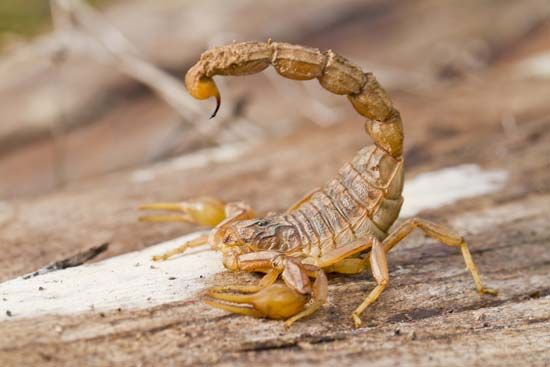
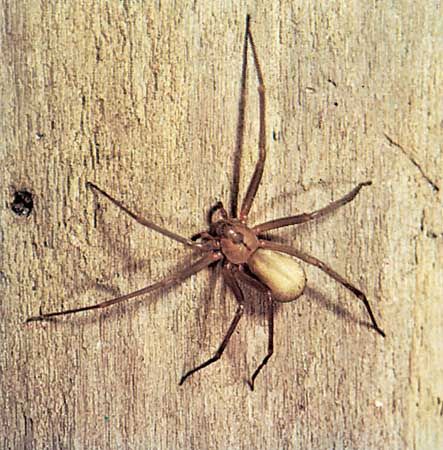
- Body Segmentation: Most arachnids have their bodies divided into two distinct regions: the cephalothorax (prosoma) and the abdomen (opisthosoma). In contrast, insects possess three body sections (head, thorax, and abdomen).758
- Appendages: Arachnids typically possess six pairs of appendages. The first pair, the chelicerae, are located in front of the mouth and are often used for crushing prey or injecting venom. The second pair, the pedipalps, function primarily as sensory organs. The remaining four pairs are walking legs.5
- Lack of Antennae and Jaws: Unlike many other arthropods, arachnids lack antennae and true jaws. They generally feed by injecting digestive fluids into their prey and sucking up the liquefied remains.58
- Eyes: Arachnids possess simple eyes, rather than the compound eyes found in many other arthropod groups.75
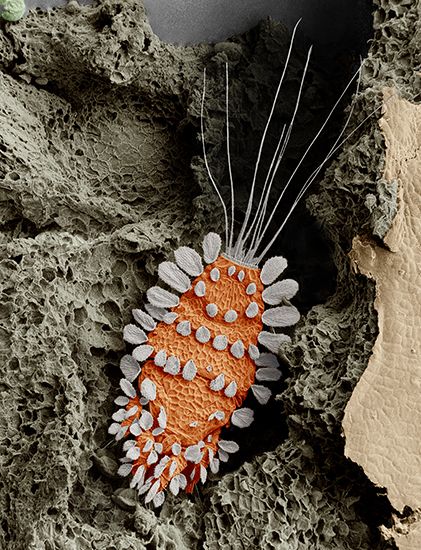
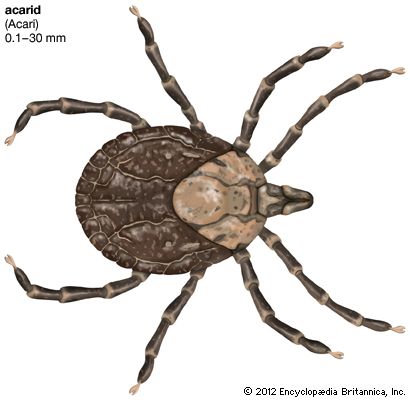
How do acarids (mites and ticks) differ from other arachnids like spiders and scorpions?
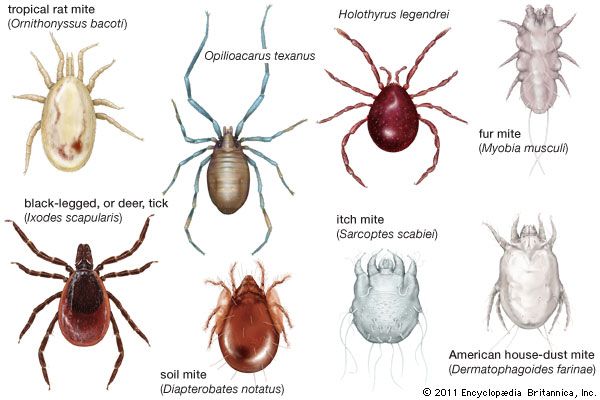
Acarids, which include mites and ticks, are distinguished from other arachnids like spiders and scorpions primarily by their body structure and specialized feeding adaptations.910
Key Distinctions
- Body Segmentation: Unlike most arachnids, which have a body divided into a cephalothorax and an abdomen, acarids generally lack external body segmentation. Their entire body typically forms a single, fused region known as the idiosoma.911
- Feeding Structures: Acarids possess an anterior region called the gnathosoma, which houses the mouth and specialized feeding appendages. Their chelicerae are highly diverse, ranging from pincerlike structures to specialized stylets for piercing, sucking, or sawing, reflecting their varied parasitic and predatory habits.910
- Size and Development: Acarids are often much smaller than other arachnids, ranging from 0.1 mm to 30 mm. While adults typically have four pairs of legs, newly hatched larvae often possess only three pairs, a developmental trait not found in spiders or scorpions.9611
- Sensory Organs: Ticks (order Ixodida) possess a unique sensory pit on the first pair of legs called Haller’s organ, which is used to detect environmental stimuli.9
How do arachnids reproduce and care for their young?
Arachnid reproduction typically involves indirect sperm transfer. Most males initiate courtship rituals to induce the female to accept a gelatinous sperm capsule, or spermatophore, which is deposited into the female’s spermatheca. For example, scorpions perform a “promenade à deux” dance to guide the female over a deposited spermatophore, while male spiders use elaborate displays or web vibrations to avoid being mistaken for prey. Daddy longlegs are a notable exception, utilizing direct sperm transfer via a penis direct sperm transfer via a penis.1314
Parental care varies significantly:
- Minimal Care: Many species simply deposit eggs in soil or protected sites and abandon them.13
- Active Guarding: Some tropical species and spiders remain with their eggs during development. Spiders often construct protective silk egg sacs, which some females carry in their jaws or attached to their spinnerets.1315
- Nourishment: Scorpions are viviparous; embryos may be nourished by the mother before birth, and the young are carried on her back until their first molt. False scorpions carry eggs in a brood sac where embryos are nourished by the female.13
Sources
- book lung — Encyclopædia Britannica
- Circulatory system - Arthropoda — Encyclopædia Britannica
- arachnid - Circulatory system — Encyclopædia Britannica
- arachnid - Respiration — Encyclopædia Britannica
- arachnid - Form and function — Encyclopædia Britannica
- arachnid - Body and appendages — Encyclopædia Britannica
- arthropod — Encyclopædia Britannica
- spider: Top Questions — Encyclopædia Britannica
- acarid - External features — Encyclopædia Britannica
- arachnid - Annotated classification — Encyclopædia Britannica
- acarid - Size range and diversity of structure — Encyclopædia Britannica
- acarid - Ecology — Encyclopædia Britannica
- arachnid - Reproduction and life cycle — Encyclopædia Britannica
- Reproductive behaviour - Arachnids — Encyclopædia Britannica
- spider - Eggs and egg sacs — Encyclopædia Britannica
Published on · 3 min read