Accentor
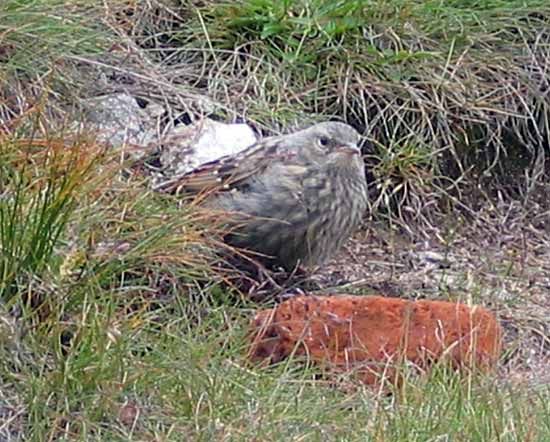
Accentors are members of the family Prunellidae and are found throughout the Old World. While they are primarily associated with mountainous regions, their…
Where are accentors typically found, and what are their preferred habitats?
Accentors are members of the family Prunellidae and are found throughout the Old World. While they are primarily associated with mountainous regions, their habitat preferences vary by species.1
Most accentors breed at high elevations, with some species, such as the alpine accentor, reaching extreme altitudes; they have been observed on Mount Everest at elevations of nearly 8,000 metres. Generally, these birds exhibit a seasonal migration pattern, breeding in mountainous areas during the warmer months and moving to lower elevations for the winter. While many species favor high-altitude environments, some are found in lowland areas, such as the dunnock, which is a widespread species often found in hedges and lower-lying habitats.1
How many species of accentors exist, and which are the most common?
There are approximately 13 species of accentors in the Old World family Prunellidae, all belonging to the single genus Prunella.12
Among these, the dunnock (Prunella modularis), also known as the hedge sparrow, is recognized as a widespread and abundant species found across much of Europe and parts of western Asia. Another notable and common species is the alpine accentor (Prunella collaris), which is the largest and stoutest of the group and is widely distributed from Spain and northwestern Africa to Japan.13
What is the origin of the name ‘accentor’ and what does it mean?
The name “accentor” is derived from New Latin, originating from the Medieval Latin term for “one that sings with another.” This etymology is rooted in the Latin prefix ad- combined with the Medieval Latin -centor, which itself stems from the Latin cantor, meaning “singer.”4
The term was first recorded in English in 1817 and is used to describe birds of the genus Prunella. While the name highlights their vocal nature, these birds are also frequently referred to as “shufflewings” due to their characteristic hopping or shuffling movement.41
What are the key characteristics that distinguish accentors from other bird species?
Accentors, which belong to the family Prunellidae and the genus Prunella, are distinguished by several key physical and behavioral characteristics:
- Morphology: They possess slender bills and rounded wings. Their plumage typically ranges from dark brown or gray to buff, chestnut, or russet, with the upper parts generally darker than the underparts. The chin and breast are often spotted or stippled.1
- Locomotion: They are frequently referred to as “shufflewings” due to their characteristic habit of hopping or moving with a peculiar, shuffling motion.1
- Habitat and Range: While they are members of the order Passeriformes, they are unique in their preference for high-elevation breeding, often nesting in mountainous regions. Some species, such as the alpine accentor, are remarkably hardy, having been observed at altitudes as high as 8,000 metres on Mount Everest.1
- Seasonal Behavior: These birds typically breed in mountains during the warmer months and migrate to lower elevations to winter.1
Sources
- Accentor — Encyclopædia Britannica
- Passeriform - Annotated classification — Encyclopædia Britannica
- Dunnock — Encyclopædia Britannica
- accentor — Merriam-Webster
- accentology — Merriam-Webster
- self-heal — Encyclopædia Britannica
Published on · 2 min read