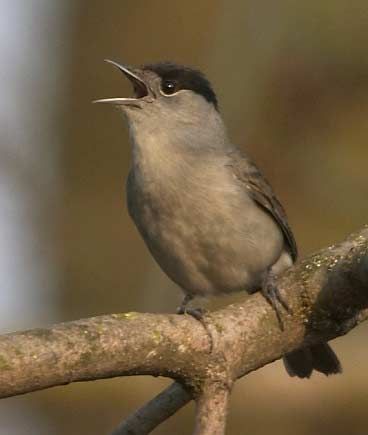
Chiffchaff
The chiffchaff (Phylloscopus collybita) is a small warbler belonging to the family Sylviidae and the order Passeriformes. Native to western Eurasia, this…
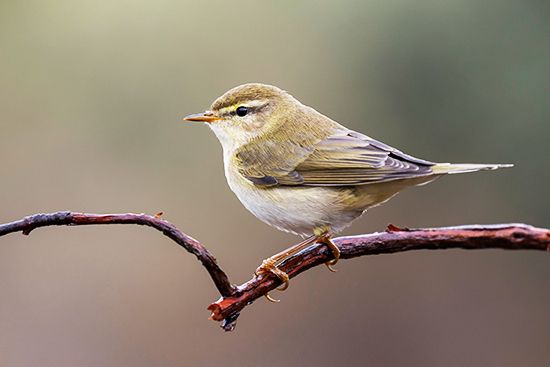
What is Chiffchaff?
The chiffchaff (Phylloscopus collybita) is a small warbler belonging to the family Sylviidae and the order Passeriformes. Native to western Eurasia, this bird is approximately 11 cm (4.5 inches) long and is characterized by its greenish-brown plumage and a pale eye stripe.1
The bird derives its name from its distinctive, repetitive song. It is a restless creature that spends much of its time hunting insects within trees and constructs a domed nest located near the ground.1
What are the main characteristics of the warbler family?
The term “warbler” refers to several distinct groups of small songbirds within the order Passeriformes, primarily categorized into Old World warblers (Sylviidae) and New World wood warblers (Parulidae). While they share similar habits, they are taxonomically diverse.34
Old World Warblers (Sylviidae)
- Appearance: Generally small (9–26 cm) and drab, with plumage in shades of green, olive, brown, buff, and black.35
- Physical Traits: They possess slender bills adapted for gleaning insects from foliage, rounded wings, and 10 primary wing feathers.35
- Behavior: They are active, insectivorous birds found in woodlands, gardens, and marshes. Their nests range from simple cups to complex domed structures.35
New World Wood Warblers (Parulidae)
- Appearance: Often brightly colored, leading to their nickname, the “butterflies of the bird world”.4
- Physical Traits: Smaller than their Old World counterparts (up to 18 cm) and possess nine primary wing feathers.35
- Behavior: Primarily found in the Americas, many are highly migratory. Despite their name, they typically sing in thin, dry, or buzzing voices rather than true warbling.4
How do birds use their songs to communicate?
Birds utilize vocalizations as a sophisticated means of communication, serving critical roles in survival and reproduction. While often referred to as birdsong, these vocalizations are complex signals produced primarily by the syrinx, a specialized vocal organ located at the base of the windpipe.67
Primary Functions of Birdsong
- Territorial Defense: Males frequently sing to establish and maintain territories, signaling their presence to rivals and warning them to stay away. This often serves as a threat display that avoids the need for physical combat.6897
- Mating and Courtship: Songs are essential for attracting mates and stimulating them sexually. In many species, songs help keep pairs together, and some birds even engage in antiphonal singing or duets to reinforce their pair bond.710
- Individual Recognition: Through variations in song, birds can identify their mates, neighbors, and other members of their social group.89
Beyond the Song
Birds also employ a variety of other vocalizations, such as alarm notes to warn of predators, begging calls to solicit food from parents, and location notes to keep flocks together. Additionally, some species produce nonvocal sounds using specialized feathers or by clapping their bills to communicate during courtship or threat displays.8710
What are some other common birds found in Eurasia?
Eurasia is home to a vast array of bird species, many of which belong to the order Passeriformes, or perching birds. These species have adapted to diverse environments across the continent, ranging from gardens and farmlands to forests and open fields.
Common birds found in Eurasia include:
- Chaffinch: The most common finch in western Europe, often found in gardens and farmlands.
- Starlings: Highly social birds that are sedentary in western Europe but migratory in northern regions.
- Larks: Distinctive ground birds known for their beautiful, soaring flight songs, typically inhabiting open fields and plains.
- Accentors: Small, drab birds often found in parks, gardens, and mountain slopes.
- Bulbuls: Medium-sized, often noisy birds with soft, fluffy plumage, found in woodlands and cultivated regions across southern Asia.
- Penduline tits: Tiny, acrobatic songbirds known for building elaborate, suspended nests.
- Wagtails: Slender ground birds often associated with open grasslands and shores.
Additionally, many insectivorous species, such as flycatchers, are common throughout the region, often migrating to Africa during the winter months.
Sources
- Chiffchaff — Encyclopædia Britannica
- chiffchaff — Merriam-Webster
- warbler — Encyclopædia Britannica
- Sylviidae — Encyclopædia Britannica
- wood warbler — Encyclopædia Britannica
- Birdsong — Encyclopædia Britannica
- Bird - Sound — Encyclopædia Britannica
- Songbird — Encyclopædia Britannica
- sound reception - Uses of hearing in birds — Encyclopædia Britannica
- Passeriform - Sound production — Encyclopædia Britannica
- Animal learning - Song learning — Encyclopædia Britannica
- Chaffinch — Encyclopædia Britannica
- Passeriform - Annotated classification — Encyclopædia Britannica
- Migration - In Europe — Encyclopædia Britannica
- Passeriform — Encyclopædia Britannica
- Passeriform - Evolution and paleontology — Encyclopædia Britannica
Published on · 3 min read