Ciconiiform
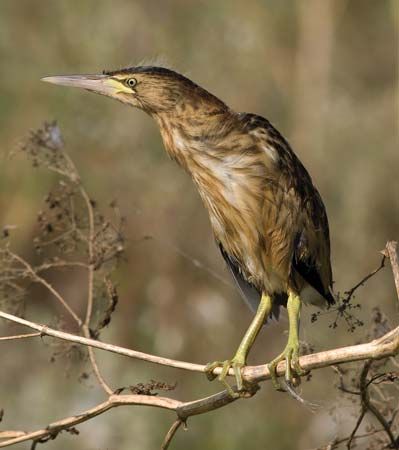
Ciconiiforms (order Ciconiiformes) are a group of storklike birds that typically includes herons, bitterns, storks, ibises, and spoonbills, with some…
What are the main characteristics that define ciconiiform birds?
Ciconiiforms (order Ciconiiformes) are a group of storklike birds that typically includes herons, bitterns, storks, ibises, and spoonbills, with some authorities also including flamingos.1
Key characteristics include:
- Habitat: Most species are found near water, particularly freshwater environments, though some, like the white stork, inhabit dry ground.2
- Social Behavior: Many are highly gregarious, often nesting in large, mixed-species colonies and roosting communally. Exceptions include bitterns, tiger herons, and the shoebill, which are generally solitary.34
- Nesting: Nests are typically loose platforms made of sticks and stems. While many are arboreal nesters, others nest on the ground, in reeds, or on cliffs.3
- Reproduction: Parental care is usually shared between sexes, involving nest building, incubation, and feeding chicks via regurgitation.3
- Physical Traits: They are generally long-necked, long-legged birds. Storks, for example, fly with their necks outstretched and legs trailing.5
Taxonomic classification remains a subject of debate, with some genetic studies suggesting a narrower definition for the order.6
What are some of the most well-known species of ciconiiform birds?
The order Ciconiiformes encompasses a diverse group of long-legged, long-necked wading birds. Below are some of the most well-known species categorized by their respective families:17
Herons and Bitterns (Family Ardeidae)
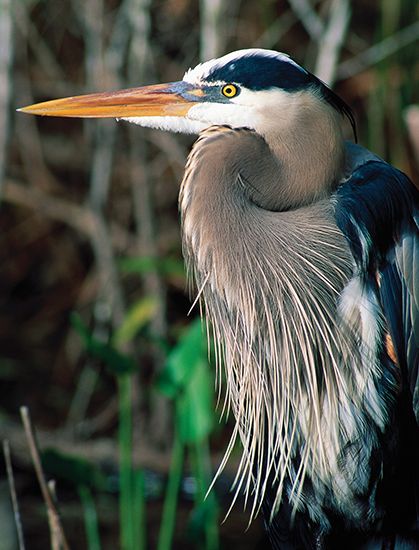
- Great blue heron: A large, widespread North American species known for its crested head and S-shaped neck posture.2
- Black-crowned night heron: A species active primarily during twilight and nighttime hours, found across the Americas, Europe, Africa, and Asia.2
- Green heron: A small, notable bird that uses bait to attract fish to the water’s surface.2
Storks (Family Ciconiidae)
- White stork: A stately, migratory bird known for nesting on rooftops and chimneys in Europe and Asia.8
- Black stork: A distinctively colored species with black plumage, a white belly, and red bill and legs.8
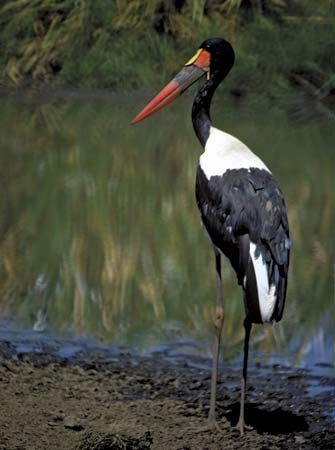
- Saddle-billed stork: A colorful African species characterized by its exceptionally long, thin legs and a red bill with a black band.8
Ibises and Spoonbills (Family Threskiornithidae)
- Sacred ibis: Historically revered by ancient Egyptians, this species is white with black wing tips and a bare black head.3
- Roseate spoonbill: A striking, deep-pink bird found in the Americas, easily identified by its long, spatulate bill.9
- Scarlet ibis: Known for its brilliant red plumage, this species inhabits northern South America.3
Other Notable Species
- Shoebill: The sole member of the family Balaenicipitidae, this large, stout bird is found in tropical east-central Africa and is recognized by its massive, hooked bill.110
- Greater flamingo: While sometimes classified separately, these highly gregarious, pink-plumaged birds are often associated with the order.11
What role do ciconiiform birds play in their ecosystems?
Ciconiiform birds play a significant role in their ecosystems, primarily as predators that help regulate populations of various aquatic and terrestrial organisms. Most species in this order subsist on animal matter, including fish, small mammals, birds, reptiles, amphibians, and a wide range of invertebrates such as mollusks, crustaceans, insects, and worms.13
Their ecological impact is defined by their diverse feeding strategies:
- Population Control: By consuming large quantities of insects, such as locusts, and various aquatic prey, they help maintain the balance of their habitats.13
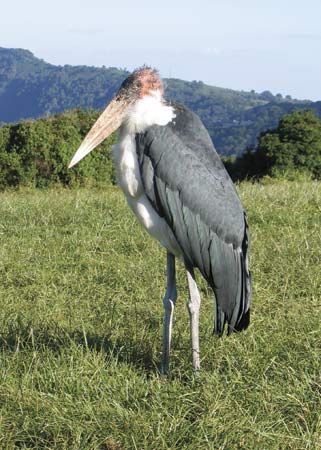
- Scavenging: Some species, such as the marabou, act as scavengers, feeding on carrion and assisting in the cleanup of organic matter alongside vultures.13
- Habitat Interaction: Through their foraging methods—ranging from standing motionless to stir up the bottom with their feet or using specialized filtering mechanisms—they influence the structure and health of their environments. For example, flamingos feed on minute algae, playing a unique role in the food web of brackish or alkaline lakes.1314
- Symbiotic Associations: Some species, like the cattle egret, have developed relationships with large mammals, feeding on the insects disturbed by these animals as they move through the landscape.135
Generally considered beneficial or neutral to human economic interests, these birds are vital components of the wetlands and other habitats they occupy.5
How do ciconiiform birds communicate with each other?
Ciconiiform birds communicate primarily through a combination of visual displays and vocalizations, often utilizing ritualized behaviors to convey information about mating, territory, and social status.617
Visual Displays
Visual signaling is a cornerstone of ciconiiform communication, particularly during courtship and territorial defense. Many species perform elaborate rituals that have evolved from ordinary survival behaviors, such as preening or nest-building.618
- Courtship Rituals: Males often perform “circle flights” and adopt stereotyped postures to attract mates. For example, some herons use a “stretch” display, extending the neck vertically before bending it rearward.6
- Threat Displays: To defend territory and avoid physical injury, birds use aggressive displays. A common heron display involves extending the head and neck forward and downward while erecting feathers and clapping the mandibles together.6
- Greeting Ceremonies: When mates reunite at the nest, they may perform specific greeting rituals, such as bending the neck back so the head rests upside down on the body.6
Vocalizations
While many ciconiiforms are relatively silent, they do utilize sound for social cohesion and signaling.617
- Range of Sounds: Communication often involves croaking, grunting, or harsh, loud cries.17
- Specialized Adaptations: Some species, such as the large bitterns, possess modified esophagi that act as resonating chambers, allowing them to produce booming sounds audible from several kilometers away.17
- Non-vocal Sounds: Certain storks compensate for their lack of vocal range by noisily clattering their mandibles to communicate.17
Sources
- Ciconiiform — Encyclopædia Britannica
- Stork — Encyclopædia Britannica
- Ciconiiform - Distribution, habitat, and abundance — Encyclopædia Britannica
- Ciconiiform - Critical appraisal — Encyclopædia Britannica
- Ciconiiform - Reproduction and nesting — Encyclopædia Britannica
- Ciconiiform - Behaviour — Encyclopædia Britannica
- Heron — Encyclopædia Britannica
- Flamingo — Encyclopædia Britannica
- Spoonbill — Encyclopædia Britannica
- Ibis — Encyclopædia Britannica
- wading bird — Merriam-Webster
- Ciconiiform - Annotated classification — Encyclopædia Britannica
- Ciconiiform - Feeding habits — Encyclopædia Britannica
- Ciconiiformes — Merriam-Webster
- Ciconiiform - Relations with humans — Encyclopædia Britannica
- Anseriform - Importance to humans — Encyclopædia Britannica
- Ciconiiform - Vocalization — Encyclopædia Britannica
- Anseriform - Behaviour — Encyclopædia Britannica
- Display behaviour — Encyclopædia Britannica
- Animal communication - Evolution of signals — Encyclopædia Britannica
Published on · 4 min read