Blackcap
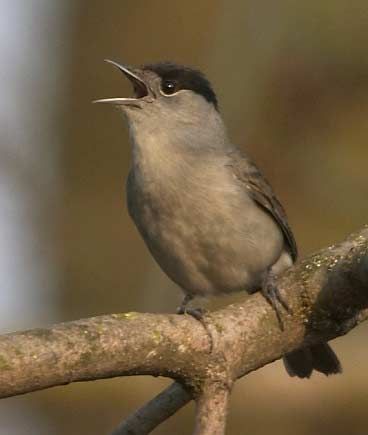
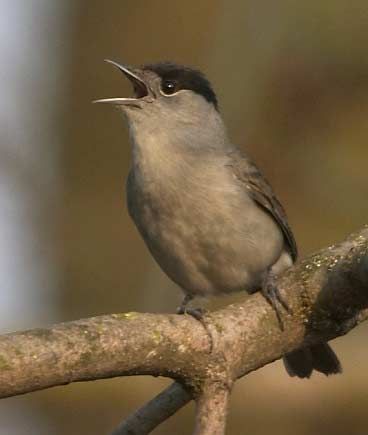
The blackcap (Sylvia atricapilla) is a common warbler belonging to the family Sylviidae. Found across Europe, northwestern Africa, and central Asia, this…
What is Blackcap?
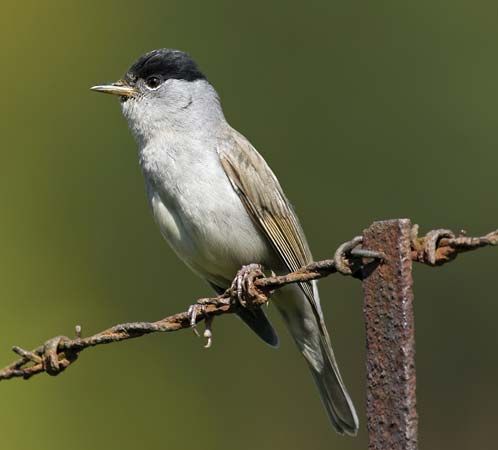
The blackcap (Sylvia atricapilla) is a common warbler belonging to the family Sylviidae. Found across Europe, northwestern Africa, and central Asia, this small songbird typically measures about 14 cm (5.5 inches) in length.12
The species is characterized by brownish upperparts and gray underparts and faces. A notable feature is the crown, which is black in males and reddish-brown in females. These birds are frequently found in woodland borders and rough hedges, where they are known for their rich, melodic song.1
It is important to distinguish this species from the bush blackcap (Lioptilus nigricapillus) of South Africa, which belongs to a different family, the Timaliidae.1
What are the main differences between Old World and New World warblers?
Old World and New World warblers are distinct groups of songbirds that share superficial similarities in habits and structure despite being only distantly related.2
Key Differences
- Taxonomy and Family: Old World warblers belong to the family Sylviidae, whereas New World warblers (or woodwarblers) belong to the family Parulidae.
- Evolutionary Relationships: Old World warblers are closely related to thrushes and Old World flycatchers, while New World warblers are more closely related to tanagers.2
- Physical Characteristics:
- Distribution: Old World warblers are primarily found from Europe and Asia to Australia and Africa. New World warblers are found mainly in North and Central America.2
How do blackcaps use their songs to communicate?
Like many songbirds, the blackcap (Sylvia atricapilla) utilizes its rich, melodic song primarily as a form of animal communication during the breeding season. These vocalizations serve two critical functions: the attraction of a mate and the defense of a territory.41
Through these advertising songs, other blackcaps can identify the singer’s species, assess its mood, and recognize its individual identity. Because the blackcap belongs to the suborder Passeri, it possesses a complex vocal organ known as the syrinx, which allows for the production of its characteristic complex and beautiful songs.435
While the specific developmental process for the blackcap is not detailed in the provided records, birdsong in similar species is generally both hereditary and learned, often involving a sensitive period where young birds establish a template of the species-typical song before perfecting it through practice. In most passerine species, it is primarily the male that sings these true songs to establish his presence and secure reproductive success.465
What do blackcaps typically eat in their natural habitat?
Blackcaps are members of the warbler group, which are characterized by their habit of gleaning insects from various types of vegetation. While many birds exhibit specialized feeding behaviors, warblers generally focus on foraging for insects among leaves and branches.7
It is important to note that many bird species, including those that primarily consume insects, often exhibit seasonal changes in their diet. While the provided information highlights the insectivorous nature of warblers, many birds also incorporate plant materials—such as seeds, fruit, or nectar—into their diets depending on the time of year and food availability.7
Sources
- Blackcap — Encyclopædia Britannica
- warbler — Encyclopædia Britannica
- Sylviidae — Encyclopædia Britannica
- Birdsong — Encyclopædia Britannica
- Animal learning - Song learning — Encyclopædia Britannica
- Passeriform - Sound production — Encyclopædia Britannica
- Bird - Feeding habits — Encyclopædia Britannica
Published on · 2 min read