Black Duck
The term "black duck" refers to two distinct species of birds that are not closely related:
What is Black duck?
The term “black duck” refers to two distinct species of birds that are not closely related:
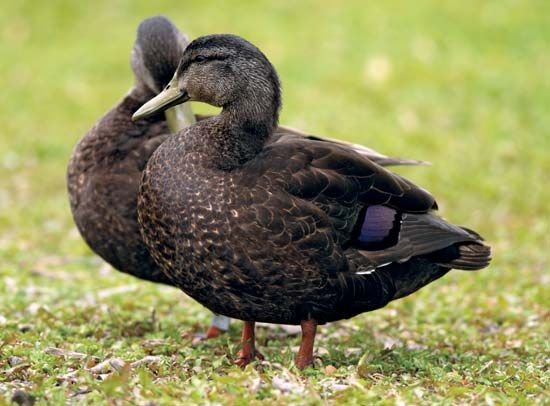
- American Black Duck (Anas rubripes): A highly prized game bird native to eastern North America. These ducks inhabit various wetlands, including salt marshes, lakes, and rivers. They are known for their ability to winter in northern climates due to a diet that includes periwinkles and mussels. They resemble mallard hens, featuring blackish-brown bodies, tan heads, and reddish feet, with a distinct white underwing visible during flight.1
- African Black Duck (Anas sparsa): Found across sub-Saharan Africa, this species is less social than other dabbling ducks and exhibits more frequent diving behavior. Some experts suggest it may serve as a link to the perching duck group.1
How does the American black duck differ from a mallard?
The American black duck (Anas rubripes) and the mallard (Anas platyrhynchos) are distinct species, though they are closely related enough to interbreed. While the black duck was once considered a subspecies of the mallard, it is now classified as a separate species.2
Key differences include:
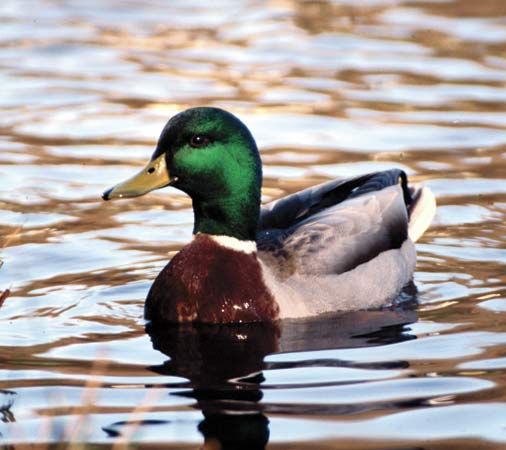
- Plumage: Mallard drakes (males) are easily identified by their iridescent green heads and white neck rings, while mallard hens are mottled dull brown. In contrast, both sexes of the American black duck look similar to each other, featuring blackish-brown bodies and tan heads that resemble a female mallard.21
- Physical Features: The American black duck is distinguished by its reddish feet and a conspicuous white underwing visible during flight. Mallards possess yellow bills and a purplish-blue wing bar bordered by white.12
- Behavior: Mallard females are the only ones that quack, whereas males produce whistling and nasal calls. Additionally, black ducks are known for a diet that includes seafood like periwinkles and mussels, allowing them to winter further north than many other species.21
What are the main differences between dabbling ducks and diving ducks?
Dabbling ducks and diving ducks are distinguished primarily by their feeding behaviors and physical adaptations for their respective environments.
Feeding Behavior
- Dabbling Ducks: These birds feed in shallow water or on land. They typically employ a “tipping up” behavior, where they tilt their bodies forward to reach aquatic vegetation beneath the surface without fully submerging. They also forage near shorelines for seeds, grasses, and insects.34
- Diving Ducks: These species are adapted for foraging in deeper water. They dive beneath the surface—sometimes over 20 feet deep—to reach food sources like mussels, crabs, crayfish, and submerged vegetation at the bottom of lakes, bays, and coastal waters.35
Physical Adaptations
- Body and Legs: Diving ducks possess streamlined bodies and legs set further back on their bodies, which makes them excellent swimmers but often results in an awkward, upright waddling gait on land. Dabbling ducks float higher in the water and are generally more maneuverable on land and in the air, capable of leaping directly upward into flight.364
- Physiology: Diving ducks have specialized respiratory adaptations that allow them to remain underwater for extended periods, drawing oxygen from stored hemoglobin and myoglobin rather than relying on their respiratory system while submerged.7
Why is the African black duck considered a unique species?
The African black duck (Anas sparsa) is considered a unique species because it is not a close relative of the North American black duck (Anas rubripes), despite their shared name.1
Several distinct characteristics set the African black duck apart:
- Diving Behavior: Unlike most dabbling ducks, which typically feed by tipping up in shallow water, the African black duck dives more frequently to forage.12
- Social Structure: It is notably less social than other dabbling duck species.1
- Taxonomic Classification: Because of its unique traits, some authorities suggest that the African black duck may serve as an evolutionary link to the perching duck group, further distinguishing it from the typical Anas dabbling ducks.1
Sources
- Black duck — Encyclopædia Britannica
- Mallard — Encyclopædia Britannica
- What do ducks eat? — Encyclopædia Britannica
- Dabbling duck — Encyclopædia Britannica
- Diving duck — Encyclopædia Britannica
- Anseriform - Physiology — Encyclopædia Britannica
- Anseriform - Locomotion — Encyclopædia Britannica
Published on · 3 min read