Acheron
Acheron is a name with both geographical and mythological significance. In Greek mythology, it is known as a river in Hades, often referred to as the "River…
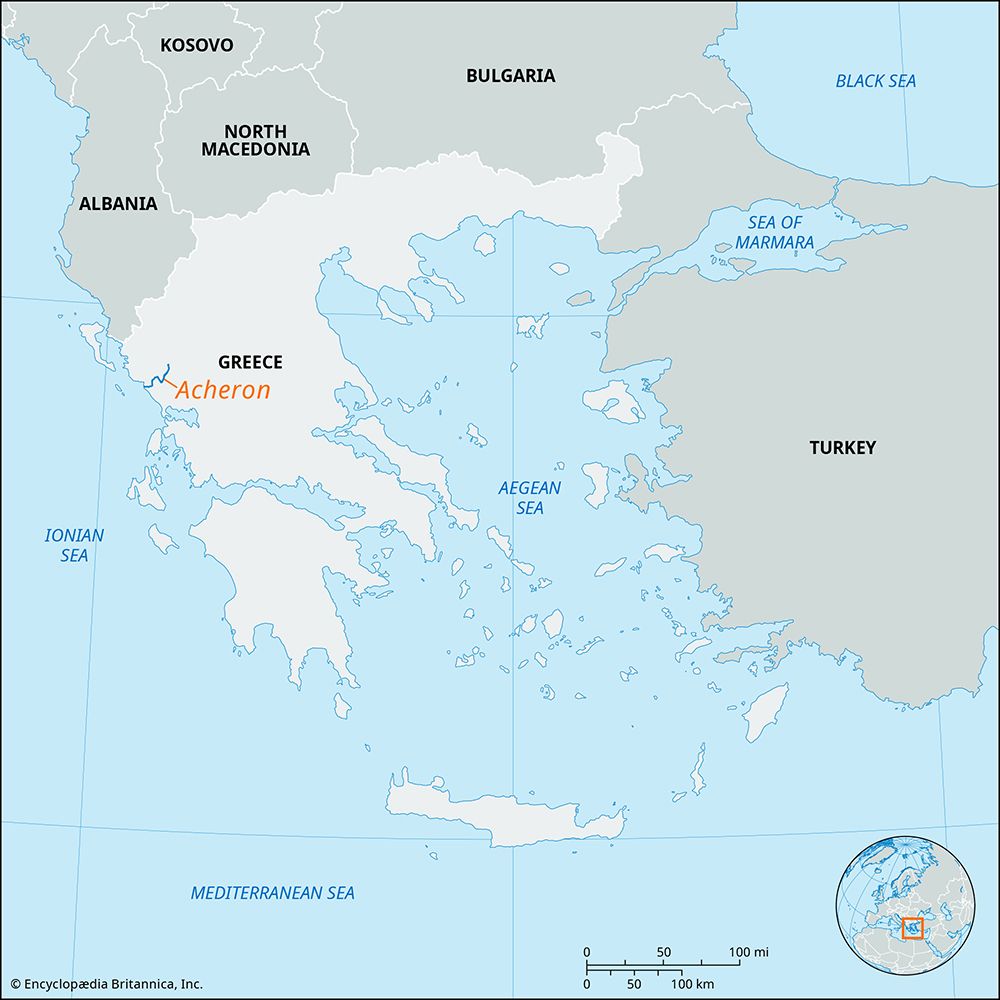
What is Acheron?
Acheron is a name with both geographical and mythological significance. In Greek mythology, it is known as a river in Hades, often referred to as the “River of Woe,” and the name is sometimes used to describe the underworld in its entirety.12
In reality, there is a river named Acheron located in Thesprotia, Epirus, Greece. In ancient times, this river was associated with the underworld because it flows through dark, deep gorges and disappears underground in several locations. An oracle of the dead was once situated along its banks.1

What are the other rivers of the Greek underworld?
In addition to the Acheron, Latin poets traditionally identified five rivers within the Greek underworld, each representing different aspects of the afterlife:1
- Styx: Often called the river of “shuddering,” it represents the loathing of death. It was considered a boundary between the living and the dead, and gods famously swore their most binding oaths upon its waters.3
- Lethe: Known as the river of “oblivion” or “unmindfulness.” In various traditions, including Orphism and the works of Plato, souls were said to drink from this river to lose the memories of their past existence before being reborn.1
- Phlegethon: Described as a river of fire that flows through Hades.4
- Cocytus: While not detailed in the provided search results, it is traditionally recognized alongside these rivers as the river of lamentation.
Who is Charon and what is his role on the river?
In Greek mythology, Charon is a minor deity who serves as the ferryman of the underworld. His primary role is to transport the souls of the deceased across the rivers Styx and Acheron to reach the realm of Hades.78
Charon only ferries those souls who have received proper burial rites. As payment for his services, he requires a coin, which was traditionally placed in the mouth of the corpse before burial.78
Depicted in art as a morose and grisly old man, Charon has appeared in various classical works, including Aristophanes’ Frogs and Virgil’s Aeneid. Over time, he became a symbol of death itself, evolving into the figure of Charos or Charontas in modern Greek folklore.7
We could dive deeper into the specific burial customs that influenced these mythological beliefs, or perhaps explore the other figures who guarded the entrance to the underworld.
How did the ancient Greeks view the afterlife?
Ancient Greek views on the afterlife evolved significantly over time, shifting from a generally somber, uniform outlook to more complex eschatological systems involving judgment and reward.
The Archaic View
In the Archaic period, as depicted in Homer’s Odyssey, the afterlife was primarily viewed as the “house of Hades.” This realm was a dark, joyless labyrinth where the dead existed as “strengthless doubles”. Generally, this existence was considered indifferently unpleasant for all, regardless of one’s actions in life, though notorious sinners faced specific torments in Tartarus.69
Evolution of Beliefs
By the late Archaic and Classical periods, traditions began to diverge:
- Mystery Cults: Movements like those associated with Demeter and Dionysus promised a more favorable afterlife for initiates, contrasting with the gloom awaiting the uninitiated.6
- Orphism: The Orphic movement introduced concepts of judgment, retribution, and metempsychosis (reincarnation). Adherents viewed the cycle of birth and death as a “sorrowful, weary wheel” and used gold tablets as guides to navigate the underworld and reach the company of the blessed.6
- Philosophical Influence: Thinkers like Plato integrated these myths into reflections on justice, teaching that souls were judged and consigned to either punishment or the Isles of the Blest.69
The “Infernalized” Underworld
During the Hellenistic and Roman periods, the underworld became increasingly “infernalized.” Authors like Virgil described a structured realm with specific compartments for different types of souls—such as infants or suicides—and distinct paths leading to either torture or paradise.6
Sources
- Acheron — Encyclopædia Britannica
- Acheron — Merriam-Webster
- Lethe — Encyclopædia Britannica
- Styx — Encyclopædia Britannica
- Phlegethon — Merriam-Webster
- hell - Greece and Rome — Encyclopædia Britannica
- Charon — Encyclopædia Britannica
- Greek religion - Eschatology — Encyclopædia Britannica
- Hades — Encyclopædia Britannica
- Roman religion - Sacrifice and burial rites — Encyclopædia Britannica
- soul — Encyclopædia Britannica
Published on · 3 min read