Black River
The name "Black River" refers to several distinct geographical features worldwide. It is important to note that the Negro River in South America, while often…
What is Black River?
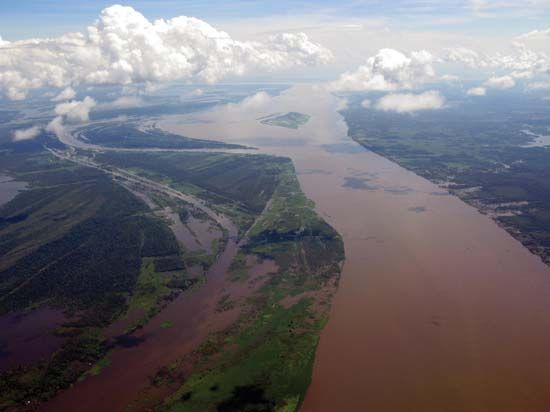
The name “Black River” refers to several distinct geographical features worldwide. It is important to note that the Negro River in South America, while often translated as “Black River,” is a separate major tributary of the Amazon known for its dark, organic-stained waters.1
Notable rivers named Black River include:
- United States (Arkansas and Missouri): A 280-mile-long river rising in the Ozark Mountains. It flows into the White River and features the Clearwater Dam for flood control.2
- United States (Wisconsin): A 160-mile-long river that flows into the Mississippi River near La Crosse, supporting seasonal barge traffic.3
- Asia (China and Vietnam): A nearly 500-mile-long tributary of the Red River. It is home to the Hoa Binh Dam, which forms Vietnam’s largest reservoir and provides significant hydroelectric power.4
How do dams on rivers impact the surrounding environment?
Dams significantly alter river ecosystems and the surrounding environment, often creating a tension between human economic needs and ecological preservation. Their impacts include:56
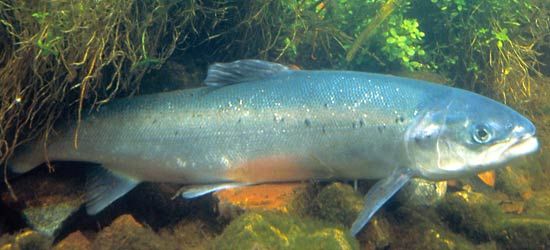
- Disruption of Aquatic Life: Dams act as physical barriers that block or impede the migration of fish species, such as salmon, preventing them from reaching spawning grounds. While technologies like fish ladders and fish locks have been implemented to mitigate these effects, they have not always been sufficient to prevent population declines or the risk of extinction for certain species.57
- Sediment Trapping: Reservoirs capture much of the sediment load that would naturally flow downstream. This process can lead to land degradation downstream, as the water, now stripped of its silt burden, may erode riverbanks rather than building them up.89
- Inundation and Displacement: Large-scale dams often flood vast areas, resulting in the loss of natural landscapes, cultural heritage sites, and the forced relocation of human populations.59
- Geological and Safety Concerns: In some regions, the creation of large reservoirs in seismically active areas has raised concerns regarding the risk of landslides and potential dam failure.9
What are the main differences between a river and a tributary?
The primary difference between a river and a tributary is their relationship within a water system. A river is a large natural stream of water that serves as a primary passageway for flow, while a tributary is a smaller stream or river that flows into a larger one.101112
Key distinctions include:
- Direction of Flow: A tributary acts as a “feeder” or “affluent,” contributing its water to a larger body of water. Conversely, the main river collects these waters as it moves toward its destination, such as an ocean or lake.101312
- Scale and Hierarchy: While a tributary is defined by its role as a contributor, it can still be massive in its own right. For example, the Missouri River is a tributary to the Mississippi River, yet it spans approximately 2,500 miles and possesses its own network of smaller tributaries.12
- Terminology: The term “tributary” historically draws from the concept of a smaller state paying tribute to a more powerful one, mirroring how a smaller stream “pays” its water into the larger river system.12
We could dive deeper into how these drainage basins are mapped or explore the difference between tributaries and distributaries.
Why do many rivers have the same name in different parts of the world?
Many rivers share the same name across different regions due to a combination of historical naming practices, linguistic transfer, and the conservative nature of hydronyms (water feature names).
- Descriptive Naming: Explorers often named rivers based on physical characteristics, such as color. For example, multiple rivers in the Americas were named “Colorado” (meaning “reddish” or “colored” in Spanish) because of their silt-heavy, red-tinted waters.15
- Linguistic and Cultural Transfer: When new populations settle in an area, they often adopt existing names for major geographic features. Because river names are highly conservative, they frequently persist long after the original inhabitants have been displaced or assimilated. This process preserves evidence of ancient populations, such as the Indo-European roots found in similar river names across Europe, including the Isère in France and the Isar in Bavaria.16
- Exploration and Mapping: Confusion among early explorers and mapmakers often led to the duplication of names. Additionally, names are sometimes transferred between languages through phonetic approximation or “folk etymology,” where a name is adapted to sound more familiar in the new language.17
- Political and Regional Identity: Sometimes, names are changed or standardized to reflect political shifts or regional pride, as seen when the Grand River was renamed the Colorado River in 1921 to align with the state of Colorado.15
Sources
- Black River — Encyclopædia Britannica
- Black River — Encyclopædia Britannica
- Black River — Encyclopædia Britannica
- Negro River — Encyclopædia Britannica
- dam - Rise of environmental and economic concerns — Encyclopædia Britannica
- dam - Fish passes — Encyclopædia Britannica
- river - Environments of deposition — Encyclopædia Britannica
- Did you know? — Merriam-Webster
- Yangtze River - Human impact on the environment — Encyclopædia Britannica
- tributary — Merriam-Webster
- river — Merriam-Webster
- tributaries — Merriam-Webster
- Did you know? — Merriam-Webster
- water system — Merriam-Webster
- Why are there two Colorado Rivers? — Encyclopædia Britannica
- river — Merriam-Webster
- toponymy — Encyclopædia Britannica
- Name - Place-names reflecting historical influences — Encyclopædia Britannica
Published on · 3 min read