Blood River
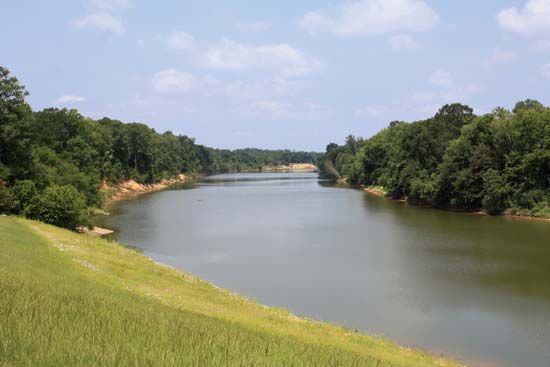
Blood River is a short stream located in the KwaZulu-Natal province of South Africa. It is a tributary of the Buffalo (Mzinyathi) River and is historically…
What is Blood River?
Blood River is a short stream located in the KwaZulu-Natal province of South Africa. It is a tributary of the Buffalo (Mzinyathi) River and is historically significant as the site of the Battle of Blood River, which took place on December 16, 1838.1
During this conflict, a Voortrekker commando force led by Andries Pretorius defeated the Zulu army under King Dingane. The Boers utilized superior firepower to inflict heavy casualties on the Zulu forces, and the river earned its name because the water reportedly turned red with the blood of thousands of the slain.1
The date of this battle remains significant in South African history; it was formerly commemorated as a religious holiday and is now observed as the Day of Reconciliation, a day intended to foster national unity and racial harmony.2
Who were the Voortrekkers and why did they migrate?
The Voortrekkers (Afrikaans for “early migrants”) were Boer farming families who migrated from the British Cape Colony into the Southern African interior between 1835 and the early 1840s. This movement, known as the Great Trek, involved approximately 12,000 to 14,000 people who sought to establish independent communities, eventually forming the Orange Free State and the South African Republic (Transvaal).345
Historians offer differing perspectives on the motivations for this migration:
- Traditional View: Many have depicted the migration as a protest against British rule, specifically the abolition of slavery after 1834 and British reluctance to seize more land from the Xhosa for white settlement.34
- Modern Perspective: Recent scholarship suggests the trek was an “explosive culmination” of colonial expansion. Rather than merely fleeing British policy, the Voortrekkers were energized by the prospect of acquiring new land and utilizing their superior weaponry to engage in commercial expansion and colonial labor raids.63
What was the significance of the Great Trek in South African history?
The Great Trek (1835–1843) is a defining event in South African history, regarded by Afrikaners as the origin of their nationhood. Its significance lies in the profound geopolitical and social shifts it triggered across the Southern African interior.6
Expansion and Conflict
The migration enabled Voortrekkers to bypass Xhosa resistance in the east and penetrate the Highveld and Natal. By utilizing superior weaponry, the trekkers displaced or defeated various African kingdoms, such as the Ndebele, fundamentally altering the regional balance of power.65
Political Consequences
The trek led to the creation of independent Boer states, including the South African Republic (Transvaal) and the Orange Free State the Orange Free State. The Sand River and Bloemfontein conventions (1852 and 1854) formalized this independence, effectively allowing the Boers to pursue territorial conquest without British oversight.64
Historical Legacy
Some historians view the British withdrawal from the interior as a tragic turning point, arguing it facilitated the conditions for the South African War and the eventual rise of apartheid. While the trek is often framed as a flight from British policy, modern scholarship characterizes it as an aggressive extension of colonial expansion and land seizure.45
How did the Zulu Kingdom organize their military forces?
The Zulu Kingdom developed a highly organized military system under the leadership of Shaka, which transformed them from a small clan into a dominant regional power.
Military Structure
- Regimental System: Shaka instituted a system of amabutho (age sets or regiments). Boys were initiated into these groups at adolescence and stationed at royal barracks (amakhanda) under the direct control of the king.89
- Command and Control: The army, known collectively as the impi, was led by indunas (officers) who used hand signals to direct maneuvers during battle.10
- Logistics: Regiments were highly mobile, capable of covering 50 miles a day. They were supported by boys who carried sleeping mats and cooking pots, and they lived off grain and cattle requisitioned from the areas they traversed.10
Tactics and Equipment
- Weaponry: Shaka replaced traditional throwing spears with the assegai, a long-bladed, short-hafted stabbing spear that forced warriors to engage the enemy at close quarters.10
- The “Buffalo Horns” Formation: The impi was divided into four functional groups:
- Chest: The strongest force that engaged the enemy to pin them down.
- Horns: Two groups that raced to encircle the enemy and attack from the rear.
- Loins: A reserve force kept seated with their backs to the battle, ready to reinforce any part of the ring if the enemy attempted to break out.10
Sources
- Blood River — Encyclopædia Britannica
- Day of Reconciliation — Encyclopædia Britannica
- Voortrekker — Encyclopædia Britannica
- South Africa - The Great Trek — Encyclopædia Britannica
- Great Trek — Encyclopædia Britannica
- Afrikaner: Top Questions — Encyclopædia Britannica
- Sand River and Bloemfontein conventions — Encyclopædia Britannica
- Zulu — Encyclopædia Britannica
- South Africa - Emergence of the eastern states — Encyclopædia Britannica
- Zululand — Encyclopædia Britannica
- Shaka — Encyclopædia Britannica
- South Africa - The Zulu after Shaka — Encyclopædia Britannica
Published on · 3 min read