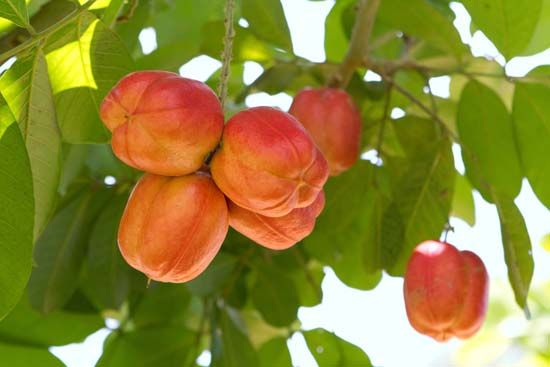
Ackee
The ackee tree (Blighia sapida) is native to West Africa. Its spread to other parts of the world, particularly the Caribbean, occurred through the forced…
How did ackee spread from its native region to other parts of the world?
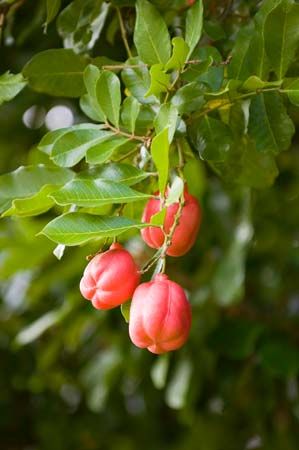
The ackee tree (Blighia sapida) is native to West Africa. Its spread to other parts of the world, particularly the Caribbean, occurred through the forced migration of enslaved people from Africa.1
The tree was later introduced to the scientific community by William Bligh, the captain famously associated with the Bounty, which is why the plant bears his name in its botanical classification. Today, the tree is widely cultivated in tropical and subtropical regions, including the Caribbean, Florida, and Hawaii, where its edible arils are consumed when ripe. It is important to note that the fruit is toxic if consumed while unripe or overripe.12
How is ackee used in traditional cuisine, particularly in Jamaica?
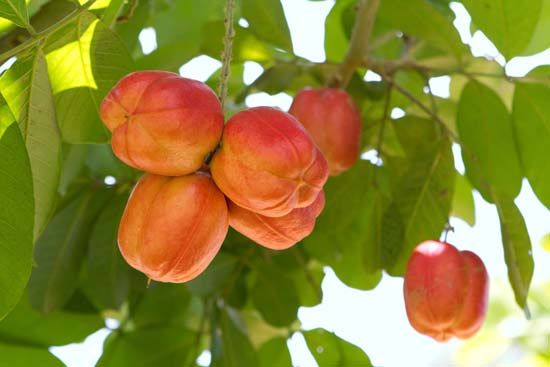
In Jamaican cuisine, the most prominent use of the ackee fruit is in the dish known as “ackee and saltfish.” This preparation is recognized as the national dish of Jamaica.1
The culinary application of the fruit involves the following characteristics:
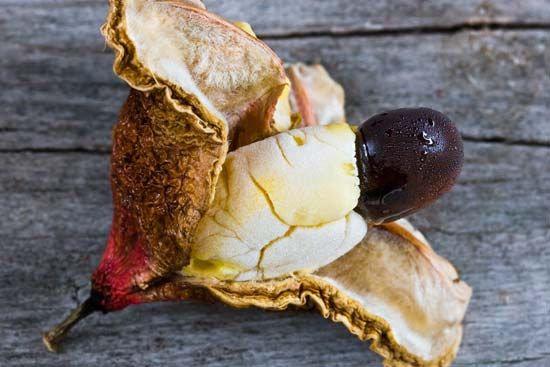
- Preparation: The edible portions of the fruit are the three white arils, which are the fleshy coverings of the seeds. These arils are harvested only after the reddish, woody shell of the fruit has naturally split open at maturity.1
- Flavor and Texture: The arils are soft and possess a bland flavor, which allows them to absorb the savory, salty qualities of the accompanying saltfish.1
- Culinary Role: While botanically a fruit, the arils are prepared and consumed as a vegetable.1
It is essential to exercise caution when preparing this dish, as the fruit is toxic—and potentially fatal—if consumed while unripe or overripe.12
Are there any health risks or precautions associated with eating ackee?
Consuming ackee requires significant caution because the fruit contains toxins that can be fatal if ingested improperly.
The primary health risks and necessary precautions include:
- Maturity Requirement: The fruit is only safe to eat when it has reached full maturity. The reddish, woody shell must naturally split open on its own to reveal the edible white arils inside.1
- Toxicity of Immature Fruit: Consuming the fruit while it is unripe is dangerous, as it contains toxins that can cause severe illness or death.12
- Overripe Hazards: The fruit is also considered poisonous if it is overripe.2
- Toxic Components: In addition to the risks associated with the stage of ripeness, the pink raphe—the membrane that attaches the aril to the seed—is toxic and must be removed.2
Because of these risks, it is vital to ensure that only properly matured arils are prepared for consumption, with all toxic parts carefully discarded.
What is the cultural significance of ackee in Jamaica and other Caribbean countries?
The ackee holds deep cultural significance in the Caribbean, particularly in Jamaica, where it is celebrated as the primary component of the national dish, ackee and saltfish.1
The presence of the ackee tree in the region is a direct result of the transatlantic slave trade; it was brought to the Caribbean by enslaved people from West Africa. This history links the fruit inextricably to the African diaspora and the resilience of cultural traditions maintained despite the horrors of enslavement. The name itself is believed to be derived from West African languages, such as Twi, reflecting its origins in the region.12
While the tree was later introduced to the scientific community by William Bligh—the captain of the Bounty—its integration into Caribbean cuisine represents a profound synthesis of African heritage and local culinary evolution. Today, it remains a symbol of national identity and a staple of regional foodways.1
Sources
- ackee — Encyclopædia Britannica
- ackee — Merriam-Webster
Published on · 3 min read